

Aaron Rodgers is trying to convince current Packers players to buy his longtime Green Bay home, a move that reflects his lasting connection to the city and franchise. The effort goes beyond real estate; it’s about legacy, loyalty, and keeping the Packers’ culture rooted in Wisconsin.
Aaron Rodgers might be wearing Steelers colors these days, but his ties to Green Bay remain strong, so strong that he is actively trying to persuade current Packers players to buy his house in the area.
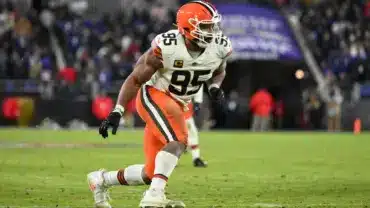
After a recent game where Rodgers scrambled to avoid a sack by Micah Parsons, the veteran quarterback reportedly told Parsons, “Buy my house.” Parsons said he looked at the property but admitted the size was more than he needed.
The best part of the Micah Parsons/Aaron Rodgers interaction? “He told me to buy his house”
— Dave Schroeder (@SchroederWBAY) October 28, 2025
A similar conversation reportedly occurred with Jordan Love last summer after he signed an extension with Green Bay. Rodgers offered the home as an option and joked that if Love did buy it, Rodgers would still keep an eye on things.
What looks like banter has a deeper context. Rodgers’ old Green Bay residence sits just a few miles from Lambeau Field, and his efforts to keep current players grounded in Wisconsin speak to more than mere real estate. They reveal his enduring attachment to the Packers culture, his own legacy, and a changing dynamic of franchise loyalty.
Why the house offer signals something bigger
Rodgers’ efforts to influence Packers players’ living decisions send multiple messages. First, it underscores how much he values staying connected to the organization and the community where he spent the bulk of his career.
He has publicly stated he intends to retire as a Packer, even amid transitions.
Second, it highlights how players’ off-field lives, where they live, and how they invest, are becoming part of broader team culture and branding. By nudging teammates toward a local purchase, Rodgers is promoting a deeper identity of staying in Green Bay rather than relocating.
Micah Parsons said he had been looking at Aaron Rodgers’ old house even before Rodgers told him to buy it last Sunday night.
Parsons said Tucker Kraft is considering Rodgers’ old house and that Parsons doesn’t need it yet since he’s still by himself. pic.twitter.com/AkSyuSwD7t
— Matt Schneidman (@mattschneidman) October 30, 2025
Third, it shows Rodgers still finds leverage in relationships. Even after moving on to new teams, he maintains influence over rising stars like Love and Parsons.
For the Packers, this could be a subtle morale play. Having younger players remain in the Green Bay area might help reinforce team cohesion, local engagement, and a sense of continuity as the franchise transitions to a new era. Rodgers’ gestures may simply be twinned with personal invitation, but they carry cultural weight.
The lingering legacy of Lambeau ties
Rodgers’ house pitch is more than a quirky headline; it may reflect how he sees his role in shaping the Packers beyond his playing days. By encouraging players to buy his Green Bay home, he keeps a physical connection to the city and the organization alive.
Whether any player takes up the offer remains to be seen, but the attempt signals Rodgers’ persistent investment in what he helped build. In an era where player movement and brand identity dominate the sport, Rodgers’ move is a reminder that legacy can live in bricks, mortar, and residence just as much as it lives on the field.