

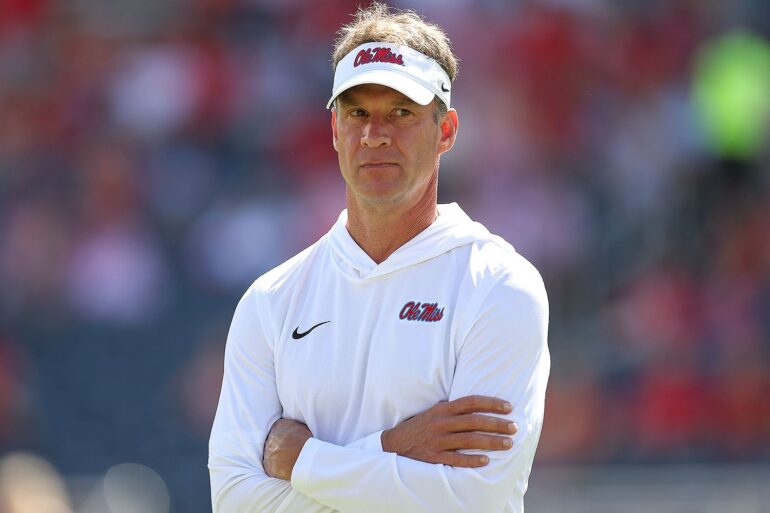
Lane Kiffin’s seven-year, $91 million contract with LSU vaults him into elite coaching pay and reshapes expectations in Baton Rouge as the Tigers chase national championships in a new NIL era.
LSU’s pursuit of Lane Kiffin culminated in one of the most aggressive coaching contracts in college football history. The seven-year agreement runs through 2032 and carries a reported total value of $91 million, placing Kiffin among the highest-paid coaches in the sport at roughly $13 million per year.
The deal’s structure signals urgency. It reportedly includes a national-championship escalator that would push Kiffin’s compensation even higher should LSU win a College Football Playoff title under his leadership.
BREAKING 🚨
THERE IT IS : Lane Kiffin has officially signed his 7y 90 million dollar contract with LSU 🐯
He WILL NOT be coaching Ole Miss in the CFP as there is a sour taste from players and staff about how the era ended. per @AdamSchefter pic.twitter.com/CgIdSxTOHg
— AyeshaNFL (@AyeshaNFL) November 30, 2025
Even more notable is the buyout protection: if Kiffin is fired without cause, LSU would owe roughly 80 percent of the remaining contract value with no offset for future employment. That level of guarantee reflects not just confidence, but institutional pressure to make this move work.
This represents a massive financial leap from Kiffin’s deal at Ole Miss, where he earned in the range of $9 million annually.
LSU didn’t merely outbid its SEC rival. It redefined the ceiling for what it was willing to commit to stabilize the program and reassert itself among college football’s elite.
Why LSU chose Kiffin and why the timing mattered
LSU’s decision to invest at this level is rooted in both fear and ambition. In recent seasons, the Tigers have endured coaching turnover, defensive regression, and recruiting volatility.
In the modern NIL and transfer-portal ecosystem, instability compounds quickly. LSU needed a coach with schematic credibility, national recruiting reach, and enough personality to command a locker room in an era when players carry unprecedented leverage.
It’s official 🐅
Lane Kiffin has announced he will leave Ole Miss to accept the Head Coaching position at LSU. pic.twitter.com/tVcUJ1kJW3
— FOX College Football (@CFBONFOX) November 30, 2025
Kiffin checked all three boxes. At Ole Miss, he modernized offensive identity in the SEC, turned the Rebels into a consistent national presence, and proved he could win high-profile games with rosters that lacked LSU’s raw talent upside.
His work developing quarterbacks, maximizing tempo, and blending analytics with play-calling made him one of the most coveted offensive minds in the country.
Timing amplified the urgency. The SEC’s competitive landscape is tighter than ever. Georgia remains the gold standard. Texas is surging again. Alabama is retooling. LSU could not afford a multi-year philosophical rebuild.
The Tigers needed a coach who could produce immediate top-10 relevance while building toward championship infrastructure.
This contract reflects the belief that Kiffin offers the best blend of short-term traction and long-term upside.
What the deal means for the future of LSU and college football
This contract is not just about LSU. It resets expectations across the Power Five. As revenue sharing, NIL collectives, and athlete compensation evolve, coaching salaries are inflating in lockstep.
Kiffin’s deal reinforces a growing reality: elite programs now operate under the economics of professional sports.
For LSU, the pressure is now explicit. This is no longer a developmental hire. It is a championship mandate. Recruiting expectations will rise immediately.
Ole Miss gives a proper goodbye to Lane Kiffin pic.twitter.com/3JGu28grO3
— Unnecessary Roughness (@UnnecRoughness) November 30, 2025
Staff salaries will escalate. NIL infrastructure will be scrutinized. Every eight-win season will be viewed not as stability, but as underperformance.
For Kiffin, the contract changes his legacy arc. For years, he was viewed as a brilliant tactician searching for the right long-term platform. LSU now becomes the defining chapter of his career.
If he elevates the Tigers into consistent CFP contention, this deal will be remembered as visionary. If not, it will join the short list of cautionary tales about what happens when financial muscle outruns results.
More broadly, LSU’s commitment reinforces how sharply the sport has tilted toward financial arms races.
The barrier between college football and professional economics is thinner than ever. Coaching hires now resemble franchise quarterback investments. Risk tolerance has grown. So has fallout potential.
At its core, LSU’s deal with Kiffin is not about contract language. It’s about identity. The Tigers have declared that they will not rebuild quietly. They will spend loudly, recruit aggressively, and demand relevance now.
The rest of college football has been put on notice.