
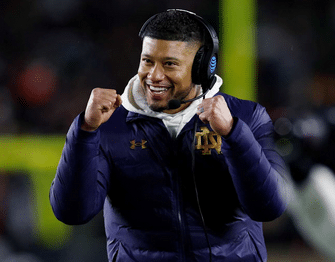
For the past year, Marcus Freeman’s name has hovered around nearly every NFL coaching cycle. As teams searched for the next young leader capable of modernizing a franchise, Freeman’s profile, age, recruiting success, program stability, and national visibility, made him an easy name to circle. That speculation finally ended when Notre Dame finalized a new long-term contract that removes any real doubt about his future in South Bend.
The agreement signals that Notre Dame is done playing defense in coaching rumors and is fully committed to keeping him as the face of the program. By locking him into a long-term deal with top-tier compensation and strong contractual protections, the school effectively shut down the idea that he was a short-term stopover waiting for the NFL.
Marcus Freeman Contract
2026…run it back
Go Irish ☘️
— Marcus Freeman (@Marcus_Freeman1) December 29, 2025
A tweet from the man himself signaled Notre Dame’s new deal. Marcus Freeman’s new contract extends through the 2031 season with a total value of $70.8 million, and places him firmly among the highest-paid coaches in college football. While the university does not release full contract documents, enough information has surfaced to build a clear picture of how the deal is structured and why it sends such a strong message.
The contract emphasizes long-term security and financial stability rather than short-term incentives. Instead of relying heavily on annual bonuses, the structure leans on guaranteed compensation and built-in annual raises. That approach aligns with Notre Dame’s goal of removing yearly uncertainty and discouraging outside interest, particularly from the NFL.
The sections below break down the salary structure, incentive framework, and buyout terms that define the new agreement.
Marcus Freeman Salary
Like most modern Power Five contracts, the bulk of Freeman’s earnings come through supplemental compensation rather than base salary. This allows flexibility for the school while keeping total pay elite.
Total guaranteed compensation (2026–2031): $70.8 million
Signing bonus (paid up front): $3.0 million
| Season | Base Salary | Supplemental Pay | Total Compensation |
|---|---|---|---|
| 2026 | $1,500,000 | $9,300,000 | $10,800,000 |
| 2027 | $1,500,000 | $9,700,000 | $11,200,000 |
| 2028 | $1,500,000 | $10,100,000 | $11,600,000 |
| 2029 | $1,500,000 | $10,500,000 | $12,000,000 |
| 2030 | $1,500,000 | $10,900,000 | $12,400,000 |
| 2031 | $1,500,000 | $11,300,000 | $12,800,000 |
Performance Incentives
Freeman’s contract includes performance-based bonuses tied to team success and academic benchmarks. These incentives can significantly raise annual earnings in a playoff-caliber season.
| Incentive | Bonus |
|---|---|
| College Football Playoff appearance | $500,000 |
| Playoff win (per game) | $600,000 |
| National championship game appearance | $800,000 |
| National championship win | $2,500,000 |
| Final AP Top 5 finish | $300,000 |
| Final AP Top 10 finish | $150,000 |
| 10 regular-season wins | $100,000 |
| 11 regular-season wins | $200,000 |
| 12 regular-season wins | $300,000 |
| National Coach of the Year | $150,000 |
| Academic performance bonus | $100,000 |
Marcus Freeman Buyout Terms
The contract includes clear protections for both sides. If Notre Dame were to move on from Freeman without cause, the university would owe the remaining guaranteed compensation. If Freeman were to leave early, a declining buyout applies.
Buyout if Notre Dame terminates the contract
| Season Terminated | Buyout Owed |
|---|---|
| After 2025 | $70,800,000 |
| After 2026 | $60,000,000 |
| After 2027 | $48,800,000 |
| After 2028 | $37,200,000 |
| After 2029 | $25,200,000 |
| After 2030 | $12,800,000 |
| After 2031 | $0 |
Buyout if Marcus Freeman leaves Notre Dame
| Departure Timing | Amount Owed |
|---|---|
| Before 2026 season | $20,000,000 |
| After 2026 season | $16,000,000 |
| After 2027 season | $12,000,000 |
| After 2028 season | $8,000,000 |
| After 2029 season | $5,000,000 |
| After 2030 season | $3,000,000 |
With this deal in place, both sides have effectively removed uncertainty from the equation. Notre Dame has its head coach locked in through the end of the decade, and Freeman has the institutional backing needed to build without distraction.
The message is clear: this is no longer a program waiting to see what happens next. It’s a program committed to chasing playoff runs and national relevance with Marcus Freeman firmly at the helm.