
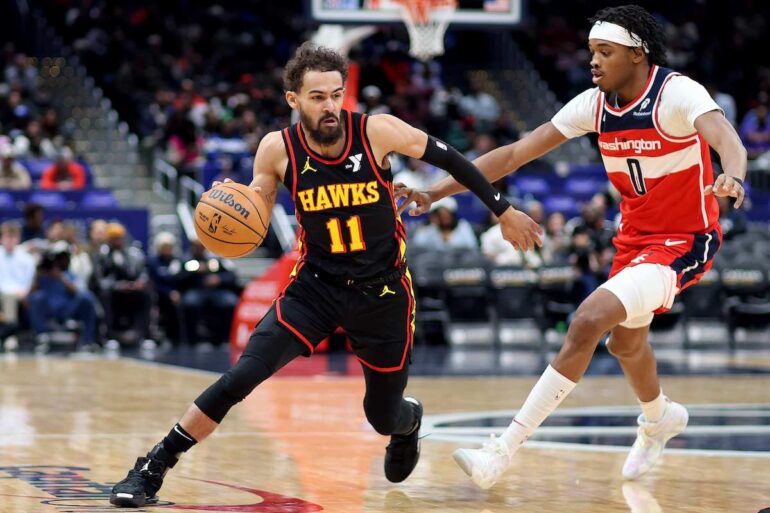
In some ways, the Washington Wizards landing as the eventual suitor for a long-awaited Trae Young trade feels incongruent. The Wizards are waist deep in a rebuild without any clear avenues to contention in the near future. What good does a 27-year-old Young, his best basketball likely in the rearview, do for the league’s worst team (by net rating)?
Much of the rationale for the Atlanta Hawks’ trade with Washington, swapping Young for CJ McCollum and Corey Kispert without any picks, doesn’t involve the feature player. The Hawks clearly hoped to part ways with Young, especially after his injuries this season, aiming to construct a more formidable defensive core, and the Wizards seemed to want out of the McCollum business.
Even an apex version of Young wouldn’t bring enough to lift this Washington team out of the basement. Young has a player option at the end of this season he’ll likely pick up, leaving him as a free agent in the summer of 2027. Maybe the Wizards plan for a clean break from Young but we shouldn’t ignore the possibility he lifts his new team in a manner many won’t predict. There’s been some speculation Young won’t suit up this year but he’s on the team for more than just 2025-26 at the moment.
Young’s greatest offensive strengths, even with diminished athleticism, are his advantage and shot creation. He’s one of the NBA’s premier offensive engines at any state and positively influences the shot quality of his team, especially as one of the league’s best interior passers for layups, dunks and free throws.
Alex Sarr, who’s already enjoying a nice second-year breakout, stands to benefit most from Young’s presence. According to the NBA’s tracking data, Sarr’s expected shot difficulty (49.1 percent) ranks in the bottom 10 among full-time centers and he faces the 12th-tightest defensive pressure among all players.
Pinpoint passing and heavy pick-and-roll gravity should help Young spoon-feed Sarr easy buckets and offer chances to attack advantageous situations. Beyond Sarr, electric play-finishers like Bilal Coulibaly and nuclear shooters like Tre Johnson should also see shot quality increases.
His ball-dominance might hurt players like Bub Carrington and Kyshawn George, who operate most comfortably with the ball, but George in particular should be fine, given his size and the off-ball offensive acumen he flashed throughout his rookie season. And it’s worth noting Young’s mega on-ball rate hit a career-low 40.7 percent this season instead of his usual league-leading figure.
Maybe, Young’s need for the ball and defensive woes hurt Washington’s core development more than it helps. I seriously doubt that, as the downside of inserting a player like him has less weight on rebuilding teams, especially considering Young’s health means nobody knows when he’ll first suit up for the Wizards.
Young’s value deflating because of injuries, shifting league trends and salary makes sense, but the pendulum has swung too far. Washington’s future will depend on where it lands within a loaded 2026 NBA Draft but there’s always the possibility Young, still well beneath 30 years of age, finds his groove once more. Even if that only happens for a season or two, this deal will have been well worth the price for the Wizards.