
The NBA is barreling toward its biggest structural change in more than two decades. At upcoming Board of Governors meetings, the NBA is expected to vote on formally exploring expansion in Las Vegas and Seattle — two markets widely viewed as the leading candidates for franchises targeted to begin play in the 2028-29 season. Both cities will need rosters, and that means an expansion draft.
Here’s everything you need to know.
Why These Two Cities?
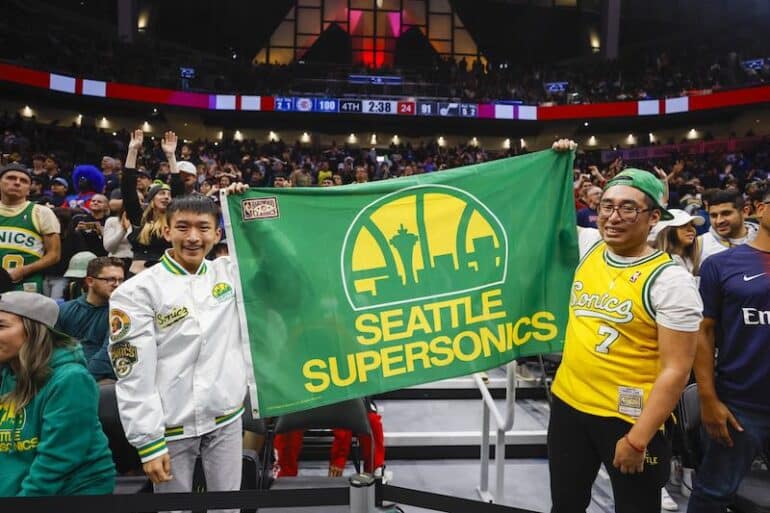
Seattle has been the largest U.S. city without an NBA team for nearly 20 years, since the SuperSonics relocated to become the Oklahoma City Thunder in 2008.
Las Vegas, meanwhile, has become a proven major league sports market, home to the Raiders, Golden Knights, Aces, and Athletics, and already hosts the NBA’s annual Summer League every July.
How Many Votes Are Required?
Expansion requires approval from 23 of the 30 existing owners.
The financial incentive is significant: if both franchises sell for a combined $15 billion, every existing owner pockets a $500 million check. That financial windfall is a powerful incentive.
The counterweight is dilution — more teams mean more roster spots to fill, more playoff shares to split, and a longer path to a championship for every existing contender.
So far, the money appears to be winning the argument.
NBA Conference Realignment
Both new teams would join the Western Conference, bringing the league to 32 franchises.
To rebalance, either Minnesota or Memphis is expected to shift to the East, a move that would reshape playoff seeding, travel schedules, and decades-old rivalries for whichever franchise draws the short straw.
Memphis would make geographic sense given its closer proximity to Eastern markets, but the Grizzlies have built their identity as a Western Conference team. Minnesota, meanwhile, would face significantly longer road trips to the coasts.
Neither city will be happy about it.
How the Expansion Draft Works
New franchises build their initial rosters by selecting players already under contract across the league.
When the Toronto Raptors and Vancouver Grizzlies entered the NBA in 1995, they alternated picks from a pool of exposed players until each had a full roster. The 2004 Charlotte Bobcats did the same.
Las Vegas and Seattle would follow the same basic framework.
Here’s how it works:
Protecting Players
- Each existing team may protect up to 8 players from being selected.
- Every team must leave at least one player exposed, even if they have fewer than 8 under contract.
- Unrestricted free agents cannot be protected and cannot be selected. They’re simply excluded.
- If an exposed player holds a player option and gets selected, he can still exercise that option and walk.
- If a restricted free agent is selected, he becomes unrestricted — the expansion team does not inherit the right of first refusal.
Selection Rules
- Each expansion team can take only one player per existing franchise, and no existing team can lose more than one player total.
- Each expansion team is expected to select 14 players, leaving one roster spot for their first-round rookie pick.
- A coin flip determines who picks first. The teams then alternate in standard order, not a snake draft.
Salary Cap
- New teams operate under a reduced cap: 66.7% of the league cap in Year 1, rising to 80% in Year 2.
- That limitation makes early free agency difficult, but it also functions as a pressure valve. Lower cap obligations give expansion teams flexibility to absorb bad contracts in trade without the same pain it would cost an established contender.
The Real Game: Side Deals
The expansion draft isn’t just a passive selection event. It’s a negotiating arena. Teams that want to protect more than 8 players can cut deals with the expansion franchises:
- An existing team can pay the expansion team (usually in future draft picks) to select or avoid selecting a specific player.
- In 2004, Charlotte agreed to take Jahidi White from Phoenix in exchange for a future first-rounder, then selected Zaza Pachulia from Orlando and flipped him to Milwaukee for a second-round pick.
- The Bobcats turned the expansion draft into an asset-gathering exercise before their first game was ever played.
This side-deal market often produces more value for expansion franchises than the draft selections themselves.
Rookie Draft Position
New teams are slotted into the first round of the rookie draft by the commissioner, not through the lottery.
Historically they’ve landed in the top ten, though none has ever received the No. 1 overall pick in year one.
That slot matters: a high pick gives an expansion team its first homegrown cornerstone, and the fastest path from expansion doormat to contender usually runs through one.
The Long Game
The franchises that thrive fastest won’t be the ones who simply grabbed the best available players. They’ll be the ones who used the expansion draft as a deal-making engine, trading exposure agreements for future assets and building toward competitiveness before their first tip-off.
Seattle has waited 20 years. Las Vegas has never had a team. Neither will want to wait long for a winner.