
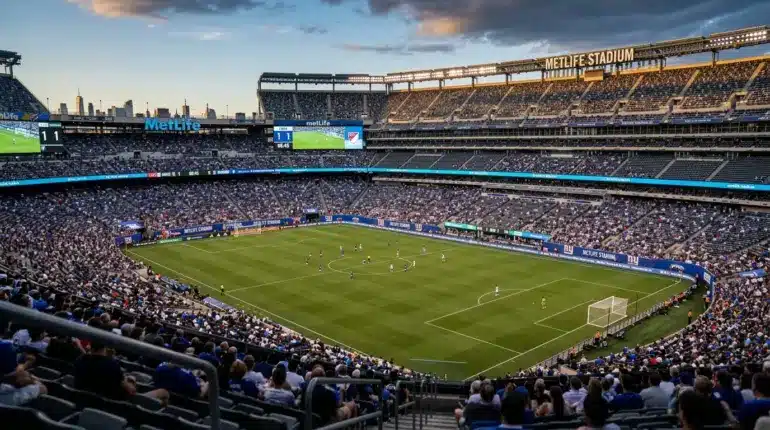
MetLife Stadium opened its 2026 World Cup account last week – and it was not the triumphant debut anyone had planned for. The venue earmarked to host the tournament’s most prestigious match delivered a stress test that exposed serious cracks in the foundation before the big games have even arrived.
Two problems dominated the post-match conversation: a transportation system that failed fans trying to reach the stadium, and a surprising number of empty seats that made for uncomfortable viewing inside one of the world’s biggest venues.
Transit Meltdown: The $98 Gamble That Nobody Took
NJ Transit positioned itself as the primary travel solution for World Cup fans heading to East Rutherford – and then watched that plan collapse in real time. The rail operator priced its dedicated matchday tickets at $98 per trip, a figure that arrived after earlier proposals floated fares as high as $150 drew immediate public backlash and political pressure.
Even at the reduced rate, fewer than 6% of available NJ Transit tickets sold. Fans who did attempt the rail route encountered bottlenecks at Secaucus Junction and the stadium shuttle station – the same choke points that have plagued the Meadowlands for years during Super Bowls and major concerts. Some spectators reportedly didn’t clear the transit system until well into the first half.
The math was never especially favorable. Officials had projected 40,000 rail riders per MetLife match, but the Meadowlands rail spur has historically topped out near 35,000 – and the World Cup plan stretched capacity by adding shuttle buses rather than any meaningful infrastructure upgrade. A cheaper bus alternative from Manhattan at roughly $20 round trip existed, but the messaging around it was muddled enough that many fans either didn’t know about it or couldn’t navigate the options in time.
For context on how transportation failures are shaping the broader tournament picture, FIFA World Cup 2026 travel concerns extend well beyond East Rutherford – but MetLife’s debut made the local problems impossible to ignore.
Empty Stands at a World Cup Match: The Visibility Problem Nobody Wanted
World Cup matches at major venues don’t typically come with empty sections. That’s part of what made the visual so striking – patches of vacant seats cutting through the stands at a tournament that FIFA has marketed as the largest in history.
The gaps weren’t incidental. They created genuine visibility problems for fans inside the stadium and a damaging optics story for a venue that is supposed to represent the pinnacle of American soccer hosting. Over 20,000 tickets for each MetLife match were reportedly reserved for FIFA hospitality, VIPs, and commercial affiliates – a bloc of inventory that, when it doesn’t fully materialize in the seats, leaves conspicuous holes in a stadium built for 82,500.
The result is a stratified access model that squeezed regular fans between triple-digit transit fares and a secondary market shaped by corporate allocation. Across multiple US host cities, World Cup bookings are falling short of expectations – and MetLife’s empty sections suggest the attendance problem isn’t confined to hotels.
MetLife Is Scheduled to Host the 2026 World Cup Final
That detail carries more weight now than it did a week ago. FIFA selected MetLife Stadium as the host venue for the tournament final – the single most-watched club football match on the planet – and the debut raised questions about whether the surrounding infrastructure can handle that moment.
The chaotic first match was, in theory, a manageable group-stage fixture. The final will bring an entirely different scale of demand, international media scrutiny, and logistical complexity. Officials have signaled that service patterns will be adjusted for later knockout matches, with ongoing coordination between NJ Transit, PATH, and New York City DOT to refine bus lanes and contingency routing.
Those assurances will need to translate into visible improvements quickly. The tournament itself is building toward something genuinely historic – and the last thing FIFA needs is its showpiece final undermined by avoidable failures that were flagged months in advance.
Can Organisers Fix MetLife’s Problems Before the Final?
The transit and ticketing failures weren’t unforeseeable – advocates had been raising pricing and capacity concerns since the transport blueprint dropped in April 2024. What’s unclear is whether officials will act decisively enough, or whether incremental adjustments will prove too little for a venue still carrying structural limitations no bus lane can fully fix.
World Cup logistics failures have a way of compounding. The debut handed organizers a clear diagnostic – broken transit pricing, inadequate fan communication, and a corporate ticketing model that leaves too many seats empty. Whether they use it is the question that will define MetLife Stadium’s World Cup legacy long before the final whistle blows.