
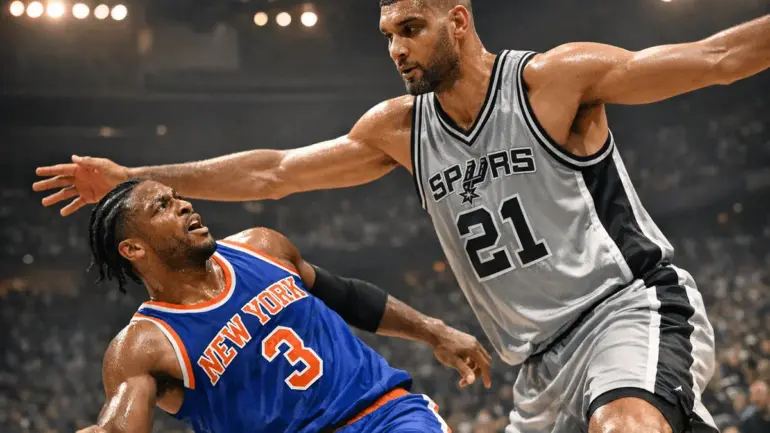
Jalen Brunson was shoved by Victor Wembanyama in the first quarter of NBA Finals Game 3, officials swallowed their whistles, and the clip was spreading across every major platform before halftime. When asked about the play postgame, Brunson delivered exactly 8 words: “whatever you saw is what you saw.” That response – measured, pointed, and deliberately unfinished – became as viral as the shove itself.
The Knicks lost 115-111, their 13-game playoff winning streak snapped by a Spurs team that won in large part because Wembanyama was genuinely brilliant. But the non-call and its aftermath have given this Finals something beyond box scores: a flashpoint with staying power, the kind of moment that pulls in audiences well beyond the hardcore NBA base and doesn’t let go.
What Actually Happened – The Full Sequence
Early in the first quarter, with the game still finding its physical register, Wembanyama shoved Brunson – a two-handed push that sent the Knicks point guard stumbling and drew immediate broadcast attention. Officials on the floor did not whistle a foul, which procedurally closed the door on any flagrant review, since that process is only triggered by a live-action call. The play stood.
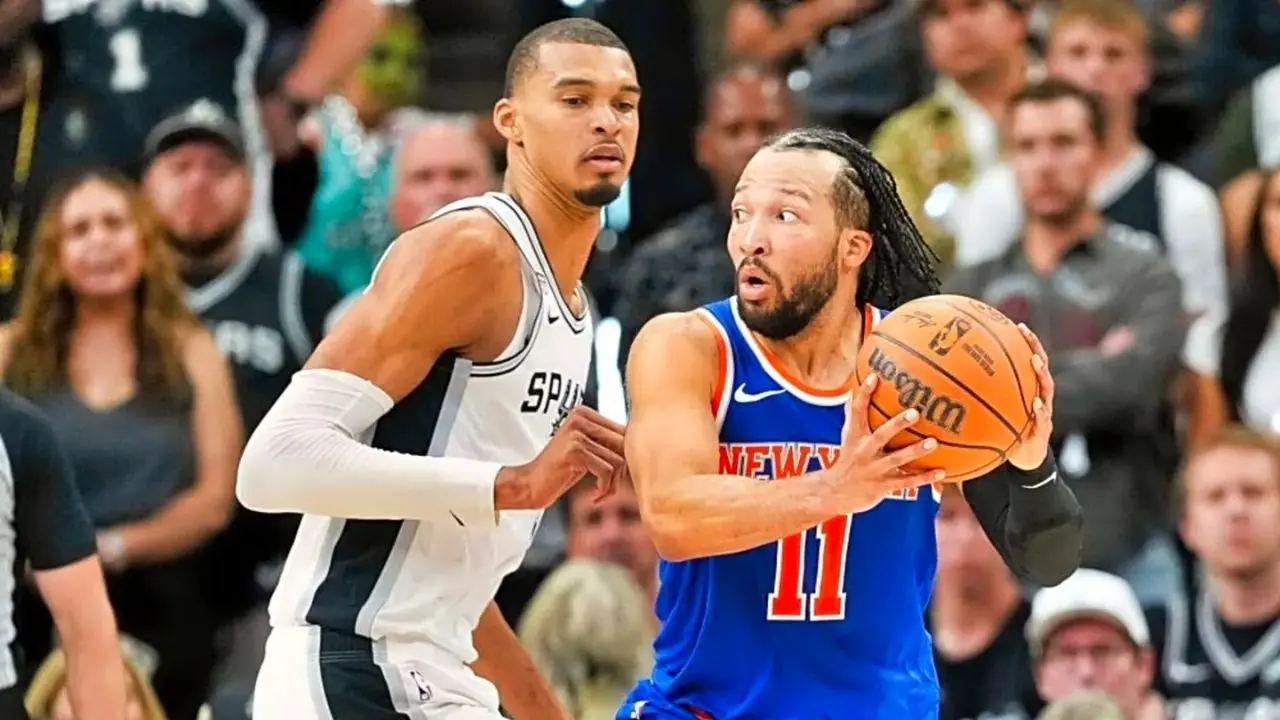
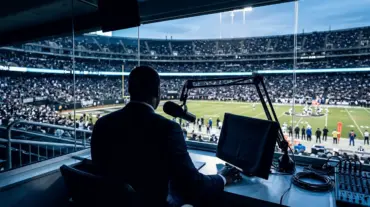
Broadcast analysts were less willing to let it stand. Richard Jefferson, calling the game, argued the contact should have been assessed as a flagrant 1 – a designation that would have meant free throws and possession for New York. The clip circulated immediately on video platforms, and fan reaction amplified it further, with the sequence framed widely as one of the most consequential non-calls of the postseason. The physical tone only escalated from there: Josh Hart received a technical foul in the first quarter after a separate shoving exchange with Luke Kornet, and Brunson himself was assessed a flagrant foul in the third quarter for a reckless closeout that invaded Julian Champagnie‘s landing space on a 3-point attempt. Later, Stephon Castle put Brunson on the floor with a forearm during a rebound battle – that play was reviewed and still did not rise to a flagrant.
Postgame, Brunson declined to elaborate. Knicks head coach Mike Brown was less restrained, telling reporters: “There were opportunities for fouls to be called to at least try to even the free throws out. Now, we didn’t play good. San Antonio played great. We could have played better, there were a lot of things that we could have done that we did in Game 1 and Game 2. But to get 24 free throws in the second half? … All the shots we took, we got fouled four times, roughly, for eight free-throw attempts? … That’s tough to overcome when you’re playing a great team.” The Spurs finished with a 32-22 free-throw attempt advantage, 24 of those attempts coming after halftime.
Brunson, Wemby, and the Dynamic – Why This Has This Kind of Pull
Brunson‘s 8-word non-answer is doing more analytical work than it appears to. It is not silence – it is a carefully constructed refusal to give officials, the league, or the Spurs anything to respond to. Coming from a player who has been carrying New York‘s offense through 13 straight playoff wins, and who scored 32 points in this very loss – his highest total of the series – the composure reads as competitive discipline rather than indifference. Brunson is not going to hand anyone a bulletin board. He has been that kind of player all postseason, and the high-emotion atmosphere surrounding him in this series makes that restraint more conspicuous, not less.
Wembanyama‘s side of this is structurally different. The shove is a departure from the version of Wembanyama most casual observers have been sold – the elegant, almost cerebral big man who alters games with positioning and length rather than aggression. His Game 3 line (32 points on 11-of-18 shooting, 8 rebounds, 6 assists, 3 blocks in 39 minutes) is the performance of a player fully in command. The shove complicates that portrait in a way that generates friction – and friction is exactly what drives clip engagement. For context on how Wembanyama has navigated on-court intensity throughout this series, the Mitchell Robinson technical rescinded after a separate Wembanyama altercation illustrates how physical the margins of this matchup have already been.
The series backdrop amplifies everything. The Knicks are chasing their first championship in 53 years. Brunson is the player they’ve built that chase around. A no-call that potentially cost them momentum in a game they lost by 4 is not a minor detail – it is a narrative pressure point with genuine stakes attached.
The Social Mechanics – Why This Travels Beyond the Core Audience
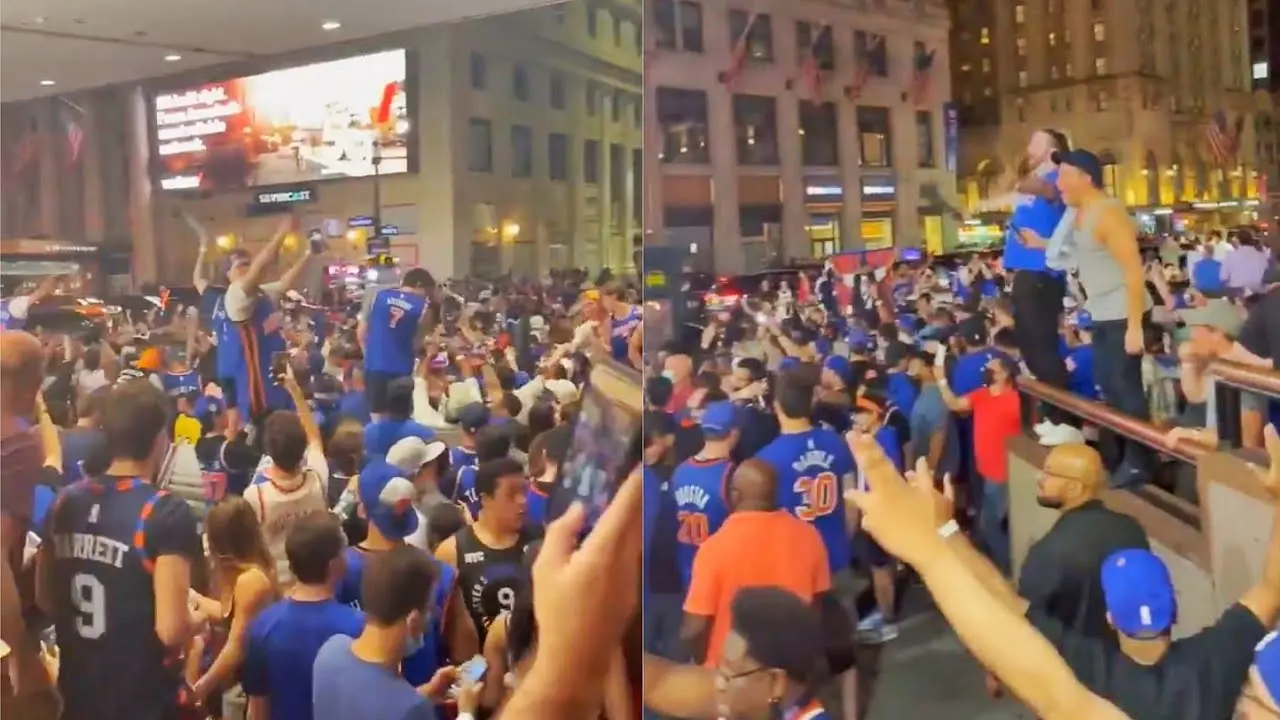
At least 4 distinct audience communities are distributing this clip along completely separate tracks, and the non-overlap between them is what makes the total reach compound rather than add. Core NBA Finals viewers are engaging with the officiating argument – the flagrant standard, the free-throw disparity, and what Brown‘s postgame comments signal about how New York is processing the loss. That conversation is happening on sports-specific forums and comment sections and is driven by people who watched every minute of the game.
Knicks fans are operating on a completely different emotional frequency – this is a 53-year drought, the shove hit their best player, and the no-call came in a game their team lost by 4. Their distribution is grievance-fueled and high-volume, the kind that generates thousands of quote-posts rather than shares. Wembanyama‘s growing global fanbase is engaging with a different frame entirely: their player had a historically efficient 32-point Finals performance and the physical edge reads, to them, as competitive assertiveness rather than a violation.
The 4th lane – and the one that extends reach furthest – is the casual social media sports audience that has no rooting interest but is drawn to the combination of a superstar reaction clip and a genuine officiating controversy. This audience does not need to care about the Finals series to share a 15-second video of a shove and an 8-word response. That is the lane where clips escape sports media entirely and reach general entertainment audiences, which is exactly what the tracking data on this video suggests is happening.
What’s Confirmed and What Isn’t
What is confirmed: Wembanyama shoved Brunson in the first quarter of Game 3. No foul was called on the play in live action. Because no foul was called, no flagrant review was triggered. The Spurs won 115-111. Brunson scored 32 points. Wembanyama scored 32 points on 11-of-18 shooting with 8 rebounds, 6 assists, and 3 blocks. The free-throw attempt split was 32-22 in favor of San Antonio. Brunson‘s postgame quote is on record and has been widely reproduced. Brown‘s officiating criticism was delivered in full at the postgame press conference.
What is not confirmed: whether the NBA will issue any retroactive disciplinary review of the shove, whether either player will address the incident further before Game 4, the precise reach figures for the clip across platforms, and whether the officiating approach changes in subsequent games as a result of the scrutiny this sequence has generated. None of those outcomes can be inferred from what is currently on the record.
What to Watch Next
Game 4 is the most obvious forward signal. Watch specifically for how officials manage contact between Brunson and Wembanyama in the paint and on off-ball actions – referees do not exist in a vacuum, and a sequence that generated this much public and broadcast attention will be part of the officiating conversation heading into the next game. If the whistle tightens around those interactions, it directly benefits New York‘s ability to attack the paint; if it doesn’t, Brown‘s postgame comments will look prescient rather than reactionary.
The second signal to track is Wembanyama‘s on-court demeanor. His Game 3 combination of elite efficiency and physical aggression is a version of him the Spurs clearly benefit from – but it also invites retaliation and official scrutiny that could alter his foul situation in close fourth quarters. A Wembanyama in foul trouble is a structurally different game for San Antonio. The Knicks, trailing 2-1, need to find a way to exploit that equation before it becomes academic. For more on how Wembanyama has handled Finals pressure to this point in the series, his Game 2 turnover and the scrutiny that followed is worth revisiting as context for how he responds when the moment gets heavier.
For the latest on Jalen Brunson, Victor Wembanyama, the New York Knicks, and everything at the intersection of sports and culture, keep it locked to Sportscasting.com.