
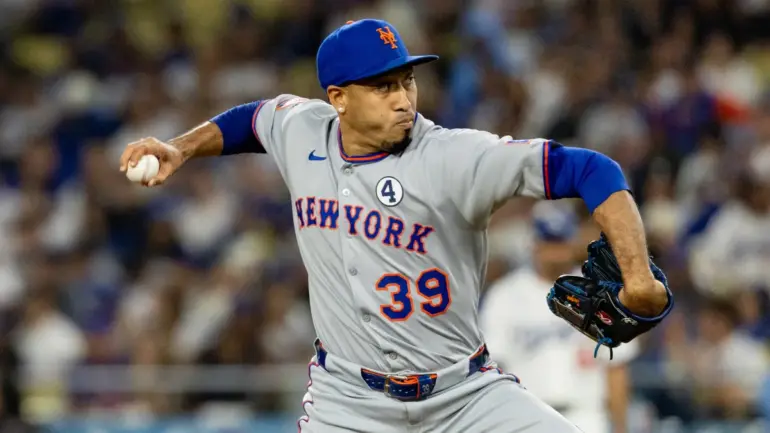
When Edwin Díaz signed a three-year, $69 million contract with the Dodgers Tuesday morning, the richest average annual value ever for an MLB reliever, the move sent another signal. It appears that elite players still see value in joining Los Angeles, even if the Dodgers aren’t always offering the absolute highest headline salary.
Top MLB Team Gets Stronger By Adding Elite Closer
Apparently, the draw isn’t just about money. According to multiple sources, it is likely that teams like the New York Mets or Toronto Blue Jays offered more money to Diaz, but the offer that he decided to accept was the one from baseball’s current dynasty. Instead, it appears to be about winning, stability, and being part of a championship-caliber roster.
Dodgers, RHP Edwin Díaz reportedly agree to deal, per multiple reports including MLB's @Feinsand.
(MLB x @CohnReznick) pic.twitter.com/MohlWwCOe7
— MLB (@MLB) December 9, 2025
That mindset has become part of what some players are willing to sacrifice in annual pay to be a “Dodger.” That’s been evident not just with marquee free-agents, but with veterans who’ve accepted what might be considered “team-friendly” deals because they view Los Angeles as a landing spot where their chances at a title improve dramatically.
This trend isn’t new. Over the past decade, multiple veterans and free agents have taken pay cuts to sign with the Dodgers. The franchise’s track record of postseason appearances and a strong clubhouse culture appear to have created a virtuous cycle.
The success attracts talent willing to compromise, which then helps sustain excellence. Multiple reports attribute certain signings to players preferring the Dodgers’ environment over higher offers elsewhere.
Dodgers Have Mastered The Manipulation Of Their Payroll
Another reason players (and the club) find deals with L.A. palatable is the Dodgers’ mastery of deferred-salary contracts. Rather than front-loading or evenly distributing pay, L.A. has frequently deferred significant portions of the total value into future payments. That allows the Dodgers to keep their immediate-year payroll and luxury-tax number manageable, while promising players long-term financial security.
It's hard to imagine that the Mets (or the Blue Jays) were outbid by these final contract numbers. The assumption here is that Edwin Diaz wanted to join the Dodgers, as many top free agents have chosen to do this decade. https://t.co/2V8POhupfi
— Spotrac (@spotrac) December 9, 2025
Shohei Ohtani, Mookie Betts, and Freddie Freeman (along with others) have all used this option in recent years.
With Díaz now in the fold for 2026–28, fans and league watchers will likely dissect what his deal says not just about L.A.’s spending, but about how desirable the Dodgers remain even for veterans who could chase top dollar elsewhere.
If this pattern continues, the Dodgers’ roster strategy may remain the envy (and frustration) of the rest of the MLB for years to come.