
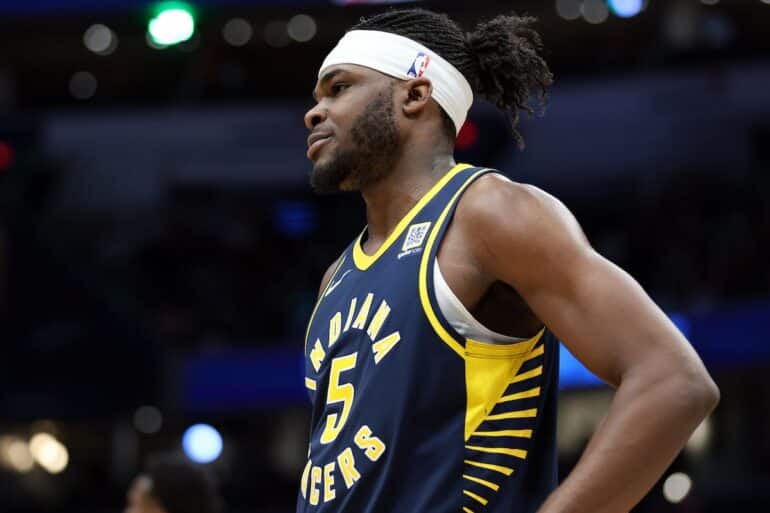
Through his first two NBA seasons, Jarace Walker fell down the path of many Rick Carlisle-coached young players, struggling to find consistent minutes. The Indiana Pacers’ eighth overall pick from 2023 logged just under 16 minutes per game last year, with his playing time fluctuating heavily throughout the season.
He barely contributed on the court during Indiana’s magical run to Game 7 of the NBA Finals. Walker recorded 117 playoff minutes before injuring his right ankle in the Pacers’ Game 6 Eastern Conference Finals win over the New York Knicks. His junior campaign will mark a pivotal turning point that Tyrese Haliburton’s season-ending Achilles tear magnifies.
In his sparse high-leverage NBA minutes so far, Walker adds value through splash defensive plays and efficient outside shooting. But he hasn’t earned Carlisle’s trust as a postseason rotation player. With Haliburton sidelined this upcoming season — which muddies Indiana’s 2025-26 title aspirations — Walker should have ample time to refine his defensive strengths and, most critically, crystallize his offensive role on the Pacers for the short- and long-term.
What Has Walker Shown Defensively?
Immense defensive potential drives a large portion of his upside. He’s already proven himself a solid professional defender through two seasons, with metrics like Defensive DARKO (plus-0.2) and Estimated Plus-Minus (minus-0.5) viewing the 21-year-old as a roughly neutral defensive player. Quick reflexes, unabashed aggression and size combine to make life challenging for Walker’s opponent. He unleashes all of his 7-foot-2 wingspan to plug passing lanes, pick out loose handles and block shots while defending the ball.
jarace walker ranked in the 80th percentile or better last year in steals/100 (2.2), blocks/100 (1.0), deflections/100 (4.3) and STOP% (2.9%)
a phenomenal chaos agent on defense for the pacers and a huge turnover creatoe pic.twitter.com/Syl5KUD7E3
— ben pfeifer (@bjpf_) July 19, 2025
In his second NBA season, Walker developed into a monstrous defensive playmaker, creating chaos on and off the ball for a strong Pacer defense. With Walker on the floor last year, opposing offenses increased their turnover rate by 1.3 percent (82nd percentile). He placed in the 80th percentile or better in steals (2.2), blocks (1.1) and deflections (4.3) per 100 possessions.
Inconsistent footwork and limited agility could cap Walker’s versatility as an on-ball defender, but his rim protection has been a larger problem so far. Despite solid block numbers, opponents shoot a staggering 13.9 percent better at the rim with Walker contesting. That’s the worst differential in the league by nearly five percent (second-place Norman Powell sits at 9.3 percent).
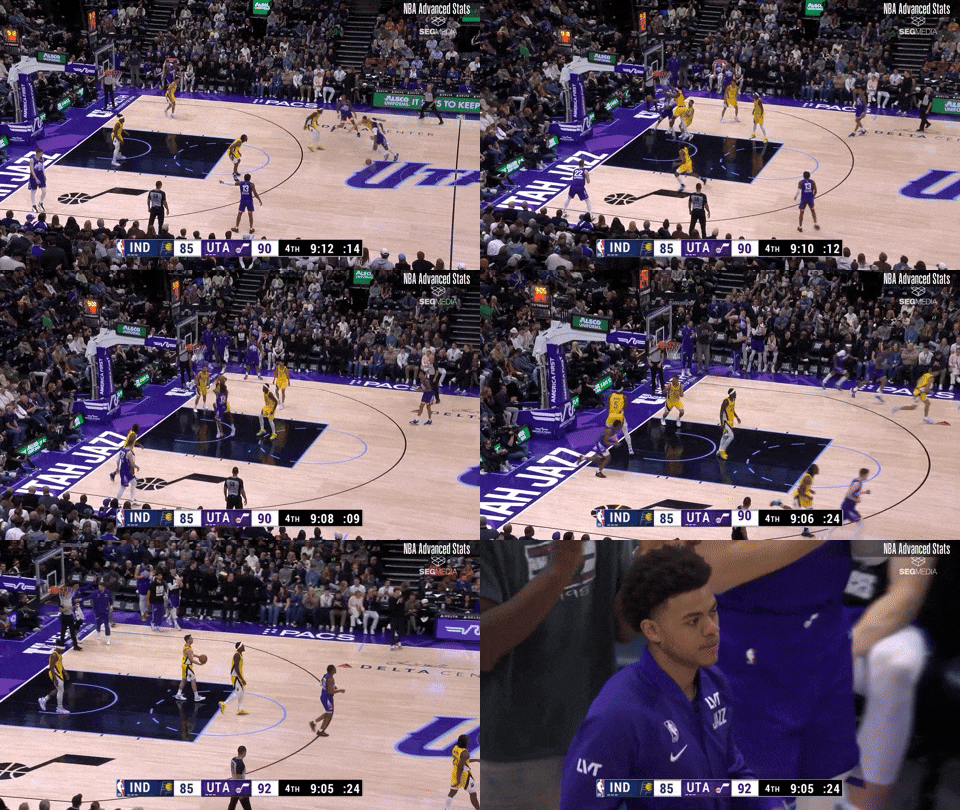
Moderate contesting volume and noisy tracking data likely exaggerate how poor Walker’s paint protection actually is. His rim protection as a helper and primary defender doesn’t match his positive block numbers, though. So many possessions featuring timely rotations end with opposing players shooting and scoring over Walker:
A Flawed Yet Intriguing Offensive Game
His defensive projection is smoother than his offensive one, though, especially in a complex and demanding Carlisle offense. As a sophomore, Walker averaged 6.1 points on an above-average 59.0 percent true shooting clip with a 1.5 assist-to-turnover ratio. However, all-in-one metrics like Offensive EPM view Walker as a 16th percentile (minus-2.8) offensive player, resulting from a lack of synergy between his on and off-ball repertoires.
Walker’s primary offensive strengths slant toward on-ball initiation. Through two NBA seasons, he’s developed into an impressive perimeter scoring threat. In his sole college season at Houston, he made 34.7 percent of his 6.3 3-point attempts per 100 possessions, compared to 40.5 percent on 7.5 attempts during his sophomore NBA season.
He’s quickly translated his intermediate scoring prowess to off-dribble shotmaking in the NBA. According to Synergy, Walker placed in the 86th percentile among all players for off-dribble shooting, making 38.2 percent of his threes and 43.8 percent of his midrange shots.
Though he netted an excellent 41.6 percent of his 137 catch-and-shoot threes last season, he processes the floor most comfortably on the move. With a ball-screen opening driving lanes, Walker hunts his floater, converting 45.5 percent of his runners and an elite 56.3 percent (96th percentile among small forwards) of his short midrange shots.
His most tantalizing on-ball moments come when Walker blends his midrange scoring and live dribble passing. It’s rare for taller players to boast his level of coordination and vision; only five other wings eclipsed a 12 percent assist rate and 45 percent shooting in the midrange last season (Kevin Durant, Aaron Gordon, Dyson Daniels, Vit Krejci and Kevin Huerter).
When defenders step up to guard Walker’s runner, he’ll lay passes down for layups and dunks. He’ll keep defenders in jail to maintain offensive advantages, which often forces unnecessary help Walker punishes with passes to every area of the court.
jarace walker's most impressive offensive moments so far come on the ball as a pick-and-roll handler, where he can best weaponize his touch and passing feel
per @databallr, walker's creation playtype freq (3.2/g) and rTS (+0.9%) ranked in the 70th and 75th %tile positionally pic.twitter.com/xiF904FvFk
— ben pfeifer (@bjpf_) July 19, 2025
How Walker Can Grow Offensively
Indiana has a forward-sized initiator with soft scoring touch and guard-caliber passing feel. Why can’t Walker develop into a full-time on-ball player? The first of a few major issues limiting his on- and off-ball offense is his poor ball control. Walker’s 16.8 percent turnover rate ranked in the 11th percentile league-wide last season.
Those giveaways result more from handling errors than passing ones; his creation-adjusted turnover rate (12.9 percent) ranked in the fourth percentile positionally last season. Without the help of a screen, he lacks the control and strength to hold up on the ball against better defensive players.
NBA players often improve their handles throughout their careers. While elite dribblers almost always possess that skill early, players regularly achieve a baseline of handling competency, especially young wings like Walker, who spent much of his youth career playing on the interior.
Walker’s indecision on the perimeter and unwillingness to accept physicality aren’t as simple to correct. When he totes the rock, he’ll methodically probe and wait for his chance to attack the paint or rise up for a jumper. That processing delay greatly hinders his off-ball value, particularly for a Pacers offense predicated on instantaneous decision-making.
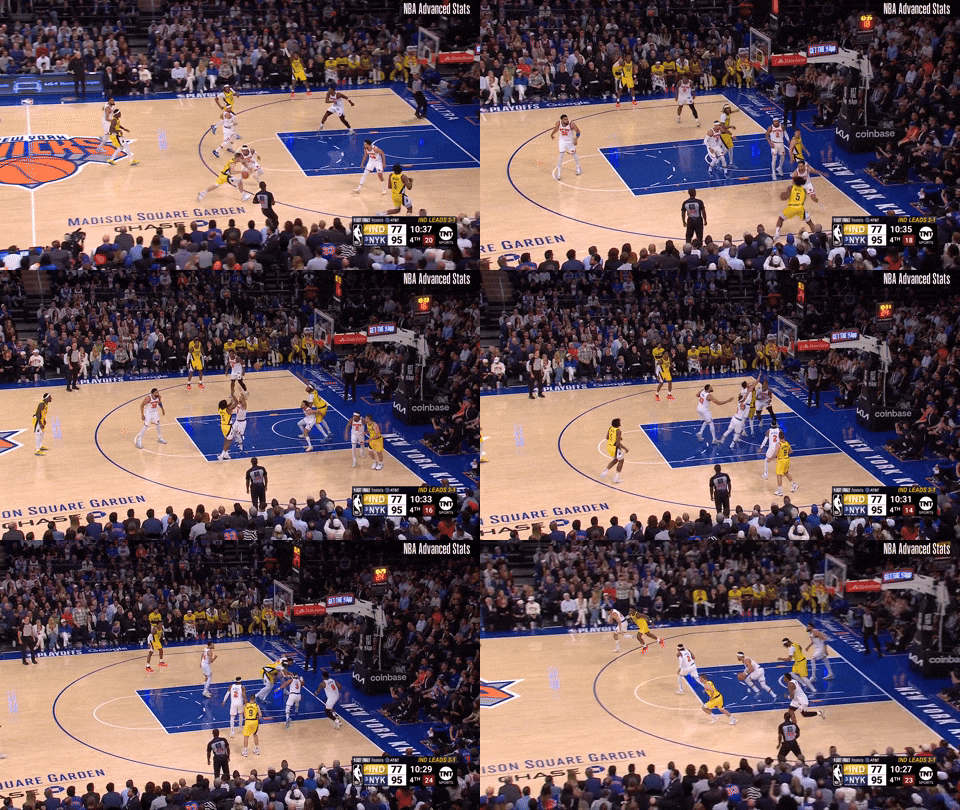
Rather than fluid, intentional attacking, Walker falls back on robotic, predetermined moves as an off-ball player. He loves flowing into a two-dribble pull-up or floater once defenders chase him off the line. When the Knicks step up to deny his jumper, Walker misses a tightly contested pass to Myles Turner for a turnover:
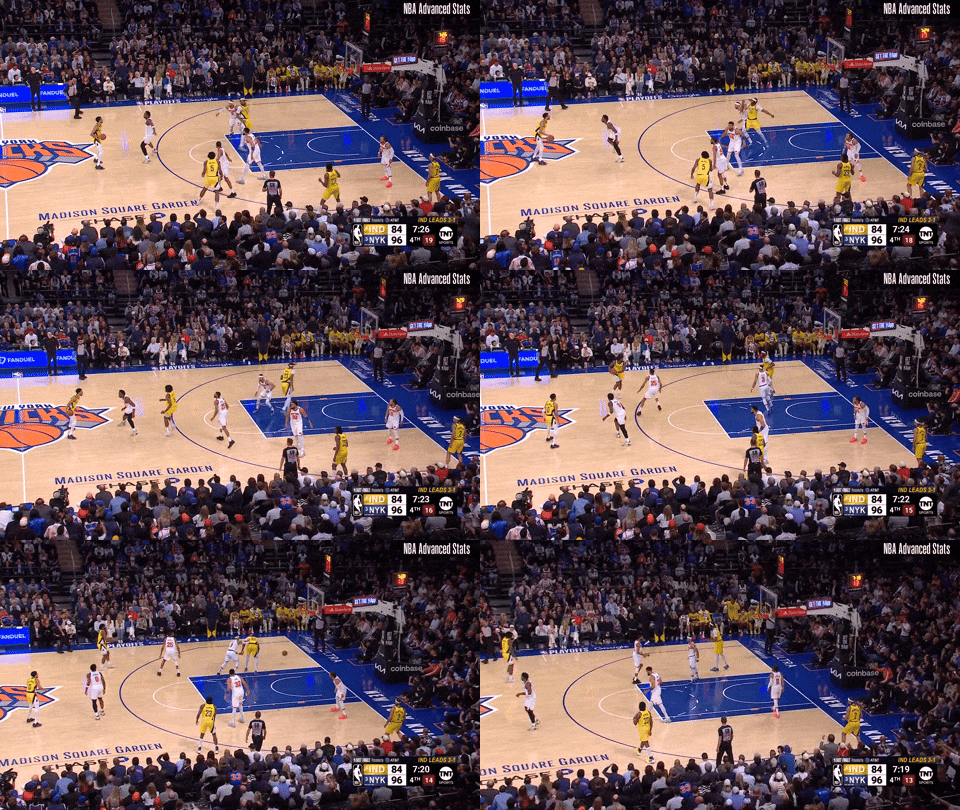
He’ll default to practice speed execution of Indiana’s offensive sets, auto-piloting this entry to Turner after a ghost screen. Walker calmly bounces the basketball to his center for a post touch, but with Josh Hart fronting hard, this hasty decision led to another giveaway:
Sharp defensive coaches exploit Walker’s indecision off the ball, especially as a shooter. Despite his efficient outside shooting on solid volume, the Pacers attempted (minus-2.2 percent 3-point frequency) and converted (minus-2.6 percent) fewer of their threes with him on the court last season.
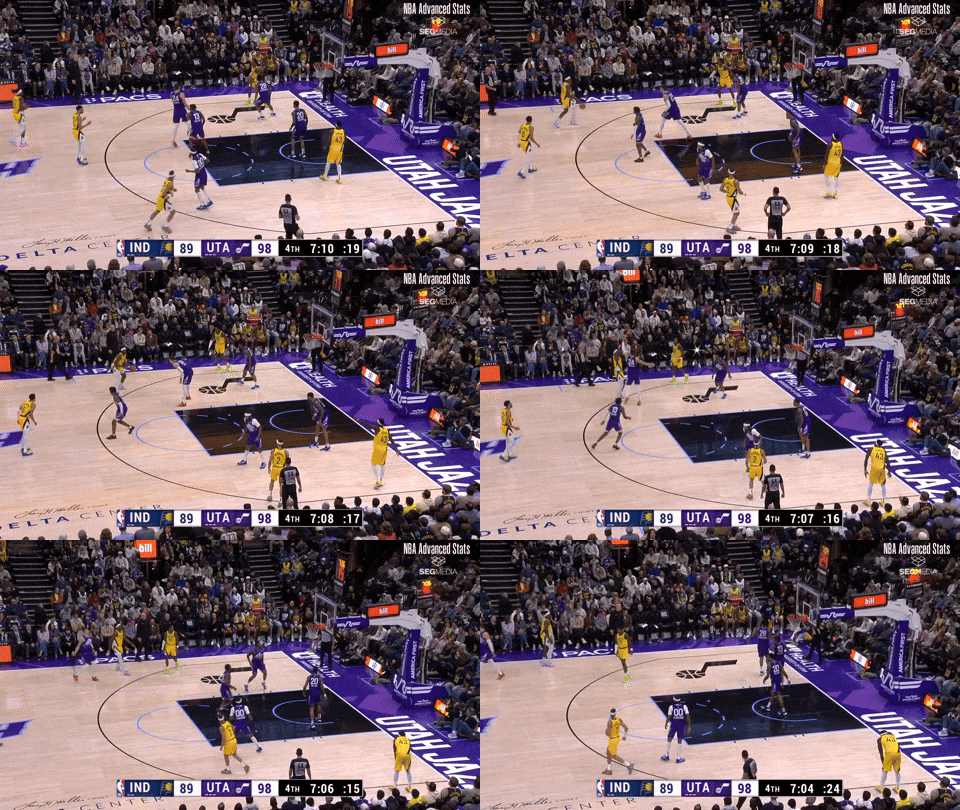
That trend stems from plays like this, where Utah Jazz head coach Will Hardy stations his center, Walker Kessler, on Indiana’s young wing. Kessler offers him plenty of space to fire a three off the catch or begin a drive, but Utah coaxes him into a lower-percentage pull-up triple instead:
Softer defensive coverages lure Walker toward a usually more difficult development path, growing into a high-usage on-ball scorer. At the tail end of his outcome range, there’s a plausible reality where he sharpens his process and reigns in his ball control, leaning on his off-dribble shotmaking and passing for star offensive impact.
To reach that level, he’d also need to pressure the rim more, which could come with handle and strength progression. At the moment, he relies heavily on his intermediate scoring, avoiding contact and physicality far too often. He attempted a meager 16.6 percent of his half-court shots at the basket last season with a poor 18.8 percent free-throw rate.
Many of those drives look something like the clips below in which Walker eschews contact, despite his impressive frame and skill. He’ll turn these slashing chances into lower-efficiency post-ups with his feathery touch acting as a crutch and not a benefit. These moments point to his weak vertical explosion, which also influences his aforementioned struggles protecting the rim.
to find a home in a great offense off the ball, jarace walker must improve his off-ball game. he's far too robotic and indecisive, leading to high turnover numbers
embracing physicality would help achieve that goal as well, helping boost his poor rim pressure and foul drawing pic.twitter.com/sRhtEHaQnr
— ben pfeifer (@bjpf_) July 19, 2025
Interior creation and finishing growth will also boost his ability to cut and attack closeouts. Both are critical for a future in Indiana. More realistic than evolving into an on-ball star is Walker becoming a malleable offensive weapon, as players like Obi Toppin, Aaron Nesmith and Pascal Siakam all have.
Walker’s on-ball scoring won’t be useless for the Pacers, offering another change-of-pace look to toss at opponents. But in the highest-leverage situations, he must capitalize when Haliburton and TJ McConnell force defenses into rotation.
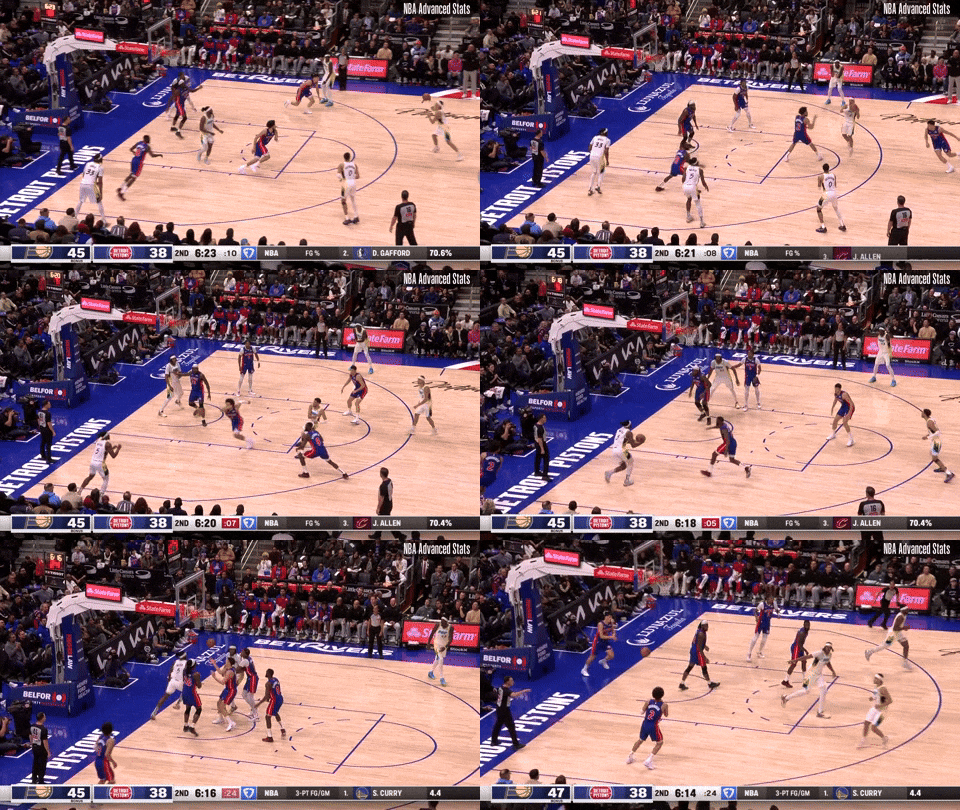
Playing patiently and confidently minimizes many of Walker’s issues against tilted defenses. Drawing hard closeouts will be integral to his status as an off-ball threat. But when he simply reacts to recovering defenders, he easily accesses his sweet-spot floater:
New Opportunities In Year Three?
Moments like these must become the norm rather than the exception for Walker. He’ll continue to bank on his defense for the moment, with upside to emerge as a strong, impactful playoff defender. His penchant for disruption and chaos fits with the NBA’s trend toward aggressive, turnover-forcing game-plans.
With Haliburton sidelined for an entire season, more on-ball reps will open up in Indiana’s offense. Though the Pacers will push for a playoff berth in a weak Eastern Conference, they’d be wise to elongate Walker’s leash. He must continue developing positive habits that accentuate Indiana’s offensive flow, even without Haliburton as the engine, rather than leaning into his often stagnant tendencies.
Unlike his defense, Walker’s offense doesn’t mirror the NBA’s current meta. With quick decision-making and off-ball shooting as valuable as ever, his methodical on-ball creation could fade him into the background. Finding a balance among his shotmaking, passing and off-ball play will determine whether Walker blossoms as a two-way star central to the Pacers’ long-term plans.