

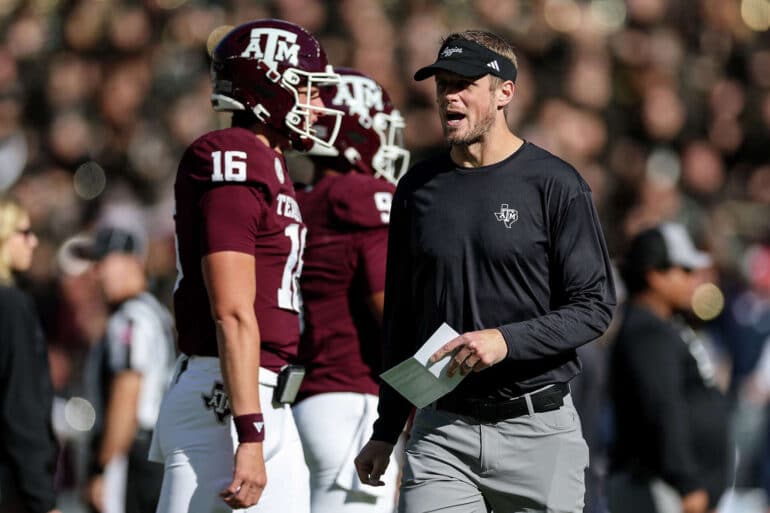
Long-time Wildcats star and current Texas A&M OC Collin Klein is reportedly returning to Kansas State as head coach
According to multiple outlets, longtime Kansas State quarterback and current Texas A&M offensive coordinator Collin Klein is expected to return to Manhattan as head coach, replacing Chris Klieman, who is stepping away from the program.
Even though nothing has been signed publicly, sources say the move is all but done, and a formal announcement could come as early as this week.
Kansas State is a strong program with familial-like bonds. It’s no surprise this move was made with privacy and professionalism.
The perfect, dream scenario for K-State was hiring Collin Klein, and they did it.
Happy for you, K-State friends, and good luck 🫡 pic.twitter.com/GyNwsiMYtS
— Zachary (@osuzack) December 3, 2025
The school has scheduled a press conference originally set for early December, signing-day remarks. That event is now expected to include the announcement of the coaching change.
Klein, 36, returns to his alma mater after a coaching journey that included stints as Kansas State quarterbacks coach and offensive coordinator, before moving to Texas A&M in 2024 to run a high-powered Aggies offense.
For fans and alumni, the possible hire carries both nostalgia and hope: a former Heisman finalist and program hero is coming back, this time to lead.
Why this feels like a perfect fit for both parties
Klein’s roots at Kansas State run deep. He starred at quarterback for the Wildcats from 2008 to 2012, leading them to a Big 12 title and finishing as a Heisman Trophy finalist in 2012.
That legacy gives him instant credibility with the fanbase, recruits, and boosters alike.
More recently, at Texas A&M, Klein helped engineer a dramatic offensive turnaround. The Aggies’ offense surged in 2025, rising to a top-tier national scoring and yardage output.
Texas A&M OC Collin Klein has discussed with school officials a potential transition from A&M to Kansas State, per ESPN sources. He intends to stay with the Aggies through the College Football Playoff, as Chris Klieman would coach through Kansas State’s bowl game. pic.twitter.com/GB1zhPFqVr
— Pete Thamel (@PeteThamel) December 3, 2025
That performance, under high pressure and in the SEC, demonstrated that Klein’s system works beyond just sentimental value.
For Kansas State, which finished the 2025 regular season 6–6 after a season marked by inconsistency, the move delivers what the program hasn’t had in a while: a young, energetic coach with deep ties to the school, recent offensive success, and a vested interest in restoring the Wildcats to prominence.
What lies ahead: opportunity, pressure, and uncertainty
Klein inherits a program with a storied history but recent turbulence.
Under Klieman, the Wildcats were generally stable, even capturing a conference title in 2022. But the 2025 season’s mediocrity underscored deeper challenges: offensive consistency, recruiting volatility, and adapting to NIL-era dynamics.
Klein’s mandate will likely be aggressive: rebuild culture, energize recruiting, modernize offense, and re-establish Kansas State as a Big 12 contender.
To the top assistant coach in the country.
Collin Klein has been named a @BroylesAward Semifinalist.#GigEm | https://t.co/JYyq3sFrn4 pic.twitter.com/tOl31CUdSY
— Texas A&M Football (@AggieFootball) December 2, 2025
Given his background and system knowledge, he offers a credible path to deliver on those goals.
Still, the pressure will be immediate. Expectations from alumni, donors, and fans will be high, and patience could be thin if results don’t follow quickly.
He’ll need to balance reverence for the legacy with innovative strategy, a challenge in any first head-coaching job.
Additionally, with departures to the NFL and transfer-portal movement common in college football, roster turnover could pose early obstacles.
Klein’s recruiting chops and familiarity with Kansas State’s identity may help, but this won’t be a guaranteed transition.