
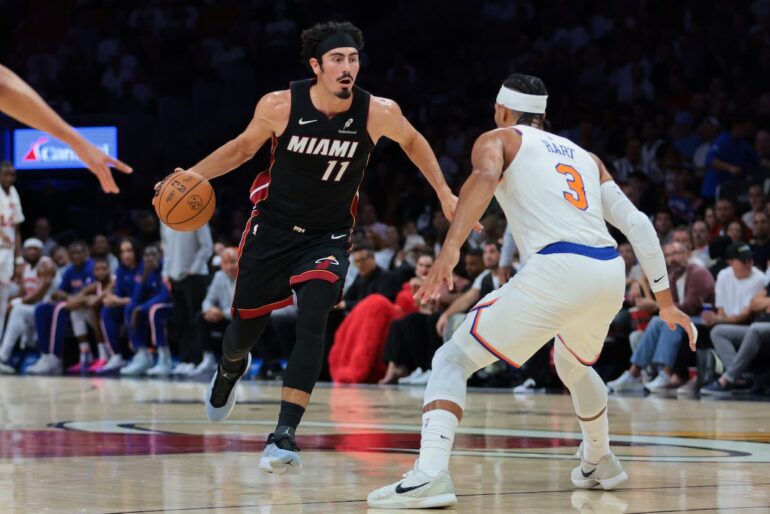
By the end of his rookie campaign, I had grown quite fond of Jaime Jaquez Jr. and his potential as an NBA player, even envisioning him as someone who could make an All-Star appearance or two at the height of his powers. Fellow media members seemed to agree with my assessment, crowning him with All-Rookie First Team honors that season.
However, Jaquez’s career took a downward spiral in year two. As his averages plummeted across the board, he found himself out of the Miami Heat’s rotation by the end of the season — eclipsing 10 minutes played in a game just once during their first-round series against the Cleveland Cavaliers.
Jaquez seemed primed to follow in the footsteps of Michael Carter-Williams, who peaked as a rookie before the league caught on to this tricks and rendered him ineffective. But here we are three games into the Heat’s season and they’re 2-1, despite being missing Tyler Herro and facing three playoff hopefuls.
While all of the credit doesn’t fall on his shoulders, Jaquez has played a big role in this impressive start, averaging 15.7 points on 70.8 percent true shooting. Not only does he look like his old self, but he may have even reached another level.
But how did this happen? And how likely is Jaquez to keep this up?
Playing To His Strengths
The first thing I tend to do when evaluating a player’s hot start to the season is look at their 3-point shooting. Shot-making comes and goes, and a player’s statistics are heavily impacted by how well they shoot from outside. If a player is shooting over their head from downtown early on, it’s likely their first lap around the track is an aberration.
The neat thing about Jaquez’s strong start is he hasn’t even hit a single three! In 84 minutes of action, Jaquez is o-of-4 beyond the arc. But that’s OK because 3-point shooting has never been a strength for him. No threes, no problem!
Instead, he’s focused on getting his points the old-fashioned way: through the midrange, shots at the rim and free throws. These shots are more in Jaquez’s wheelhouse, leading to a massive spike in overall efficiency.
He’s getting to take more of these shots because he’s spending more time as an initiator with Herro out,. Last season, 47.9 percent of his field goals were unassisted. This year, that number is up at 59.1 percent. As a result, Jaquez can dictate the looks he’s getting rather than having to be spoon-fed his shot diet.
Most players are more efficient when they can operate as play-finishers, capitalizing on advantages created for them by their teammates. Jaquez is an exception to the rule, though. His flawed outside shot and lack of functional hops (I know he was in the dunk contest but that doesn’t mean he’s a good in-game lob threat) make him a weaker floor-spacer, which is why someone like Pelle Larsson earned more minutes than him last postseason.
But by playing on the ball, Jaquez can showcase the footwork, balance and craft that make him an NBA-level player.
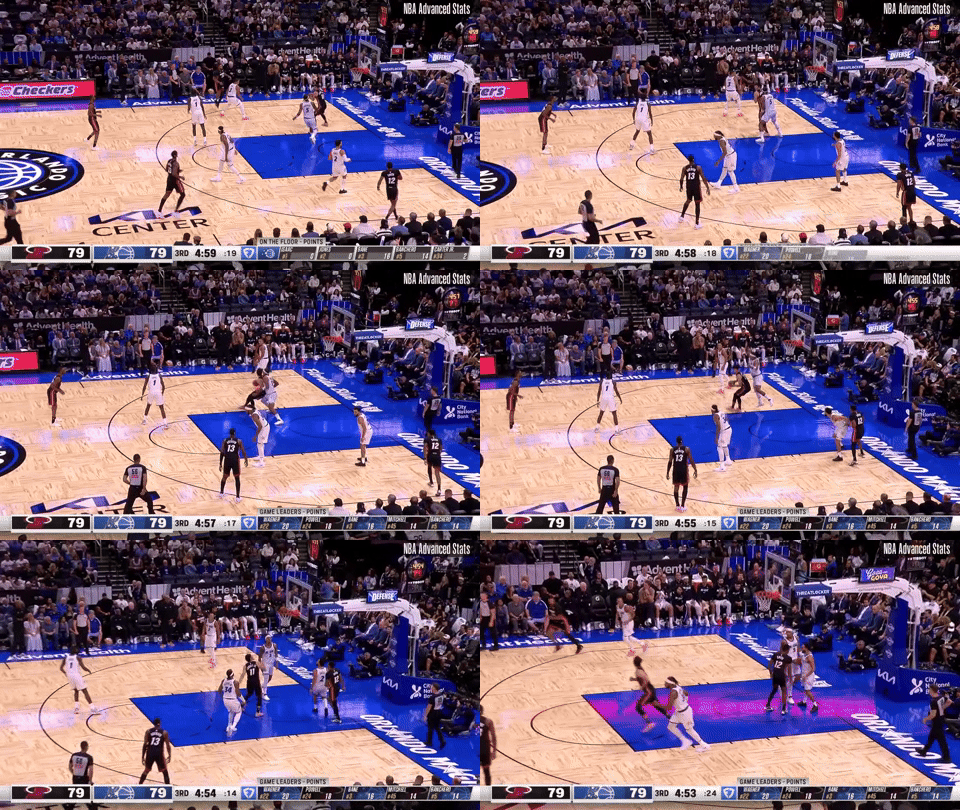
Another superpower of Jaquez’s is his supreme feel for the game. As an off-ball player, he demonstrated this through timely cuts and backside rotations. But again, because of his poor in-game verticality (30th percentile in block rate last year, per Dunks & Threes), neither of those contributions were strong enough to nullify his weaknesses.
With the ball in his hands, though, Jaquez is a good passer, using his understanding of where everyone is on the floor and how they’ll react to certain movements. It’s early but his potential assists per game is nearly double (9.3) his previous career-high (4.7, per NBA.com).
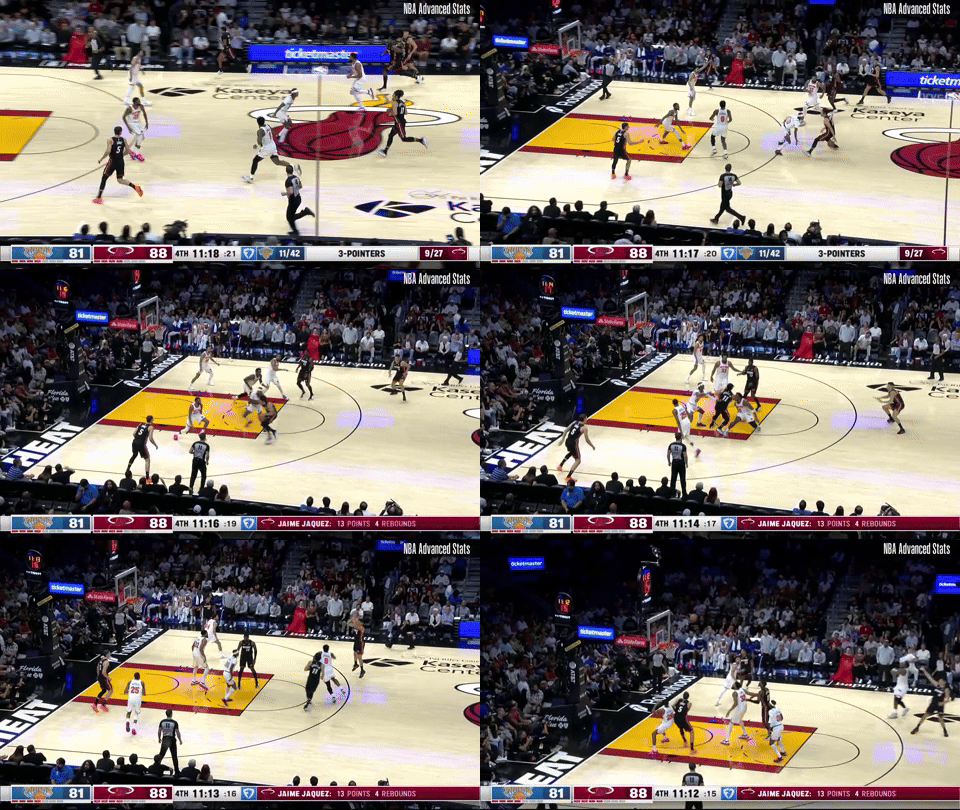
Plus, the Heat’s emphasis on playing faster this season — they’re currently second in pace after finishing 28th last year — benefits Jaquez. He can attack the rim without as many bodies in the paint, which better allows him to hide his subpar handle.
Can Jaquez Continue His Impressive Play?
Jaquez will not continue to shoot 88.9 percent at the rim or 66.7 percent from the midrange. But there is cause to believe he can continue as one of the better sixth man options in the Association.
His usage will surely decrease when Herro returns to the lineup. But even with Herro, on-ball creation is going to be a need for the Heat. Last season, they were 21st in percentage of unassisted field goals, and that was with Herro appearing in 77 of 82 games. Norman Powell was brought in to provide a boost in this category but he’s more of a pure scorer than a balanced playmaker. Outside of Herro, Jaquez may be their best off-the-dribble passer, which means he’s also one of their best creators.
The Heat just need to make sure they still prioritize Jaquez when Herro comes back. Put him in lineups that allow him to have the ball in his hands and act as a primary/secondary decision-maker. Fortunately, Herro and Powell are both excellent shooters, so they should have no issue taking on more of a spacer role in those minutes.
Shooting and athleticism will likely keep Jaquez from reaching the low-end All-Star ceiling I once thought was possible for him. But his savvy and smarts are enough to ensure he is still a productive basketball player in this league, so long as he’s able to thrive in the right environment — just as he has to open the 2025-26 season.