

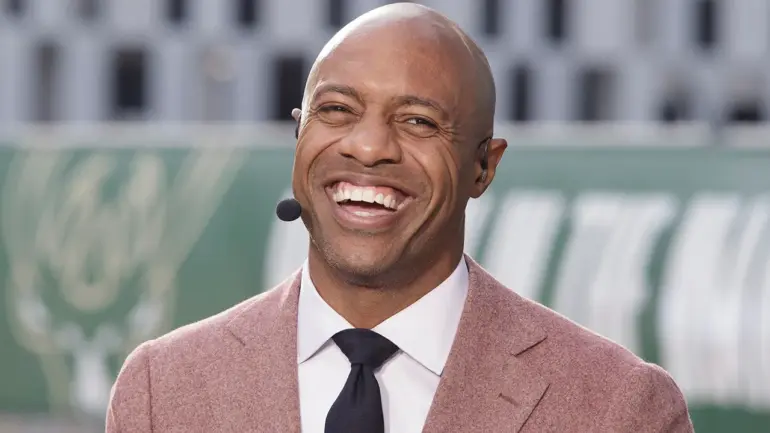
Bracket predictions are supposed to capture the chaos of March Madness. Upsets, double digit seeds, and one unexpected team crashing the Final Four are part of the tradition. ESPN analyst Jay Williams apparently skipped that memo.
Side by side screenshots of his recent NCAA Tournament brackets have started circulating online, and the pattern is impossible to miss. In both 2025 and 2026, Williams filled his Elite Eight entirely with No. 1 and No. 2 seeds. Every region. Both years. Not a single lower seed making the final eight.
For an event famous for wrecking perfect brackets within the first two days, that level of predictability stands out.
Jay Williams NCAA Tournament Bracket Picks Go Full Chalk Two Straight Years
This is why ESPN pays Jay Williams the big bucks. 🤣 #MarchMadness pic.twitter.com/CamBI2u9UT
— College Sports Only (@CSOonX) March 16, 2026
The comparison started gaining attention after viewers looked back at Williams’ 2025 bracket and compared it to the one he revealed this week for the 2026 NCAA Tournament.
The structure is nearly identical.
In 2025, his Elite Eight consisted entirely of No. 1 and No. 2 seeds:
- Auburn vs Michigan State
- Duke vs Alabama
- Florida vs St. John’s
- Houston vs Tennessee
Every single matchup featured the top two seeds in that region.
Then the 2026 bracket arrived.
The same approach appeared again:
- Duke vs UConn
- Arizona vs Purdue
- Florida vs Houston
- Michigan vs Iowa State
Once again, every region ended exactly where the seeding suggested it should. There is no room for Cinderella stories in Jay Williams’ world.
Just the top two seeds across the board.
March Madness Brackets Rarely Stay Chalk This Long
The reason fans immediately noticed the pattern is simple. The NCAA Tournament almost never unfolds like this.
Upsets define the event. Lower seeded teams regularly reach the second weekend, and every few years a true long shot breaks through the bracket entirely.
Recent tournaments have seen No. 15 seeds knock out No. 2 seeds, double digit teams reach the Elite Eight, and unexpected programs storm the Final Four.
Even when favorites dominate a region, it rarely happens across the entire bracket.
Predicting all four Elite Eight matchups to feature the top two seeds in a region once would already be aggressive. Doing it two years in a row suggests Williams trusts the seeding list more than the madness part of March Madness.
Jay Williams Picks Arizona To Win 2026 National Championship
After advancing the same seed pattern through the bracket, Williams projected Arizona, Duke, Florida, and Iowa State as his Final Four teams for 2026.
He ultimately selected Arizona to win the national championship over Florida. They are currently the favorites at around +350 with top sportsbooks. Very on-brand for Williams.
Every region followed the same script. Higher seed wins. No surprises.
That approach might feel logical when filling out a bracket on television, but history suggests the NCAA Tournament rarely cooperates with neat predictions.
Fans Point Out The Same Problem With ESPN Brackets Every Year
Part of the reaction comes from how fans treat their own brackets. Millions of people fill them out knowing the odds of perfection are microscopic, yet they still search for that one underdog run that could separate their picks from everyone else.
When a national analyst submits a bracket that mirrors the seeding chart, the response is predictable.
If the tournament follows the seeds exactly, everyone would look brilliant. But that outcome would also erase the unpredictability that makes March Madness popular in the first place.
Jay Williams is far from the only analyst who leans toward safe picks. Still, seeing the exact same Elite Eight formula appear two years in a row makes his brackets feel less like bold predictions and more like a carefully color coded version of the bracket sheet.
The NCAA Tournament has a habit of punishing that kind of confidence quickly.