
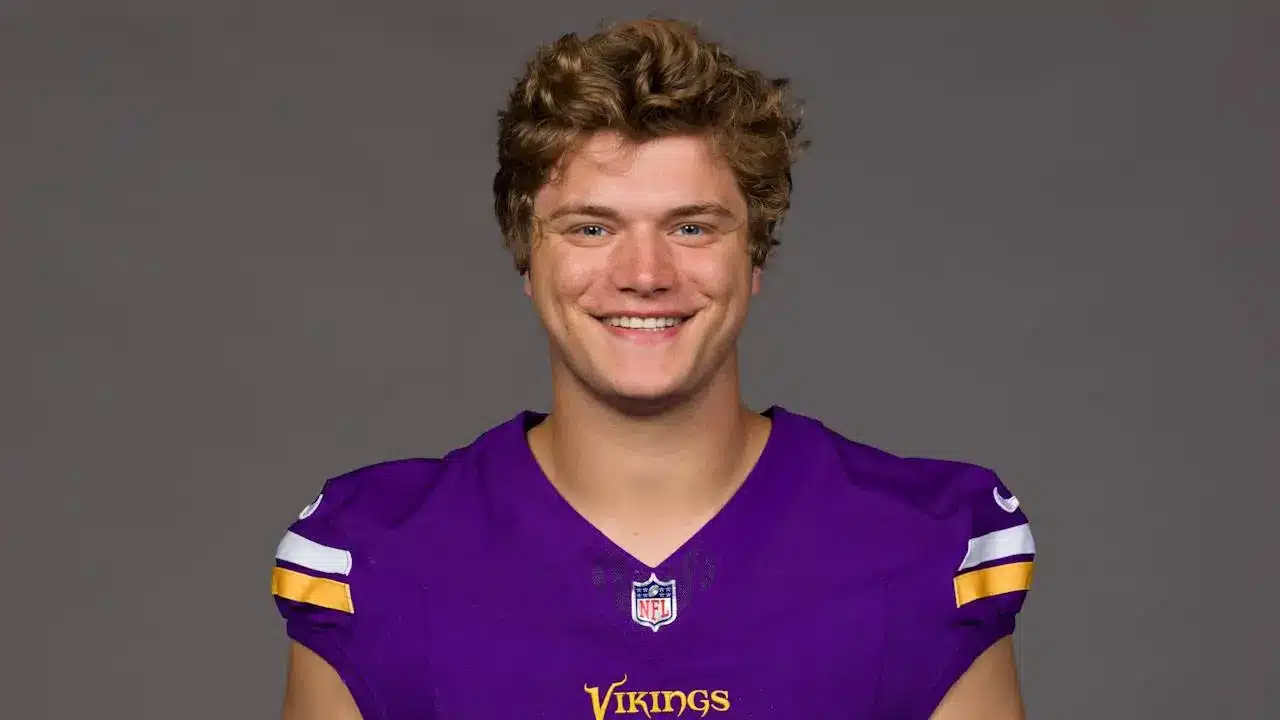
Kevin O’Connell didn’t have J.J. McCarthy at the top of his 2024 draft board, according to Vikings legend Cris Carter, who said on the “Fully Loaded” podcast that fired general manager Kwesi Adofo-Mensah was the one driving the pick.
That claim reframes everything about how Minnesota has handled the quarterback position since. The Vikings traded picks 11, 129, and 157 to the Jets to move up to 10th overall and land McCarthy, making him the highest-drafted quarterback in franchise history. If the head coach wasn’t the driving force behind that pick, the obvious question becomes what that means for McCarthy’s standing in 2026.
What Cris Carter Actually Said About The J.J. McCarthy Pick
Carter said his sources told him McCarthy was “the general manager’s guy, not the coach’s guy,” pushing back on the long-standing narrative that O’Connell hand-picked McCarthy as his future franchise quarterback. Adofo-Mensah had final say as the team’s roster-builder, but the expectation inside the building had always been that he’d defer to O’Connell’s expertise on the quarterback specifically. Carter’s account suggests that isn’t what happened.
Adofo-Mensah was fired after the 2025 season, and Carter’s claim adds a new layer to why that split may have occurred. If the coach and GM weren’t aligned on the most important pick of the O’Connell era, that tension may have been building for some time before it became public.
What The 2024 Draft Landscape Actually Allowed
Context matters here. McCarthy was the fifth quarterback taken in the 2024 draft, behind Caleb Williams (1st, Bears), Jayden Daniels (2nd, Commanders), Drake Maye (3rd, Patriots), and Michael Penix Jr. (8th, Falcons). Any preference for a quarterback ranked ahead of McCarthy would have required a prohibitively expensive trade into the top three. The price tag on those picks would have gutted the roster.
That context doesn’t make Carter’s claim less significant. It makes the internal dynamics more interesting. The Vikings front office and coaching staff may not have been aligned on the specific target, even if they agreed on the positional need.
J.J. McCarthy’s Draft Profile And What It Suggested
At Michigan, McCarthy completed over 67% of his passes with a low interception rate inside a run-heavy, defense-led championship program. Evaluators split sharply on him: high-efficiency traits versus a scheme that masked NFL-level processing demands. That same split at the scouting level may well have extended into the coaching staff and front office.
This is not a story about a bad quarterback. It’s a story about organizational alignment, or the lack of it, at the most important position in football. The Shedeur Sanders situation with the Browns showed how quickly front office and coaching disagreements over quarterback selection become public and destabilizing. Minnesota may be navigating a version of that same tension, just with different names attached and a GM who has already lost his job.
The Kyler Murray Signing Adds A Layer For J.J. McCarthy
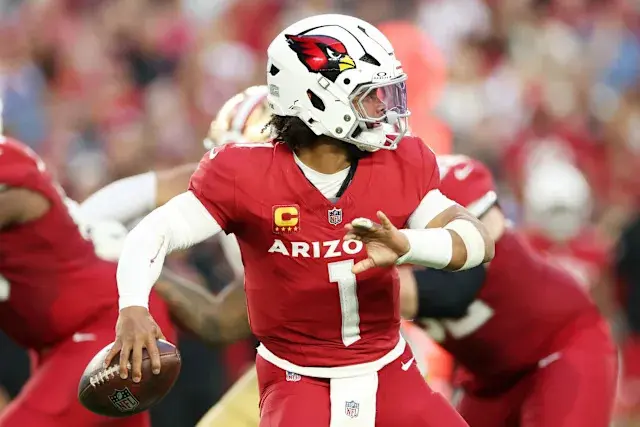
McCarthy enters 2026 with competition at the position after Minnesota signed Kyler Murray in free agency. O’Connell has said he will not name a Week 1 starter before training camp practices begin, which keeps the scrutiny around how much organizational conviction actually existed behind the 2024 pick very much alive. A top-10 investment competing with a veteran free-agent signing two years later is a difficult situation to explain away as routine roster depth management.
The Vikings do hold significant cost-controlled leverage regardless of how this competition shakes out. As a top-10 pick, McCarthy is on a standard four-year rookie deal with a fifth-year team option, giving Minnesota rights through 2028. That structure matters alongside Justin Jefferson’s megadeal and other core contracts eating into cap space. Cheap quarterback years are valuable no matter who actually wanted him on draft night.
Training Camp Will Force A Decision On J.J. McCarthy’s Future
O’Connell has been clear that no Week 1 starter will be named before training camp gets underway, which leaves McCarthy’s status genuinely open heading into camp. Rep distributions, injury risk, and whatever O’Connell’s real scheme preferences turn out to be will shape that decision quickly once practices begin. NFL training camp quarterback competitions have a way of producing surprises that preseason reports don’t anticipate.
How Minnesota uses McCarthy in 2026 will directly determine whether the fifth-year option gets exercised. That decision, in turn, will reveal whether this regime is building around its 2024 first-round pick or quietly moving on, regardless of who actually wanted him in the draft room back in 2024.