
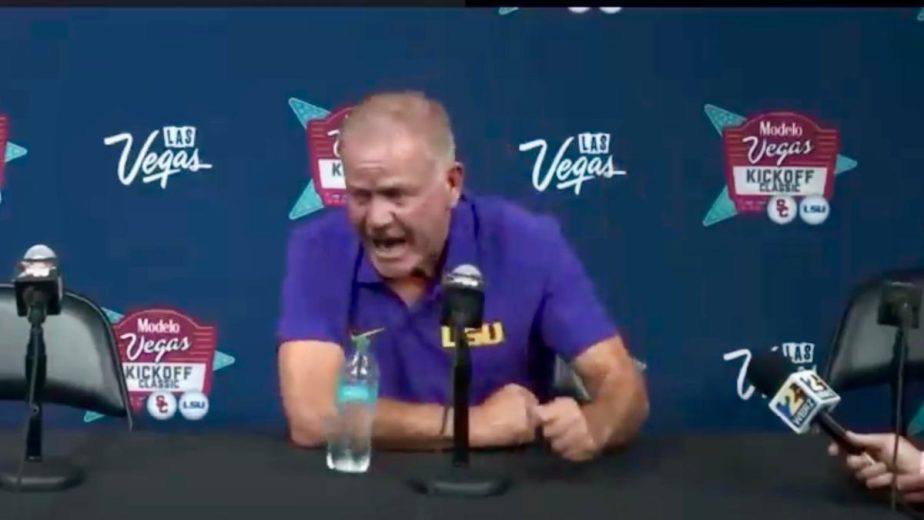
Brian Kelly’s fight with LSU has quickly become one of the strangest coaching disputes in college football history. The school claims it never formally fired him, while Kelly’s lawyers insist he’s owed his full $56 million buyout. The question now is whether LSU can successfully argue that his termination was “for cause” or if this turns into one of the most expensive lawsuits a university has ever faced.
Why LSU Says Brian Kelly Wasn’t Formally Fired
LSU’s legal position hinges on process. Kelly’s attorneys say he was told he was out, and LSU started discussing buyout terms. But the university has since walked that back, arguing that no official termination ever happened under the procedures spelled out in his contract.
Under LSU’s reasoning, athletic director Scott Woodward may have overstepped. The school can claim that the firing announcement wasn’t properly executed through the president’s office or the Board of Supervisors. That technicality matters, because without a formal written notice, the contract’s payout clauses might not have been triggered.
This “not formally terminated” argument also buys LSU time. It allows the school to complete the required notice process for a potential “for cause” termination before any buyout becomes enforceable. In plain terms: LSU can still argue Kelly is technically employed until it finishes its paperwork.
For Cause vs. Without Cause Explained
College coaching contracts typically have two paths for firing: with or without cause.
- Without cause means the coach is let go for performance or philosophical reasons. LSU would owe Kelly his full buyout, in this case, around $56 million.
- For cause means LSU claims he breached the contract through misconduct, NCAA violations, or other behavior that damages the university. If proven, LSU owes nothing beyond what’s already earned.
For LSU, shifting from “without cause” to “for cause” could save tens of millions. But it’s a high bar to clear. They need to show credible, documented violations that meet the definitions in Kelly’s contract.
Grounds LSU Could Use To Claim ‘For Cause’
The contract reportedly gives LSU several possible “cause” categories. Here are the most plausible ones the school could try to invoke:
- NCAA Violations: If LSU believes Kelly or his staff committed major recruiting or compliance violations, they can argue those constitute “material and substantial” NCAA rule breaches, enough to trigger cause.
- Serious Misconduct or Moral Turpitude: The deal allows firing if Kelly acted in a way that “displays serious disrespect for the mission of LSU” or constitutes moral misconduct. That could include unprofessional conduct or ethical breaches.
- Failure to Supervise: LSU could argue lack of institutional control over staff or players, especially if infractions occurred under his watch. That’s often a fallback clause in these contracts.
None of these arguments have been proven publicly. Kelly’s team will likely respond that LSU’s reasons are post-hoc, invented to escape paying the full buyout after firing him for performance.
Could Brian Kelly Really Owe LSU Money?
If LSU convinces a court that Kelly was terminated for cause, the tables turn. Not only would he lose the $56 million buyout, but the school could argue he owes them damages or repayment of bonuses already paid under the contract. That’s unlikely, but technically possible under certain “clawback” provisions tied to misconduct.
Kelly’s lawyers are instead arguing LSU is in breach, seeking the full payout plus interest. The “for cause” stance looks more like a bargaining position to reduce that number through settlement.
Does LSU Expect Him To Return?
Legally, LSU saying he hasn’t been “formally terminated” leaves open the absurd possibility that Kelly is still the head coach. No one expects him to show up at practice, but the language is at least interesting. Until the process is complete, LSU can argue the employment relationship technically remains active, even if it’s only on paper.
What Happens Next
This will likely move toward discovery and settlement. LSU will try to find grounds that justify cause, while Kelly’s side will push to prove the school simply fired him for losing games. The case will hinge on timing, notice, and whether LSU can back up its claims with documented misconduct.
If LSU loses, it could owe Kelly nearly the full $56 million. If it wins, it might avoid paying a cent. For now, the only certainty is that one of the most expensive divorces in college football history is far from over.