
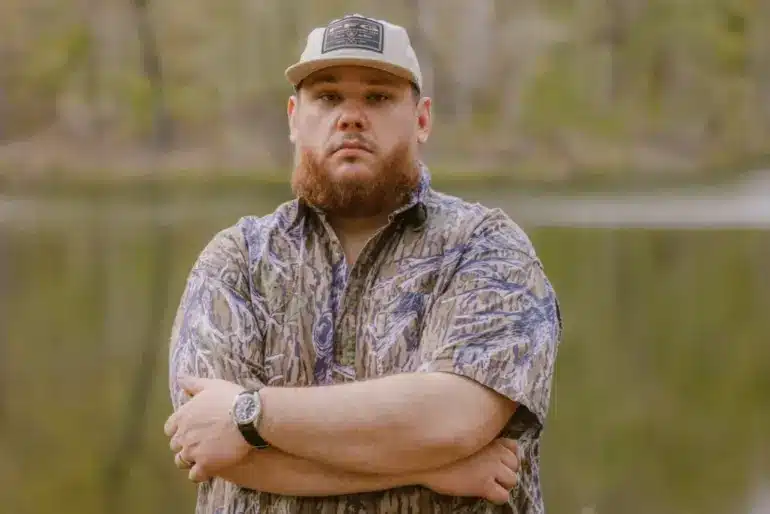
College football donors have quietly been asking the same question since NIL arrived. What exactly are they buying? Country music superstar and Appalachian State supporter Luke Combs just said the quiet part out loud. During a recent appearance on the Bussin’ With The Boys podcast, Combs explained that he has not donated any NIL money to App State and would only consider doing so if players signed multi-year contracts. His reasoning was blunt. He wants guarantees that the players being funded will actually stay at the school.
That one comment sparked debate across college football because it highlights the biggest tension in the NIL era. Boosters are funding rosters while the transfer portal allows those same players to leave almost immediately.
Luke Combs NIL Comments About Appalachian State Football Explained
Combs remains one of the most recognizable public supporters of Appalachian State football. The North Carolina native attended the school beginning in 2008 and built much of his early music career playing bars in Boone before moving to Nashville.
Despite that connection, he made it clear that he has not donated to the Mountaineers’ NIL efforts.
“I’m not donating,” Combs said while discussing the topic. “I need some concessions. I need some assurances.”
Those assurances revolve around contract length. Combs said he would only consider writing a check if players signed two-year deals instead of short agreements that allow them to transfer immediately after getting paid.
His point reflects a concern that many Group of Five programs share. When a player breaks out at a smaller school, larger programs can often lure that athlete away through the transfer portal and bigger NIL opportunities.
Why Luke Combs Wants Two Year Contracts In NIL Deals
The NIL system was designed to let athletes profit from their name, image, and likeness. In practice, collectives funded by boosters now pool money and distribute it to players through endorsement agreements.
That structure creates a strange situation for donors.
Boosters can invest thousands of dollars in a player only to watch him enter the transfer portal months later. Unlike professional sports, there is no standardized contract structure that locks athletes into a program.
Combs’ proposed solution is simple.
- Players sign at least two year NIL agreements
- Boosters know their investment stays with the program
- Roster stability improves for smaller schools
Whether that idea is realistic is another question entirely. NIL deals are technically endorsement agreements rather than employment contracts, which makes enforcement tricky when players transfer.
Luke Combs Suggests Appalachian State Should Return To FCS
The NIL conversation was only part of the debate. Combs also floated an idea that immediately stirred up the App State fan base.
He suggested that the Mountaineers might actually have a better chance to compete for championships if they returned to the FCS level. The logic behind that statement is tied directly to the money gap growing across college football.
Power conference programs now raise tens of millions of dollars in NIL support every year. Group of Five schools such as Appalachian State operate in a completely different financial environment.
Combs essentially argued that the sport has become so money driven that programs like App State are being squeezed out of realistic championship contention.
That opinion obviously clashes with the identity of the Mountaineers program, which built its reputation on giant-killing wins and its move to the FBS level in 2014.
Luke Combs NIL Debate Shows The Biggest Problem In College Football
The reaction to Combs’ comments has been split.
Some fans praised him for saying what many boosters privately believe. Others criticized the idea that athletes should be locked into longer deals in a system that was created to give players more freedom.
Regardless of where someone lands in that argument, the conversation highlights a deeper issue. College football is currently operating in a space somewhere between amateur sports and professional sports. Players can earn money, but there is no uniform contract system. Boosters can fund athletes, but they have little control over roster stability.
Luke Combs did not create that tension. He simply summarized it in one sentence. If donors are going to fund college football rosters, they want to know those rosters will still be there next season.