

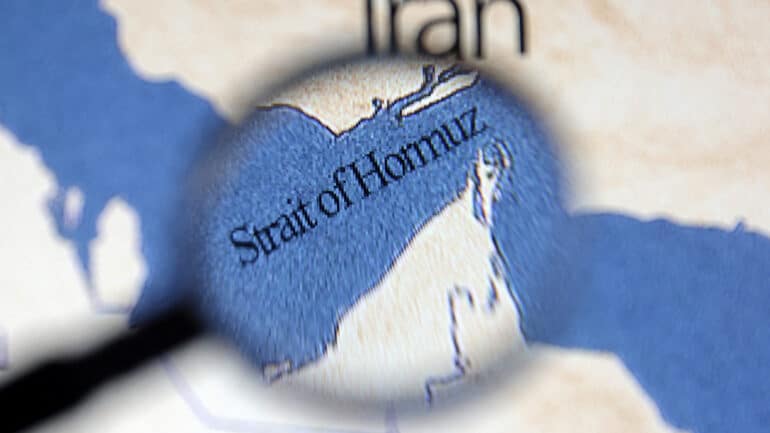
Traders who piled into a live Polymarket contract tied to Iran and the Strait of Hormuz say the ground shifted beneath them. What began as a headline driven geopolitical wager quickly turned into a rules fight, after the market’s resolution language was allegedly updated midstream to include a hard statistical threshold for what counts as a “closure.”
The dispute centers on a June 30 outcome tied to whether Iran would close the Strait of Hormuz. Early trading activity spiked after multiple major outlets reported developments around shipping and regional tensions. Minutes later, according to traders, the market’s definition of “closure” was revised to require an 80 percent or greater drop in a seven day moving average of vessel transits compared to the seven day average 30 days earlier.
Polymarket Iran Strait Of Hormuz Market Sparks Trader Backlash
i'm genuinely pissed…
bought yes shares on "will Iran close the strait of hormuz by june 30"
minutes later the closure was announced by multiple credible sources such as Axiom, Reuters
only to then see that the resolution criteria was updated with additional infos:… pic.twitter.com/XTS72Vay2x
— koozy.pm (@koozy_pm) March 1, 2026
Participants argue that the contract initially read like a common sense geopolitical market. If Iran halted or severely restricted maritime traffic, “Yes” would resolve. That interpretation aligns with how similar headline driven markets have traded in the past, especially when based on official announcements and credible reporting.
The addition of a precise quantitative benchmark changed the calculus. Instead of relying on government statements or broad shipping disruption, resolution would hinge on shipping data and a defined 80 percent collapse in traffic. Traders holding “Yes” positions say that effectively raised the bar after money had already been committed under a different understanding.
Price action appeared to reflect that shift. The market swung sharply toward “No,” with some participants claiming the rule clarification triggered a rapid repricing across the order book.
Strait Of Hormuz Closure Definition At Center Of Dispute
The Strait of Hormuz carries a significant share of global oil shipments, so even temporary threats often move markets. However, geopolitical language and shipping data do not always move in lockstep. A government might announce a closure or issue warnings, while actual vessel traffic continues at reduced but measurable levels.
By tying resolution to an 80 percent decline in a seven day moving average, the contract would require near total paralysis of maritime activity. That is a much higher threshold than many traders believe was implied by the original wording.
Critics say that when money has already changed hands, adding a statistical test shifts risk in a way that advantages one side of the book. Supporters of the platform counter that clarification is necessary to prevent ambiguous resolutions and post event disputes.
Polymarket Rules And Market Clarifications Explained
Polymarket operates on published market rules and a formal resolution process. The market page typically governs outcome criteria, and clarifications can be issued to define terms more precisely. Once an outcome is proposed, it moves through an oracle process that allows for challenges before final settlement.
The tension here is timing. Traders say that if a definition requiring an 80 percent drop had been present from the start, pricing would have looked very different. In fast moving geopolitical markets, even minutes can shape entry points and exposure.
The broader concern is perception. Prediction markets depend on trust that the rules traders read when they click buy are the rules that will ultimately determine payout.
Iran Strait Of Hormuz Shipping Data Versus Headlines
Another layer of the controversy involves what it actually means to “close” the Strait of Hormuz in modern markets. Shipping insurers, energy analysts, and governments often use strong language during crises. Yet full stoppages of traffic are rare, and partial disruptions can coexist with dramatic headlines.
If the resolution truly hinges on shipping flow data rather than official declarations, traders must evaluate satellite tracking metrics and vessel counts rather than news alerts. That changes the nature of the bet from geopolitical interpretation to quantitative maritime analysis.
As of now, the debate continues across social platforms and trading circles. Some see it as a necessary tightening of vague language. Others view it as a mid market pivot that altered risk after capital was already deployed.
For a platform positioning itself as a transparent alternative to traditional sportsbooks, controversies like this will draw scrutiny from both casual traders and high volume participants who expect consistency between headline and resolution.