
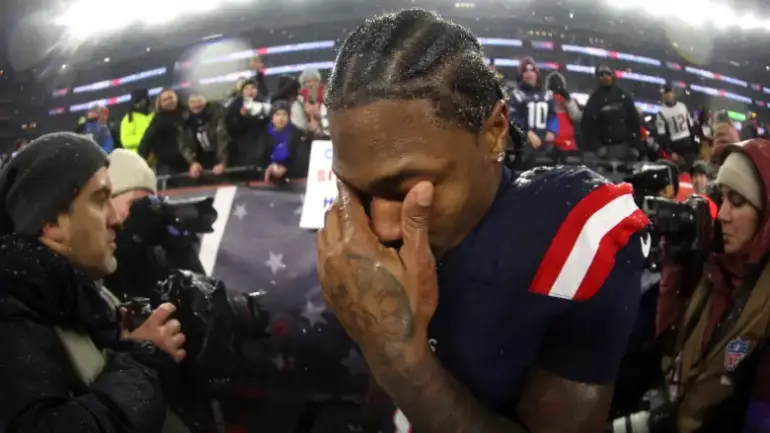
March 13 is the hard deadline that will define Stefon Diggs’ next chapter: stay in New England with a burdensome cap number or become the NFL’s most attractive veteran wideout on the market. He delivered a 1,000-yard season and accelerated Drake Maye’s rise, but the financial math, a looming $6 million guarantee and a projected $26.5 million cap hit, forces the Patriots to choose between short-term star power and long-term roster construction.
- $6 million guarantee hits March 13, creating an immediate keep-or-move decision.
- 1,103 regular-season receiving yards in 2025; about 110 postseason yards across four games.
- Projected $26.5 million cap hit for 2026 makes Diggs one of New England’s costliest roster pieces.
The Financial Crossroads
Patriots leadership faces a straightforward roster calculus: pay a 32-year-old WR top-15 money and constrain flexibility, or convert Diggs into draft capital and cap relief. He remains an elite route-runner and short-to-intermediate creator, but a hefty base salary and escalating cap number limit New England’s ability to shore up edge rush or tackle — areas that will determine whether this team sustains contention beyond a single Super Bowl run. There’s also the added complication of his pending legal troubles.
That forces two realistic paths: (1) trade him before March 13 for mid-round draft compensation while the guarantee is avoidable, or (2) keep and restructure if both sides agree on a cheaper, incentive-laden extension. A cut would be unlikely without certainty on dead-money impacts; a trade, however, preserves value for New England and gives contenders a proven WR1 option.
1. Indianapolis Colts
Why it fits: The Colts could lose Alec Pierce in free agency after his career year. Diggs would give Indianapolis a savvy, separation-driven veteran who wins quick and works the middle — a perfect complement to Michael Pittman Jr. and a cushion for Daniel Jones.
Financial and trade logic: Indy has motive and cap space to absorb a restructured deal. Expect the Colts to target a trade rather than outbidding the open market for Pierce; New England could reasonably ask for a late second to mid-third-round pick depending on guarantees retained.
2. Houston Texans
Why it fits: C.J. Stroud is a franchise cornerstone and Houston is in win-now mode. Diggs adds a high-IQ, polished target who can operate in tight windows and close games — traits Texans coaching staff covets for postseason pushes.
Financial and trade logic: The Texans have draft capital and cap flexibility to offer a package that includes a mid-round pick and a roster player. Any deal would likely hinge on Diggs agreeing to a short-term restructure to align pay with Houston’s long-term plan.
3. Chicago Bears
Why it fits: Chicago’s immediate priority is supplying its young quarterback with a reliable safety valve. Diggs’ slot work and nuanced route tree provide the kind of instant-availability target the Bears lack — someone who can stabilize an offense when defenses key on primary threats.
Financial and trade logic: The Bears can offer New England a draft pick plus young depth pieces; moving Diggs to the NFC also removes the risk of facing him twice in a season. Compensation would probably land in the third- to fourth-round range if the Patriots include partial guarantee relief.
4. Detroit Lions
Why it fits: Detroit’s offense thrives on timing and precision. Amon-Ra St. Brown draws heavy attention; Diggs would be the polished counterpoint who beats man coverage and executes contested catches. He fits Dan Campbell’s win-now posture and Brad Holmes’ willingness to acquire high-upside vets.
Financial and trade logic: The Lions could offer a third-rounder and a late-round pick or a young role player. Detroit’s willingness to pay for immediate upgrades makes it a likely suitor should the Patriots opt to trade.
Trade Value and Realistic Returns
- Most plausible return: a late second- to mid-third-round pick if the acquiring team absorbs some guarantees or the Patriots retain money.
- Mid-tier return: third- to fourth-round compensation without guarantee retention.
- Cut scenario: unlikely unless New England wants immediate cap relief and accepts smaller dead-money consequences; this would eliminate trade value but free room to address multiple positions.
The Final Call
New England gained a season-defining piece in Diggs’ one-year rental. Now the franchise must decide whether keeping a proven WR1 is worth constraining its future. The smart play for the Patriots — and the most likely outcome — is to convert Diggs into draft capital via trade before March 13 unless a meaningful restructure is agreed. For contenders, he’s the low-risk veteran upgrade that can tilt tight games, and that makes him far more valuable as a buyer’s asset than as a luxury New England can comfortably afford.