
Stephen Curry has ended his sneaker free agency – and he did not land where anyone expected. Adrian Charania reported that Curry has signed a 10-year landmark partnership with Li-Ning, the Chinese sportswear giant, in what amounts to one of the most structurally unusual athlete-brand agreements in NBA history. This is not a signature shoe deal with a logo swap. It is something closer to a full business migration.
The deal effectively places Curry Brand – the sub-label Curry launched with Under Armour in 2020 – under Li-Ning’s umbrella, while preserving Curry’s authority to sign both male and female athletes to his own banner. The rest of this piece breaks down exactly what was agreed, why it matters beyond basketball, what could genuinely complicate it, and why this story has cultural momentum that reaches well past the NBA beat.
The Deal Details – Curry Gets an Expanded Runway, Li-Ning Gets a Global Icon at the Center of Its Brand Architecture
The confirmed structure is a 10-year partnership – a length that dwarfs most standard endorsement arrangements and signals that both sides are treating this as an institution-building exercise, not a marketing rotation. Specific financial terms have not been publicly reported, but the structural details are striking on their own. Li-Ning will manage Curry’s line of branded products across basketball, athleisure and lifestyle, and a full golf category, positioning Curry as a multi-sport lifestyle figure rather than a single-category endorser.
Sports marketing expert Wei Kan told the BBC the arrangement is “a step beyond” typical endorsement deals and “a real marker for the industry.” That framing holds up when you look at the specifics: Curry retains the ability to sign athletes to Curry Brand independently, meaning the sub-label survives and grows under Li-Ning’s resources rather than being absorbed and dissolved. Curry himself called it “the partnership of a lifetime,” writing publicly that “the future of Curry Brand lies with Li-Ning.”
For context on what a decade-long athlete commitment looks like in financial terms, Travis Kelce’s three-year, $54.7 million Chiefs contract generated significant attention for its structure – and that is three years in a sport with fully guaranteed money concerns. Ten years in endorsement terms is a different kind of bet entirely, and both sides are making it publicly and loudly.
Why This Deal Is Bigger Than Basketball – Li-Ning Just Acquired the Most Recognizable American Athlete Brand Outside of Jordan
Li-Ning is not a fringe player in global sportswear. The company operates more than 7,600 retail outlets and holds the status of official partner of the Chinese Olympic Committee – which means Curry Brand arrives in the world’s largest sports market with institutional infrastructure already in place. Plans are already circulating for Curry Brand-branded retail stores in both China and the United States, a brick-and-mortar ambition that echoes the Jordan Brand model but is now powered by a Chinese company operating at global scale.
Li-Ning already carries NBA names – Dwyane Wade, Jimmy Butler, CJ McCollum, and D’Angelo Russell have all worn the brand – but Curry is categorically different. He is a four-time NBA champion, the all-time leading three-point scorer, and a figure whose cultural footprint extends into golf, family media, and mainstream lifestyle spaces. Analysts are framing his signing as Li-Ning’s most significant international basketball acquisition to date, one designed to close the gap with Nike, Adidas, and rival Chinese brand Anta – whose own NBA roster includes Klay Thompson and Kyrie Irving – in the premium performance and lifestyle tiers.
The competitive context inside China matters here. Li-Ning, Anta, and 361° are fighting for dominance in a domestic market that is increasingly receptive to homegrown brands with elite Western athlete credibility. Curry is the most credible piece either side has moved yet. The NBA’s expanding cultural footprint – from viral court designs to global broadcast growth – only amplifies the backdrop against which this deal lands.
The Honest Pushback – Why This Isn’t a Slam Dunk Despite the Scale
Here is the honest pushback: Curry is 37 years old. A 10-year deal means the back half of this partnership is being underwritten almost entirely by his legacy and brand equity rather than his on-court production. Jordan Brand survived Michael Jordan’s retirement because the culture around Jordan transcended basketball; whether Curry Brand can replicate that trajectory is genuinely unproven territory.
There are also geopolitical optics that will not disappear quietly. OutKick and other commentators have already flagged the NBA–China dimension of the deal – a four-time champion and American cultural figure deepening a decade-long business commitment with a Chinese company will generate sustained political commentary, particularly in the current regulatory climate around U.S.-China business relationships. That is a real variable, not a fringe concern.
The counter to both points is significant, though. Curry Brand’s golf and lifestyle categories are specifically designed to operate beyond his playing days, and Li-Ning’s retail infrastructure gives those categories a distribution runway that Under Armour never matched. The geopolitical noise is real, but it has not materially damaged other NBA-adjacent Chinese brand relationships to date. The risk exists; it is not disqualifying.
The Viral and Social Upside – Curry Just Gave the Internet a Storyline It Will Argue About for a Decade
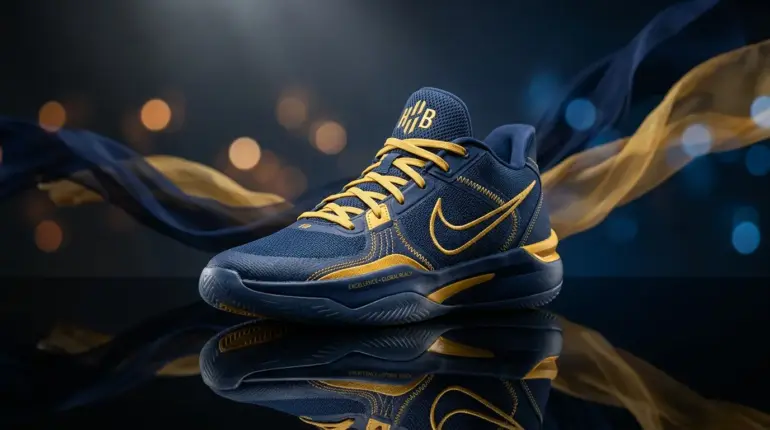
The social media landscape around this deal is not just sneakerheads debating colorways – though that is already happening, with fan forums buzzing about Curry Brand designs influenced by the Wade and Way of Wade aesthetic that Curry wore during his sneaker free agency. The broader cultural argument the deal generates is more durable: a marquee American athlete choosing a Chinese brand over the established Western giants is a genuine power-shift narrative, and those narratives have staying power across sports, business, and political media simultaneously.
Curry’s public persona – family-focused, golf-obsessed, Warriors dynasty legacy, openly faith-driven – gives him crossover appeal with audiences who do not follow the NBA box score. His wife Ayesha Curry’s media presence and the family’s collective brand footprint extend this deal’s reach into lifestyle and entertainment coverage in ways that a purely athletic endorsement cannot. The kind of multi-platform cultural visibility that surrounds celebrity-athlete crossover stories is exactly the lane this partnership is built to occupy – and Li-Ning clearly knows it.
Bottom Line
Stephen Curry’s 10-year Li-Ning deal is not just a sneaker signing – it is the most consequential migration of an established American athlete sub-brand to a Chinese company in the history of the sport. The structural details confirm that Curry Brand survives and scales under this arrangement, with basketball, golf, and lifestyle categories all in play and dedicated retail stores planned on two continents. The next observable milestone is the first wave of Curry Brand x Li-Ning product announcements and the naming of the first athletes signed under Curry’s banner – those moves will signal whether this partnership delivers on its stated ambition or remains a headline waiting for its proof of concept.