

As the NFL calendar flips to the 2026 offseason, the league’s front offices are facing a brutal reality. With the projected salary cap hovering around $303.5 million, the bill has officially come due for several veteran megadeals.
On Monday, Tyreek Hill was among the first NFL stars to become a cap casualty, as the Dolphins released him to free up $22.8 million off the books. But Hill isn’t the only big name wide receiver who could find himself on a new team next season.
Below, we’ll uncover five wide receiver cut candidates who could become cap casualties this offseason.
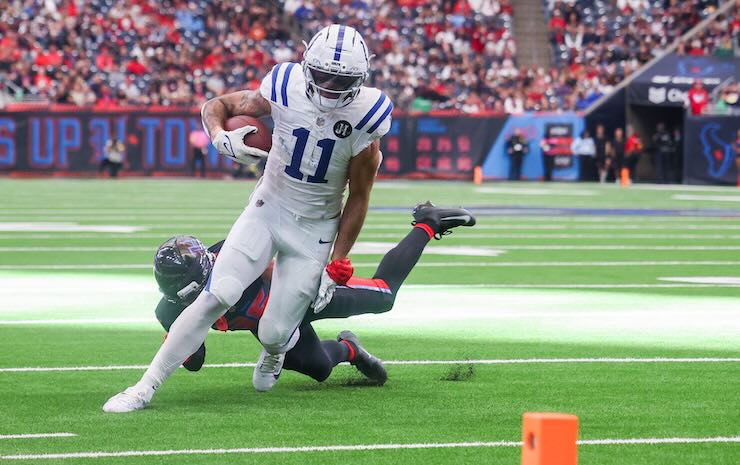
1. Indianapolis Colts: Michael Pittman Jr. (WR)
- 2026 Cap Space: $35,500,000
- Cap Savings: $24,000,000
The Michael Pittman Jr. era has likely reached its expiration date in Indianapolis. While Pittman has been a model of consistency, the 2025 season saw a seismic shift in the Colts’ hierarchy.
Over the past five seasons, Pittman averaged a healthy 950 yards and five touchdowns — solid numbers, but not great overall. Last season, Pittman posted a career-high seven touchdowns, but his receiving yardage total plummeted to just 784 yards, the lowest mark since his rookie year.
Alec Pierce emerged as the Colts’ best receiver and led the team in receiving. While Pierce is also a free agent, Pittman’s $29 million cap hit has become an impossible pill to swallow for GM Chris Ballard.
With a roster bonus due in mid-March and the team looking to secure a long-term deal for quarterback Daniel Jones, parting ways with Pittman is the most logical move. Cutting Pittman will free up $24 million in cap space and comes with a reasonable $5 million cap hit..
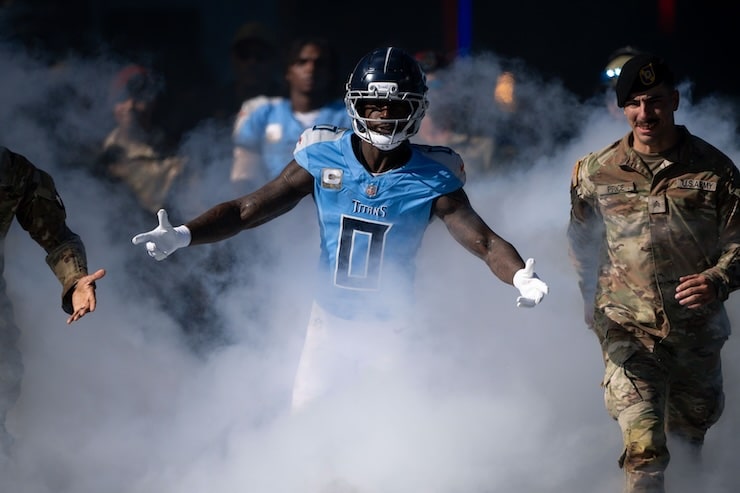
2. Tennessee Titans: Calvin Ridley
- 2026 Cap Space: $104,769,062
- Cap Savings: $18,700,000 (Post-June 1)
The Tennessee Titans already have the most projected cap space in the NFL, but that doesn’t mean the front office is content with wasting it on inefficient production.
Calvin Ridley’s tenure in Nashville has been defined by a lackluster 51.2% catch rate over the last two seasons. He posted a career-low 303 yards and no touchdowns in seven games and never quite looked like he was on the same page with former No. 1 pick Cam Ward.
After a fractured fibula cut his 2025 season short, the new regime under Robert Saleh has little incentive to pay Ridley his scheduled $21.8 million salary. Cutting Ridley after June 1 provides nearly $19 million in additional room, pushing Tennessee’s total cap space north of $120 million.
The added cap flexibility will allow Saleh to build a roster that matches his identity in free agency, while opening up the possibility of giving Ward some playmakers to work with in his sophomore year.
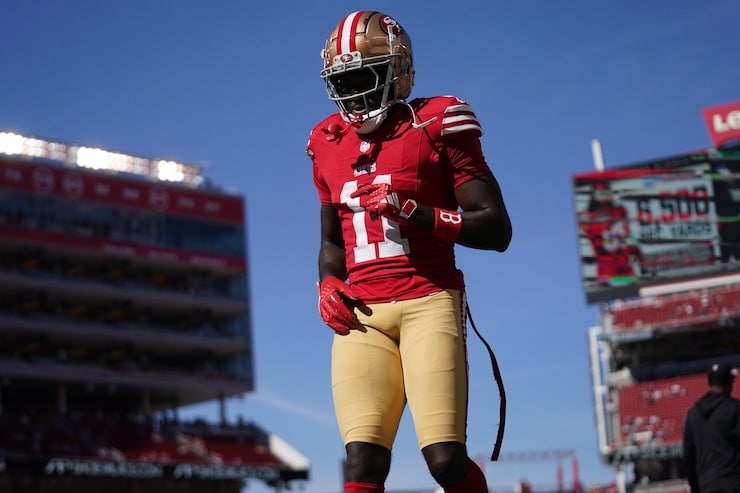
3. San Francisco 49ers: Brandon Aiyuk
- 2026 Cap Space: $41,875,176
- Cap Savings: $6,300,000 (Post-June 1)
It’s no secret that Brandon Aiyuk and the San Francisco 49ers are headed towards an ugly divorce. GM John Lynch and head coach Kyle Shanahan have confirmed that Aiyuk has played his last game in a 49ers uniform
Aiyuk didn’t play a single snap in 2025 while recovering from a torn MCL and ACL. He skipped mandatory meetings and rehabilitation sessions and stopped showing up to the facility altogether.
As a result, the 49ers voided the remaining $27 million guaranteed money on his four-year, $120 million deal. According to OverTheCap, San Francisco has about $41 million in cap space and will be able to free up an additional $6.3 million by cutting Aiyuk after June 1st.
While a trade would be the preferred option for the 49ers, teams have little incentive to give up draft capital for a player who has already played his last game in red and gold.
4. New England Patriots: Stefon Diggs
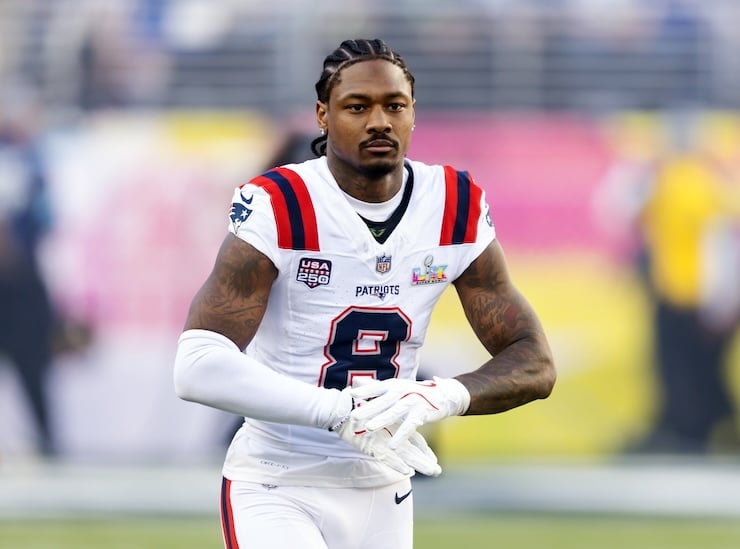
- 2026 Cap Space: $41,013,596
- Cap Savings: $16,800,000
Stefon Diggs was brought to Foxborough to provide a veteran safety net for Drake Maye, but his base salary is going to balloon from $2.9 million in 2025 to $20.6 million in 2026. Unless he takes a pay cut to stay in New England, Diggs’ $26.5 million cap hit could force the Patriots to make a difficult decision.
Diggs was productive last season, finishing with 85 catches for 1,003 yards, but he will turn 33 years old next season and the Patriots have younger options like Kayshon Boutte ready to step into a bigger role.
Releasing Diggs before June 1 saves the Patriots $16.8 million while leaving a manageable $9.7 million dead cap hit. For a team that just fell short in the Super Bowl, that money can be used to continue to build around quarterback Drake Maye.
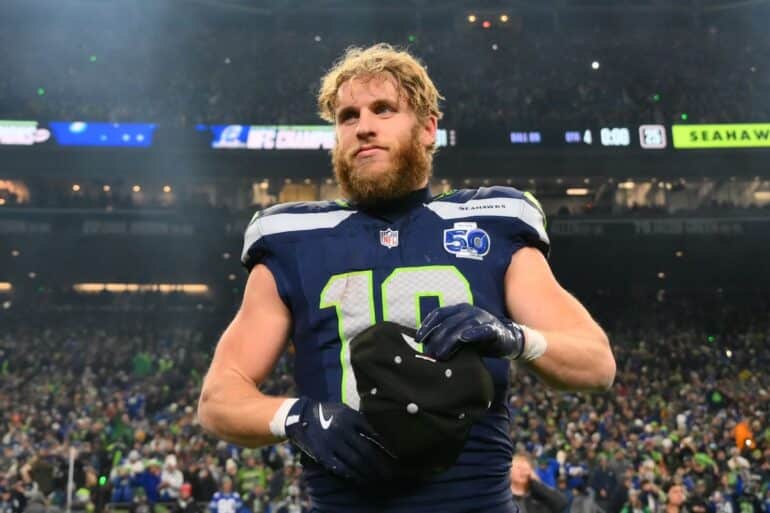
5. Seattle Seahawks: Cooper Kupp
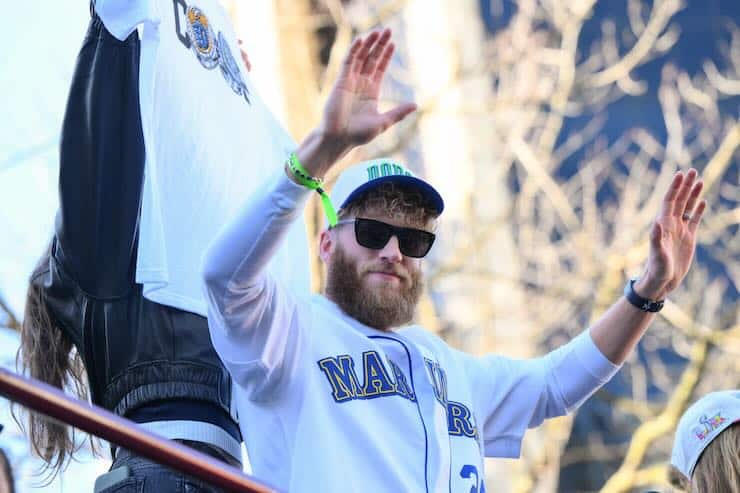
- 2026 Cap Space: $63,629,461
- Cap Savings: $9,470,000
Cooper Kupp just secured his second ring in Seattle’s Super Bowl LX victory over the Patriots, but the veteran receiver could become a luxury the Seahawks can no longer afford.
Despite his postseason heroics, Kupp’s regular-season production hit career lows in target rate and yards per route run (1.39). He finished with just 593 yards and a career-low two touchdowns in 2026. With Rasheed Shaheed and Tory Horton already on the roster, it’s hard to justify Kupp’s salary with his current production.
With a $17.5 million cap hit looming and a $9 million roster guarantee triggering in mid-February, cutting Kupp makes sense. Releasing the 32-year-old would clear nearly $10 million in space, allowing Seattle to prioritize extensions for younger cornerstones like Kenneth Walker III and Riq Woolen.
That said, it wouldn’t be a surprise to see Kupp restructure his deal and run it back in Seattle, albeit on a much cheaper contract.
The Bottom Line
Alec Pierce entered the 2026 offseason as the No. 1-ranked wide receiver on the free agent market but that could change soon. With several high-profile veterans and former stars like Brandon Aiyuk and Tyreek Hill set to hit free agency, the wide receier market is about to get significantly stronger, adding proven production and star power to the top of the board.