
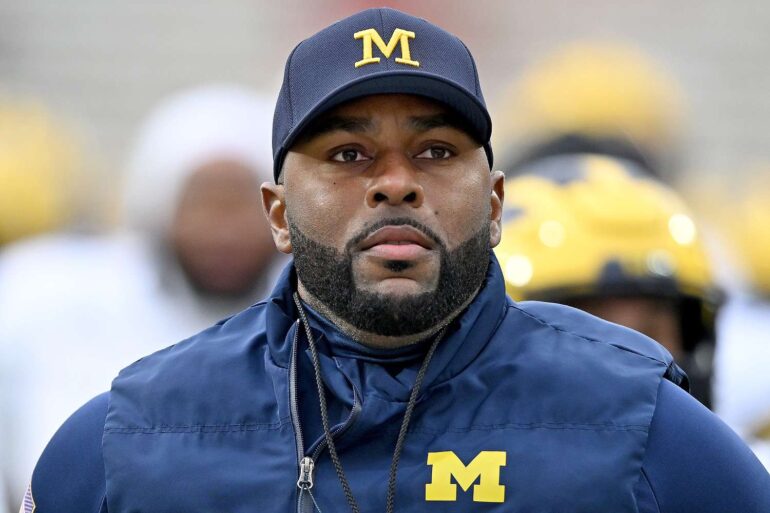
Sherrone Moore’s criminal case looked headed toward a major courtroom fight this week. Instead, it ended abruptly with a plea deal that removed the most serious charges against the former Michigan head coach.
Moore had been scheduled to take part in a key evidentiary hearing that could have challenged the entire foundation of the prosecution’s case. Rather than risk what might have happened in that hearing, prosecutors agreed to a deal that reduced the case to two misdemeanors.
The move left one clear takeaway from the courtroom drama: the legal case against Moore may have been shakier than it appeared when charges were first filed.
Sherrone Moore Plea Deal Ends Felony Case Before Critical Hearing
Disgraced former Michigan football coach Sherrone Moore just struck a deal with prosecutors to plead no contest to two misdemeanors and his original charges are going away.
🎥: FOX 2 Detroit pic.twitter.com/McT2tCod2a
— TMZ (@TMZ) March 6, 2026
Moore originally faced three charges tied to a December confrontation with a Michigan football staffer following the end of their relationship. The most serious count was felony third degree home invasion, along with misdemeanor stalking and unlawful entry.
Police said Moore repeatedly called the woman after the breakup and later entered her apartment without permission. Prosecutors alleged he grabbed kitchen utensils and threatened to harm himself while blaming her for the fallout that cost him his job.
Michigan had already fired Moore earlier that same day for violating university policy regarding relationships between supervisors and staff members.
But when Moore returned to court this week, the legal focus had shifted away from the alleged incident itself and toward how investigators built the case.
Moore ultimately pleaded no contest to two misdemeanor charges, malicious use of a telecommunications device and trespassing. Prosecutors dropped the felony charge and the stalking count before the hearing could begin.
Judge Raised Concerns About The Arrest Warrant
The hearing scheduled for March 6 was meant to examine how police obtained the warrant used to arrest Moore. His attorneys argued investigators left out critical context when presenting evidence to the magistrate who approved the warrant.
The most important issue involved Moore’s relationship with the woman involved in the case. She worked inside the Michigan football program and served as Moore’s executive assistant.
Moore’s defense team argued investigators did not clearly explain that employer employee relationship when presenting evidence about a series of phone calls Moore made before the incident.
The calls were cited by prosecutors as part of the stalking allegation. Moore’s lawyers said they could easily have been work related communication between a head coach and a staff member during bowl game preparation.
The judge reviewing the issue signaled concern about the omission, describing it as a serious gap in the warrant application and suggesting the magistrate should have been given that information before authorizing Moore’s arrest.
That concern opened the door to a legal challenge that could have undermined the case.
What The Franks Hearing Could Have Done To The Case
The proceeding Moore requested is known as a Franks hearing, a rare legal process that examines whether investigators used misleading information or left out important facts when seeking a warrant.
If a judge determines that police omitted critical details, evidence obtained through the warrant can be thrown out. In some situations, the entire case collapses because prosecutors can no longer rely on the original investigation.
Moore’s legal team had made it clear they intended to argue that the employment relationship between Moore and the staffer should have been disclosed when investigators described the phone calls used to support the stalking allegation.
That argument created real risk for prosecutors heading into the hearing.
The plea deal allowed them to secure misdemeanor convictions without exposing the case to a ruling that might have weakened or even dismissed the charges.
Who Is Paige Shiver In The Michigan Football Scandal
The woman connected to the case is Paige Shiver, a Michigan football staffer who worked as executive assistant to the head coach.
According to court proceedings, Moore and Shiver had been in a romantic relationship for roughly two years before she ended it shortly before the scandal erupted.
Shiver later cooperated with the university’s internal investigation, which led to Moore’s firing for violating workplace relationship policies.
The university did not publicly identify her early in the process, but her name quickly circulated once court documents and reporting revealed her role.
Why Paige Shiver Was Not Fired When Sherrone Moore Was
One of the stranger elements of the situation involved Michigan’s handling of the two people involved.
Moore was fired immediately once the relationship was confirmed. Shiver remained employed for months after the scandal became public.
The key difference is the structure of the relationship itself. Moore was the head coach and the direct supervisor in the workplace hierarchy. Michigan’s policy places responsibility on supervisors to avoid relationships with employees they oversee.
In other words, Moore was the party considered responsible for violating the rule.
Shiver was also cooperating with investigators when the university began examining the situation. Reports from the initial case say she provided information about the relationship to university officials during the investigation that preceded Moore’s firing.
Michigan eventually separated from her as well, but the university did so quietly by allowing her contract to expire and choosing not to renew it rather than terminating her at the height of the scandal.
Michigan Football Scandal Ends One Court Chapter
The plea deal removes the possibility of a felony conviction and brings the criminal case close to its conclusion. Moore still faces sentencing in April on the remaining misdemeanor counts.
The larger controversy around the relationship and the investigation that followed will likely remain part of Michigan football’s recent history.
What looked like a straightforward criminal case at the beginning ended up turning on a much more technical legal question about how investigators presented their evidence.