
Jalen Brunson is not on the Knicks’ injury report for Game 2 of the NBA Finals. That single fact is the most consequential piece of information in the entire Finals betting market right now – not because it is surprising, but because of what it confirms and what it leaves unresolved.
Brunson took two separate hits in Game 1: a valgus-stress blow to his right knee after Landry Shamet shoved Harrison Barnes into him on a defensive rebound, and a second incident when Spurs big man Luke Kournet stepped on him, seemingly spraining his left ankle. He scored 30 points anyway. He’s cleared to play. But cleared and unaffected are not the same thing, and that gap is exactly where the betting edge lives.
Why Brunson’s Status Carries More Betting Weight Than a Standard Injury Tag
Brunson averaged roughly 29 points and over 6 assists per game through the Eastern Conference playoffs, operating as the Knicks’ primary shot creator, primary ball-handler, and primary closer. New York’s offensive efficiency drops sharply when he sits – oddsmakers have moved Knicks spreads by multiple points in regular-season games where he was ruled out late, a pricing sensitivity that becomes even more acute in a Finals series where every possession is contested and every possession share matters.
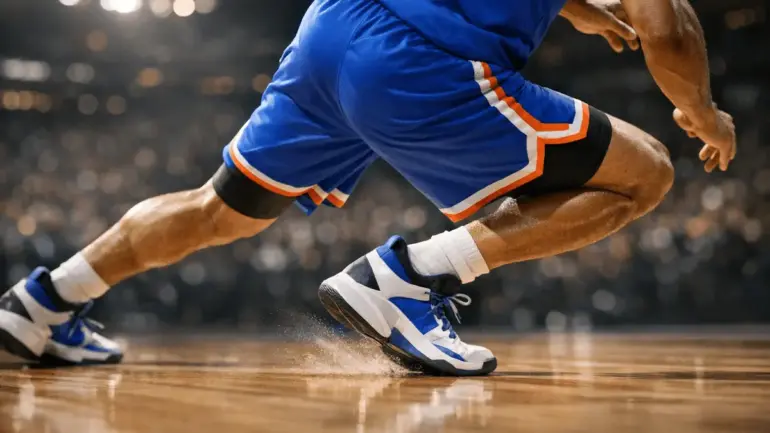
His workload context adds another layer. Brunson has logged 40-plus minutes in competitive playoff games throughout this run, ranking among the top 3 players in the postseason in both minutes and usage rate. That is a cumulative stress load that makes any in-game lower-body injury worth monitoring closely, even when the player is officially cleared. The right knee and left ankle are the two joints that carry the most load in a guard’s change-of-direction game. Both are now in play.
This is not routine questionable-tag noise. Brunson is the load-bearing offensive structure of the Knicks’ championship roster, and his physical state heading into Game 2 reshapes every market attached to this series.
How Brunson’s Status Moves the Moneyline and Spread
Trading desks have been explicit: a hypothetical Brunson scratch would be worth several points to the spread and a dramatic shift in series pricing. That scenario is off the table for Game 2 – he’s playing. But the market’s real question is not out versus available. It’s full production versus compromised production.
Full return, no visible limitation: The spread holds where it is, series odds stay in New York’s favor, and Game 2 pricing reflects a team with its full offensive ceiling intact. This is the baseline the market is already pricing.
Visible limitation early in Game 2 – reduced explosiveness, avoidance of drives to the rim, shortened minutes: expect live-line movement toward San Antonio within the first quarter. Books will reprice in real time if Brunson shows any hesitation attacking the paint, and sharp money will move faster than the public.
The Game 1 Finals odds coverage already established New York as the clear series favorite. A compromised Brunson does not flip that – Karl-Anthony Towns posted a double-double in Game 1 and provides legitimate secondary offense – but it tightens the margin considerably, particularly in a game where San Antonio has already shown it can build a double-digit lead.
Prop Market and DFS Implications
Brunson’s points prop is the most sensitive line in the entire Finals market. He is cleared to play, which means books will hang his number near his postseason average – call it 28 to 30 points depending on the platform. The under carries real value if pregame warmup footage or early-game patterns suggest he’s protecting the ankle or favoring the knee.
The AI betting model breakdowns for this Finals series flagged team totals and usage-based props as the most volatile markets around injury news – and that framing holds here. If Brunson’s minutes are trimmed even modestly, the Knicks’ team total is the first number to adjust downward.
On the DFS side, Brunson remains a must-start when active at anywhere near full minutes – 30 points and a 13-point fourth quarter on two bum joints is a data point, not a coincidence. But the hedge play is his usage absorbers: Karl-Anthony Towns and Mikal Bridges are the primary beneficiaries of any Brunson limitation, and their salary-adjusted value climbs if early reports or game flow suggest New York is managing its star carefully.
The Honest Pushback Bettors Should Weigh
The honest pushback is straightforward: Brunson has a documented track record of returning from in-game injury scares and then ramping his scoring up, including a playoff game where he left briefly with a sore foot before returning to torch Indiana. The Knicks are also organizationally cautious – they held him out of a regular-season game earlier this year for ankle management, which makes it meaningful that he is not listed at all for Game 2.
Coach Mike Brown was relaxed postgame. The knee was bent at the moment of Barnes’ impact, which reduces ACL risk significantly. MCL irritation and bruising are possible, but neither is typically limiting for a guard within 48 hours at this stage of the season.
The one legitimate risk for bettors leaning on the under is that Brunson plays 40 minutes at full capacity and the injury scare becomes a footnote. It has happened before. His durability is not an accident – he has played 74 or more games in each of his two Knicks seasons.
Bottom Line
Brunson is playing in Game 2. The market is pricing him as healthy, and the injury report backs that up. But full availability and full mobility are different things, and the first quarter of Game 2 will tell bettors more than any pregame report can.
Watch his first 3 drives to the rim. If he’s attacking the paint and finishing through contact the way he has all postseason, the full-production baseline holds and the market is right. If he’s pulling up early or deferring in spots where he normally attacks, the live line and the second-half under become the play. That is the information trigger. Don’t settle the bet before the game tells you what it knows.