
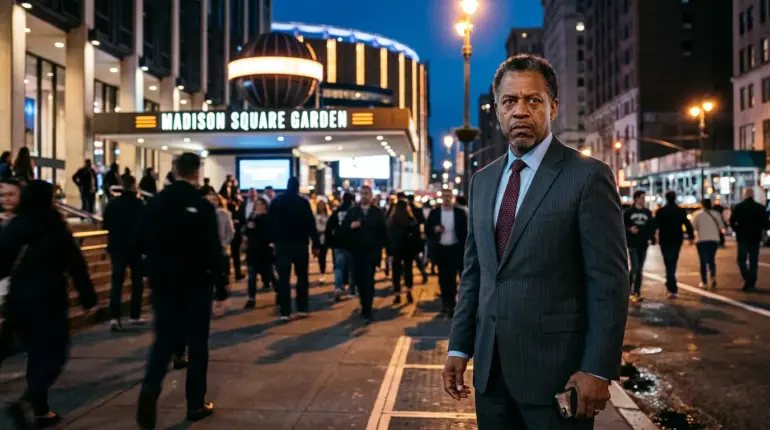
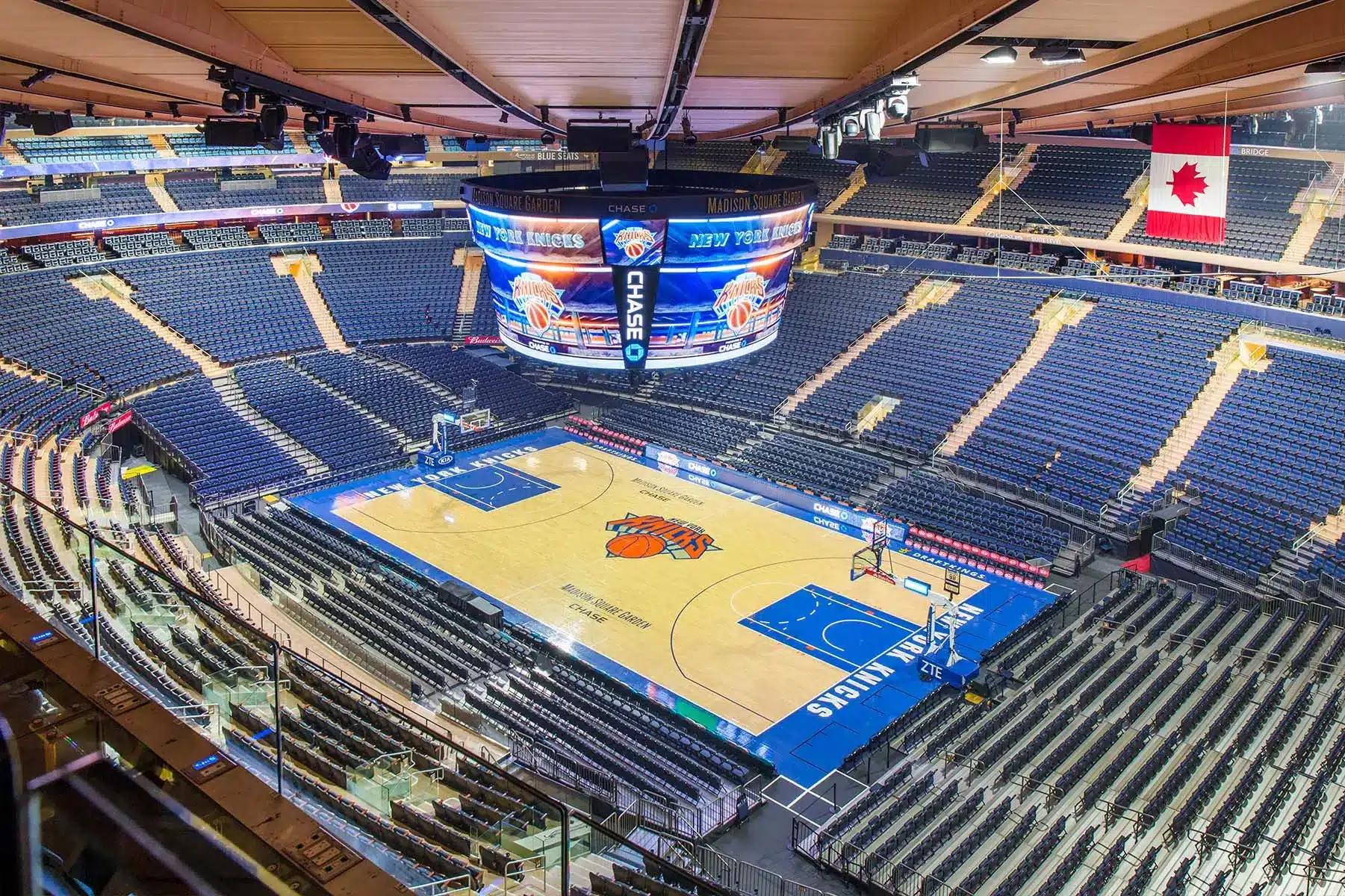
Ron Harper, former NBA champion and father of San Antonio Spurs rookie guard Dylan Harper, publicly condemned violent fan behavior outside Madison Square Garden following the Spurs‘ 115-111 Game 3 victory over the New York Knicks.
Harper took to social media to call out a post game melee that left families and children caught in the crossfire and sent the clip spiraling across every major sports platform before sunrise.
The Knicks had already issued an official warning to fans about conduct inside the arena – a warning that apparently did nothing to prevent what unfolded on the streets outside it.
This is not just a fan-behavior story. It is a story about what the NBA Finals looks like when the off-court spectacle threatens to consume the on-court product.
While also showing why a protective father’s public statement carries a very different kind of weight than anything a league office can issue in a press release.
What Actually Happened With Dylan Harper – The Full Sequence
The Spurs won Game 3 at Madison Square Garden on Sunday night, 115-111, cutting their series deficit to 2-1.
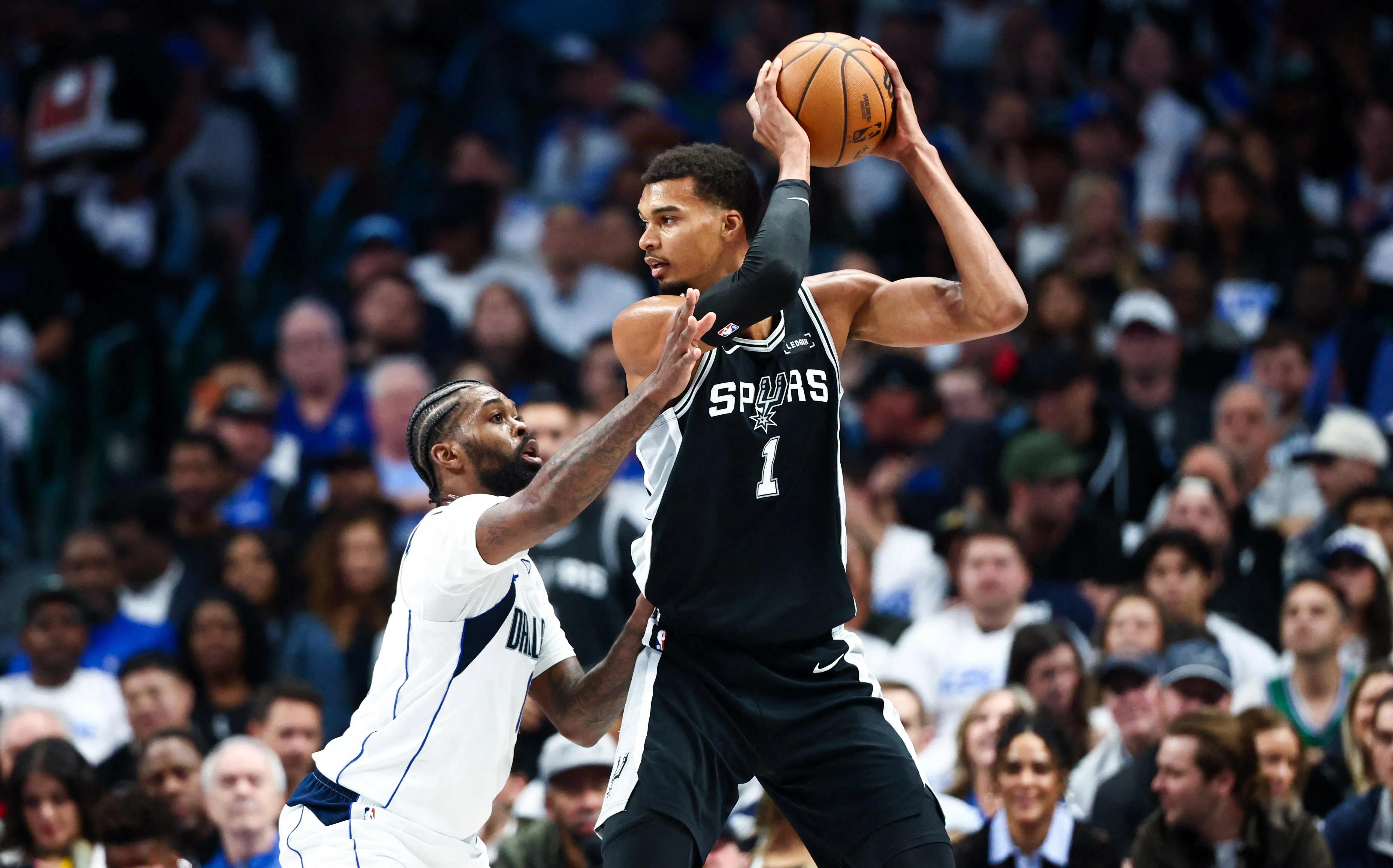
Victor Wembanyama was the dominant force – 32 points, 8 rebounds, and 6 assists – while Jalen Brunson matched him with 32 points for the Knicks in a game that went down to the final possessions.
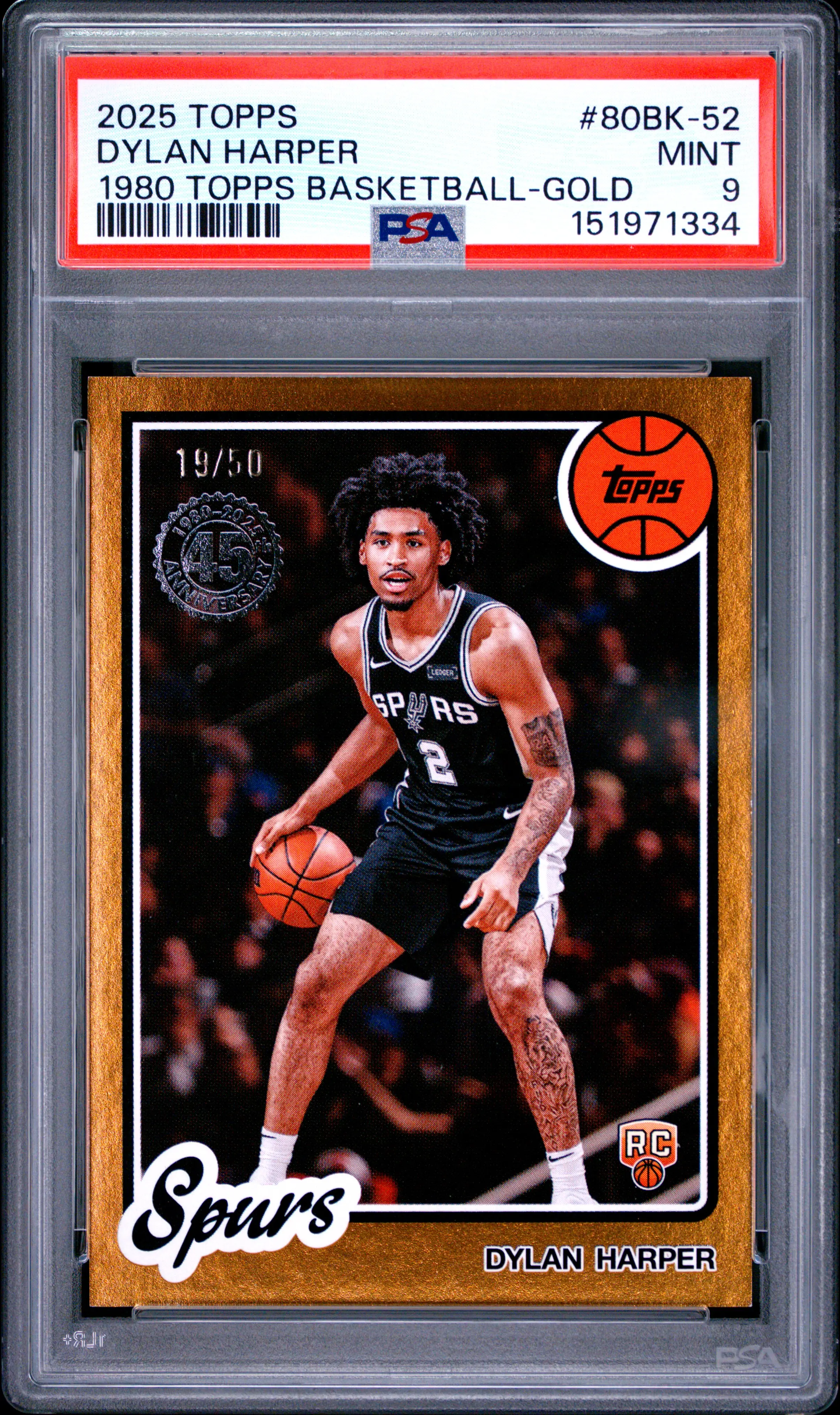
Dylan Harper, the Spurs‘ rookie guard, contributed 13 points, 9 rebounds, and 4 assists in 32 minutes – a statline that announced his readiness for the Finals stage.
What happened after the final buzzer was far less clean. Social media videos circulating in the hours following the game showed Spurs fans being physically attacked outside the arena.
A mob-style confrontation that drew immediate attention from fans and media tracking the ugly postgame fallout outside MSG.
The incident did not emerge in a vacuum: following Game 2, the NYPD had already arrested 17 people outside Madison Square Garden amid post-win celebrations that turned volatile, a pattern of behavior that had been building throughout the series.
The Knicks‘ official warning to fans about conduct at the arena had already been issued before Game 3 tip-off – which makes the postgame altercation a documented escalation, not a first offense.
When video of the melee reached Ron Harper, he responded within hours on social media. His statement read, in full:
“I’ve to get this off my chest FANS we do not need to fight other fans that wear different jerseys to support their teams. It’s not only in the @NBA but all major sports and college this is sad a mob jump on kids families parents let show some respect and go cheer the teams on…”
It was not Harper‘s first public intervention during this Finals run. Earlier in the series, he had criticized officiating after a Game 1 loss, stating the Spurs had “3 officials falling asleep” – establishing him as a vocal, protective presence well before the fan-violence incident surfaced.
The combination of a father’s protective instinct and a former champion’s platform made the statement land differently than a generic league condemnation would have.
The Harper Family and the Finals Stage – Why This Combination Has This Kind of Pull
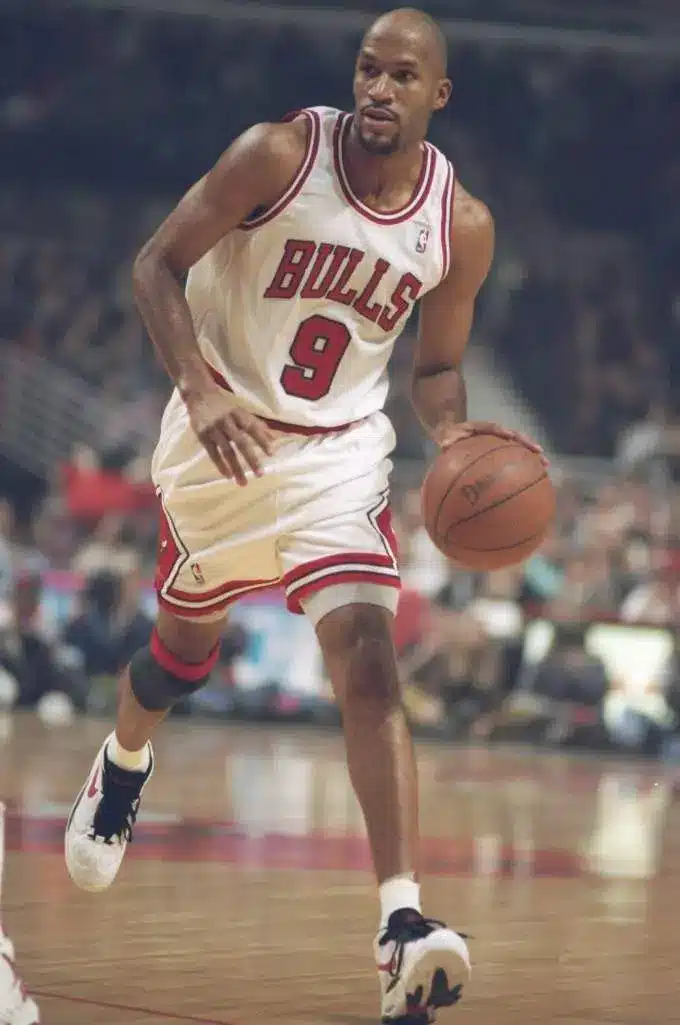
Ron Harper is not just a retired player with a famous son. He is a five-time NBA champion – three rings with the Chicago Bulls, two more with the Los Angeles Lakers – whose credibility in the sport is unimpeachable.
When he calls out fan behavior, he does so from a position that commands attention from audiences who would scroll past a similar statement from an anonymous commenter or even a team official.
Dylan Harper adds a second layer of structural interest. He is a rookie – the high-stakes debut season where every performance is measured against ceiling projections – playing in the NBA Finals at Madison Square Garden, one of the most pressure-tested arenas in professional basketball.
His 13-point, 9-rebound, 4-assist line in Game 3 is the kind of statline that generates its own conversation, and the visibility of that performance made his family’s involvement in the postgame story impossible to separate from the basketball narrative.
For context on just how much Wembanyama and the Spurs are controlling this series, the Game 3 performance that swung the series momentum toward San Antonio is worth examining alongside the off-court noise.
The father-son dynamic activates a specific kind of audience investment that player-centric stories rarely generate on their own. Ron Harper is not protecting a brand – he is protecting his kid.
That distinction is legible to audiences well outside the core sports-betting and fantasy-player readership, and it is the structural reason this story carries into lifestyle, parenting, and general cultural media spaces that would otherwise ignore an intra-series fan-behavior incident.
There is also historical texture here. The Knicks–Spurs pairing does not carry the same decades-long rivalry weight as some NBA Finals matchups, but Madison Square Garden as a venue has its own mythology around crowd intensity – and that mythology is now being tested against the reality of what unchecked fan aggression looks like in 2025.
The Social Mechanics – Why This Travels Beyond the Core Audience
At least four distinct audience communities are distributing this story, and they do not significantly overlap in their normal consumption habits.
The first community is the core NBA audience – the fans tracking this Finals series game by game, engaged with Wembanyama‘s emergence and Dylan Harper‘s rookie arc.
For this group, the story is additive context: it deepens the Spurs–Knicks narrative and gives the series a human dimension beyond box scores.
They are sharing it because it is part of the full story of this postseason run, and because Ron Harper‘s officiating criticism earlier in the series had already made him a known character in the drama.
The second community is the sports-culture and fan-conduct discourse audience – the writers, podcasters, and social media commentators engaged with the broader question of whether NBA arenas and their surrounding neighborhoods are becoming too volatile after high-stakes games.
The 17 arrests outside MSG following Game 2 celebrations had already seeded this conversation; the Game 3 altercation and Harper‘s response gave it a named face and a shareable quote. For this community, the story is evidence in an ongoing argument.
The third community is the protective-parent and family-values audience – people who engage with sports only when it produces a story about a parent defending their child in public.
Ron Harper‘s statement is not technical or analytical; it is emotional and direct, written in the voice of a father who watched something happen to his son’s fans and felt compelled to respond at 1 a.m.
That registers for audiences who would not otherwise care about NBA Finals series dynamics or rookie production curves. This is the lane that carries the story into non-sports feeds and general lifestyle media.
The fourth community is the bettors and fantasy operators watching the series closely for any factor that might affect the remaining games – player psychology, team chemistry, crowd dynamics at future venues.
A father’s public statement about safety at MSG does not change a spread, but it signals the kind of ambient tension around a series that sharp players monitor for distraction variables.
The combined distribution across these four communities means aggregate reach is not additive – it is multiplicative, because each community seeds the story into a separate algorithmic ecosystem with its own amplification mechanics.
New York Knicks vs San Antonio Spurs: NBA Finals So Far
The San Antonio Spurs defeated the New York Knicks 115-111 in Game 3 of the NBA Finals at Madison Square Garden, cutting the series deficit to 2-1.
Victor Wembanyama scored 32 points with 8 rebounds and 6 assists; and Dylan Harper logged 13 points, 9 rebounds, and 4 assists in 32 minutes.
A physical altercation involving opposing fans occurred outside the arena following the game; social media video of the incident circulated widely.
The Knicks had issued an official warning to fans about conduct at the arena prior to Game 3; the NYPD arrested 17 people outside MSG following Game 2 and Ron Harper published the quoted statement on social media in response to the postgame violence.
The precise number of individuals involved in the Game 3 altercation is yet to be confirmed and it is unclear whether any arrests were made in connection with the postgame incident specifically.
We do not know if Dylan Harper or any Spurs players were directly affected by or witnessed the confrontation; and whether the NBA, the Knicks, or local authorities plan any formal response beyond the existing arena warning.
The documented core of the story – a viral fan-violence incident, a former champion’s public callout, and a rookie’s standout performance in the same news cycle – holds regardless of what those open questions resolve to.
What’s Next After Ron Harper’s Statement?
The first signal to track is whether the NBA or local New York authorities issue any formal response to the Game 3 postgame altercation – specifically, whether the league upgrades the Knicks‘ existing fan-conduct warning into a structured enforcement mechanism with named consequences.
If the NBA issues a formal statement or the Knicks announce enhanced security protocols before Game 4, that confirms the league views the fan-behavior issue as a reputational threat serious enough to require visible institutional action.
The second signal is Dylan Harper‘s performance and public presence heading into Game 4. If he continues producing at or above his Game 3 level, the family narrative compounds – every Ron Harper social media post becomes more searchable, and the father-son storyline becomes a recurring Finals subplot rather than a one-night viral moment.
A significant drop-off would shift the spotlight back onto Wembanyama exclusively and reduce the Harper family angle to a single news cycle.
If the Spurs win Game 4 to even the series at 2-2, the intensity level around every subsequent game at MSG escalates dramatically – which means the fan-conduct story, far from fading, will be a mandatory pre-game frame for Games 5 and 7 if the series extends that far.
A Knicks win that restores the 3-1 lead changes the calculus entirely and likely moves the off-court discourse toward San Antonio‘s ability to stave off elimination.