


Global wagers on the FIFA World Cup 2026 are projected to reach $50–60 billion – a figure that would make this tournament the largest betting event ever measured by any methodology.
H2 Gambling Capital puts the regulated global handle at $60 billion, a 71% jump over its 2022 estimate, while Macquarie analyst Chad Beynon projects north of $50 billion.
Two independent research methodologies converging in the same range is not projection optimism – that is a signal. The structural drivers behind the number are real, quantifiable, and already locked in before a single ball is kicked in Mexico City.
The Global World Cup Betting Handle Breakdown – What the Numbers Actually Say



The $50–60 billion headline figure covers regulated channels only. Decomposed, it looks like this: H2 Gambling Capital projects $5.7 billion across the three host nations alone – the U.S., Canada, and Mexico – with the U.S. carrying the bulk of that domestic load. Deutsche Bank’s estimate for U.S. betting handle lands at $3.3 billion, with Eilers & Krejcik Gaming putting the base case at $2.82 billion and the ceiling scenario at $4.3 billion depending on promotional intensity and USMNT advancement depth. Two independent methodologies converging within 15% of each other is not noise – it is a market consensus forming in real time.
For domestic context: the Super Bowl generates roughly $2 billion in U.S. handle annually; March Madness comes in around $3 billion. The 2026 World Cup base case sits between those two benchmarks, and the upside case clears March Madness entirely. The 104-match format running over six weeks means sustained daily betting volume rather than a single-event spike – Eilers & Krejcik have described it as a Super Bowl–level peak sustained across an entire tournament. FanDuel is projected to lead U.S. operator market share at roughly $1.3 billion in handle, followed by DraftKings at $1.1 billion, BetMGM at $250 million, Caesars Sportsbook at $120 million, and Penn’s theScore Bet at $83 million, per Deutsche Bank estimates.
Prediction markets add a separate layer of exposure that the sportsbook figures don’t capture. Piper Sandler analyst Patrick Moley reported that Kalshi and Polymarket combined hit a record $7 billion in weekly trading volume – up 13% week over week – with Kalshi alone offering nearly 500 unique World Cup markets. Bookies.com estimates roughly $2.37 billion in combined prediction market trading tied directly to the tournament, pushing total U.S. wagering and trading exposure toward $5.4 billion when layered on top of the sportsbook handle figure.
Why This World Cup Will Break Every Betting Record – The Structural Drivers
Three structural forces explain why 2026 breaks the record. None of them are speculative. The first is the expanded 48-team, 104-match format – 40 more matches than Qatar 2022. More matches means more betting markets, more live wagering opportunities, and more days of sustained engagement across the six-week window. Industry analysis suggests in-play betting could account for roughly 55% of total World Cup handle in 2026, up from approximately 35% during Qatar, driven by better data feeds and second-screen viewing habits. At an average of over $500 million wagered per match at the global level, the format expansion alone accounts for a substantial portion of the handle increase.
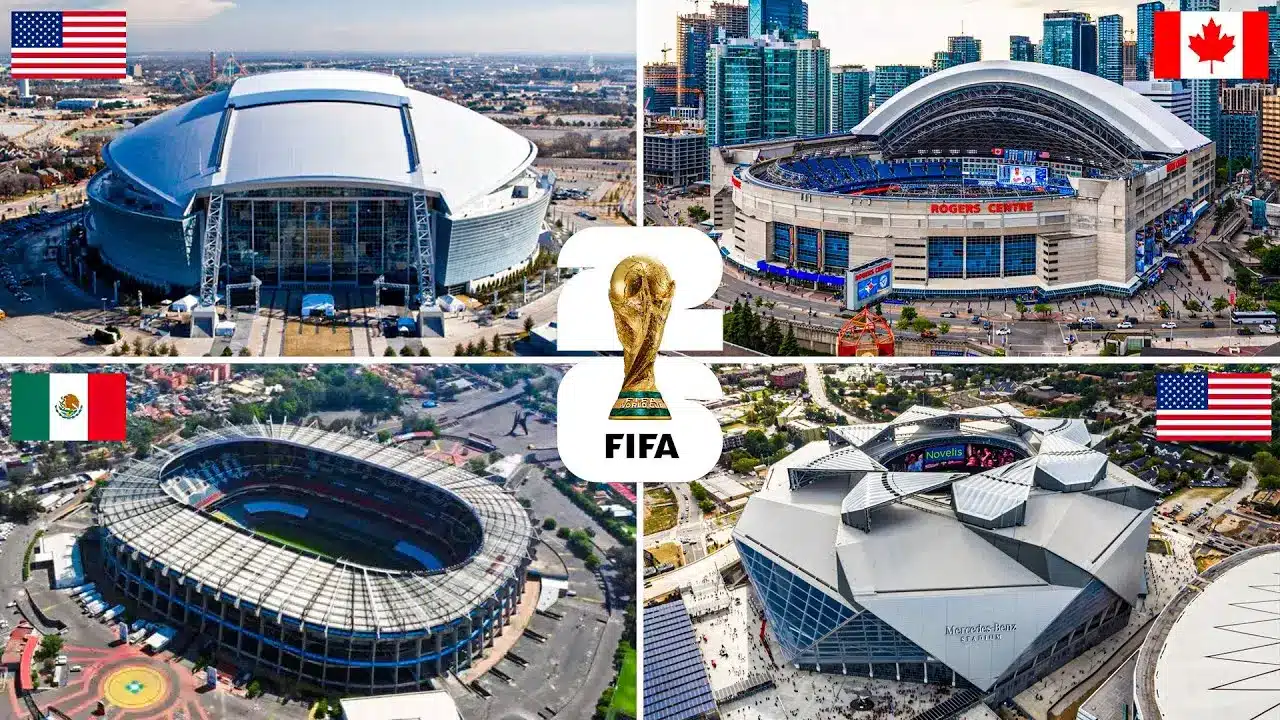
The second driver is North American time zones. The Qatar 2022 tournament ran on Gulf Standard Time, meaning U.S. bettors were placing wagers on games that kicked off at 5 a.m. Eastern. The 2026 tournament runs almost entirely in U.S. prime time – afternoon and evening kickoffs across American time zones. Flutter Entertainment CEO Peter Jackson put the scale plainly on CNBC’s Closing Bell: “We think the Super Bowl is big here in America. You might have 200 million people watching it. Last time, when the World Cup Finals played in Qatar, 1.5 billion people watched the final. Five billion people watched the whole competition, so this is massive.” A 1.5 billion-viewer final versus a 200 million-viewer Super Bowl – the audience differential is the structural underpinning of why domestic operator projections are what they are.
The third driver is U.S. market maturation – and this one is the most consequential for the sportsbooks. The American Gaming Association estimates 65% of the U.S. population now has legal access to sports betting, compared with roughly 40% during the 2022 World Cup. That gap represents tens of millions of newly addressable bettors who simply could not participate legally four years ago. Since the Supreme Court struck down PASPA in 2018 (Murphy v. NCAA), more than 38 states have launched operational markets. The product quality has also improved: same-game parlays, live betting interfaces, and soccer-specific markets are materially better than they were in 2022, and sports betting platforms have spent four years building soccer-fluent customer bases through MLS, Champions League, and Premier League coverage. Caesars is offering 10 times more betting options than it did for the 2022 World Cup. That is not a marketing metric – it is an infrastructure signal about how seriously domestic operators are treating this event.

Macquarie expects the tournament to produce a 2% to 5% boost to 2027 operator EBITDA, with Flutter Entertainment – parent of FanDuel – identified as the best-positioned operator globally given its international footprint and large soccer audience base. Super Group and Rush Street Interactive are also flagged as well-positioned. Sports-data companies Genius Sports and Sportradar sit upstream of all of it – Sportradar recently inked a data deal with Kalshi covering professional soccer, baseball, hockey, and UFC, positioning the data layer to monetize across both traditional sportsbooks and prediction markets simultaneously.
The U.S. Handle – What the Upside Scenario Actually Requires
The $2.82–3.3 billion base case for U.S. handle is the number to anchor on. The $4.3 billion ceiling scenario is real but conditional – it requires the USMNT to make a deep run, which would drive match-by-match engagement spikes of a scale domestic operators have never experienced from a soccer event. Caesars Digital SVP of sports Dominic Hammond framed it directly: “If the U.S. Men’s National Team makes a deep run, that’s when things could really accelerate, driving massive spikes in engagement and betting with each match. At the same time, the tournament’s unpredictability and the surge in parlay betting mean just a few key upsets can significantly swing outcomes.”
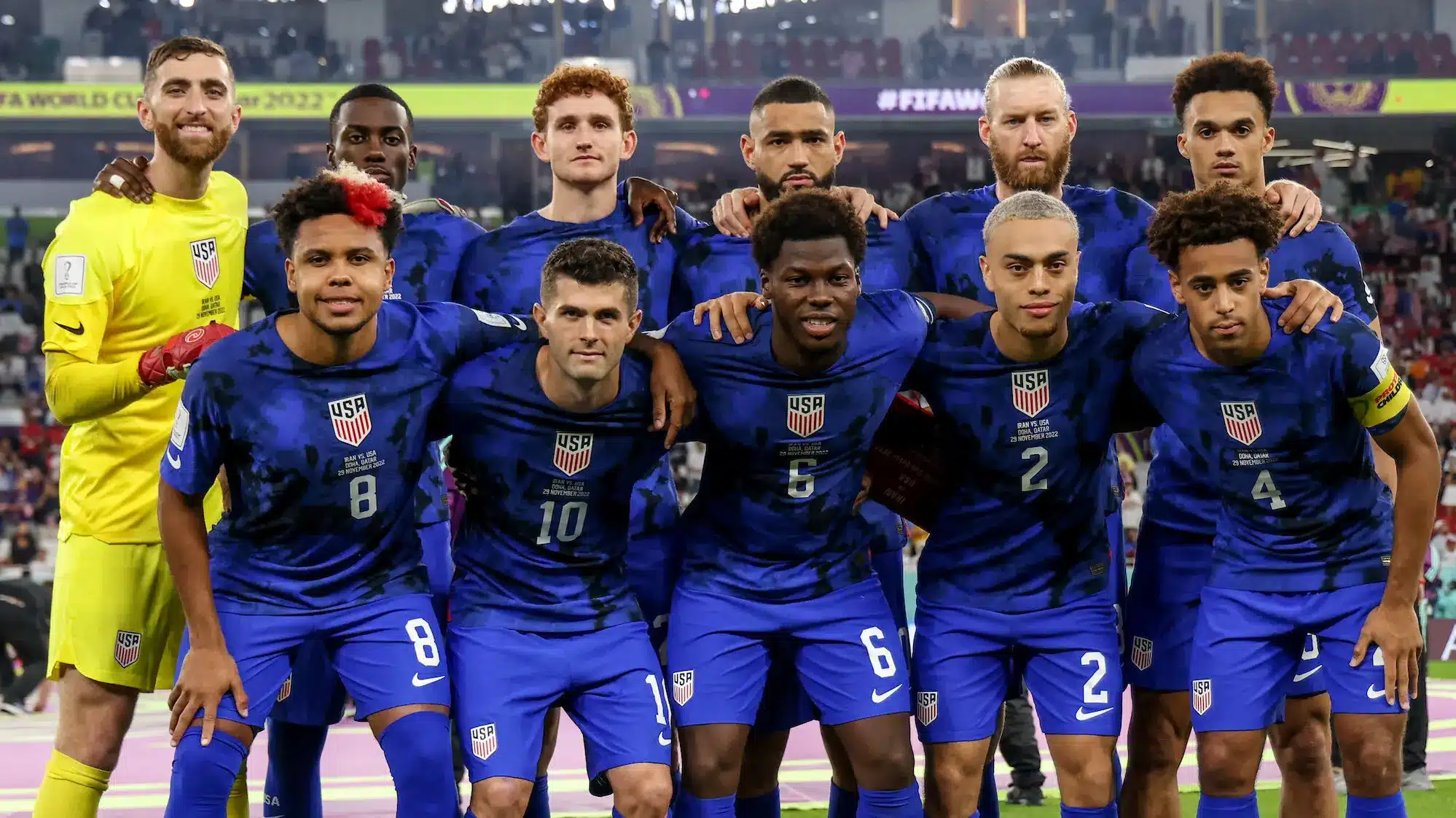
The time-zone advantage compounds the USMNT variable. U.S. group stage matches will run in viewable afternoon and evening windows, meaning casual bettors – not just sharp gambling regulars – will be placing wagers in the same rhythm they would for an NFL Sunday. The 2022 World Cup generated roughly $1.8 billion in U.S. handle despite the time-zone penalty and the 40% legal-access ceiling. Doubling that coverage to 65% of the population, removing the time-zone friction, and running 40 additional matches produces the base case almost mechanically. The upside case just adds a variable – team advancement – that is structurally capable of moving the number by an additional $1 billion or more. How bettors approach group stage and knockout markets will go a long way toward determining where the final U.S. figure lands inside that range.
For bettors entering this market, the DraftKings stock move this week is instructive as a sentiment signal: shares jumped 11% after May trading volume showed a 34% month-over-month jump to $3.1 billion annualized, with annualized consumer volume hitting $1.3 billion – a 24% month-over-month increase. That is pre-tournament momentum, before a single World Cup match has been played. U.S. bettors who haven’t yet set up accounts at the major platforms have a narrow window to access promotional offers that will narrow once the tournament opens.
What the $60 Billion Projection Doesn’t Capture
Honest caveat: every figure cited above covers regulated, legal channels only. Total global handle including offshore and grey-market wagering is estimated by some analysts at $100–165 billion – the regulated projections represent roughly 40–60% of actual global money at risk on this tournament. The $60 billion H2 figure and the $50 billion Macquarie figure are not the ceiling for how much is wagered on the 2026 World Cup; they are the measurable, regulated floor.
There are also structural downside risks that the projections model as scenarios rather than certainties. Early exits by major wagering nations – Brazil, England, and France collectively drive enormous betting volume in regulated European and South American markets – would compress handle significantly in the knockout rounds. The absence of Italy, a historically high-volume betting market, is a structural drag that has been baked into every model but still represents a real reduction from what a full-field European contingent would generate. The SEON fraud survey finding that nearly 25% of bettors admitted to signing up for multiple accounts to access promotions – what the industry calls friendly fraud – also introduces a betting handle inflation risk: inflated handle figures that overstate genuine market depth if promotional abuse is significant at scale.
The prediction market legal landscape adds a separate layer of uncertainty. Multiple U.S. states are in active legal proceedings over Kalshi and Polymarket, with the Commodity Futures Trading Commission asserting exclusive jurisdiction over event contracts. That regulatory ambiguity could constrain prediction market volume in key states – and it’s the primary reason FanDuel and DraftKings limit their own prediction platforms to states where they lack gaming licenses.
Bottom Line
The $50–60 billion global projection for the 2026 World Cup is structurally grounded – built on an expanded 104-match format, a 65% U.S. legal-access footprint that didn’t exist four years ago, and prime-time North American kickoffs that remove the single biggest friction point from 2022. FIFA handed the sports betting industry its most commercially favorable World Cup structure in the tournament’s history, and the market is priced accordingly.
The primary variable to track as the tournament unfolds is USMNT advancement. The base case – $2.82–3.3 billion in U.S. handle – holds regardless of how far the Americans advance. The $4.3 billion upside scenario requires a deep run to the quarterfinals or beyond, at which point each successive match becomes a domestic betting event of near-Super Bowl proportions. That performance tracker starts Thursday in Mexico City.
H2 Gambling Capital told ESPN that 2026 “will likely be the largest betting event we’ve ever measured.” The structural case supports that call. Full stop.