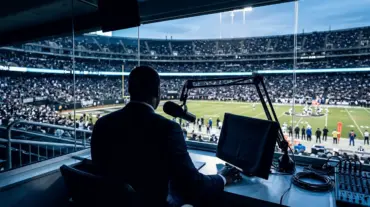

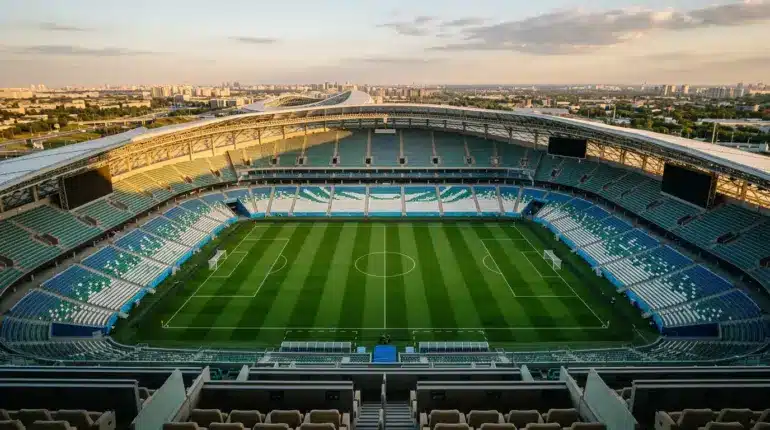
Most bettors will approach all 104 group stage games and the knockout bracket the same way – pick a winner, size the bet, move on. That conflation is where World Cup bankrolls go to die.
The 2026 FIFA World Cup features 48 teams across 12 groups, kicking off June 11 across three North American host nations, and the structural differences between the group phase and the elimination rounds are significant enough that treating them as the same betting problem is one of the most expensive mistakes you can make across a six-week tournament.
Group stage betting and knockout round betting are not variations of the same exercise. They operate under different incentive structures, different market mechanics, and different settlement terms.
Build your World Cup betting strategy around that distinction from the start, and you will enter the knockout rounds with capital intact and a sharper edge than the majority of the field.
Why Group Stage and Knockout Betting Are Different In The World Cup



The group stage runs on a point system: three points for a win, one point for a draw, zero for a loss.
Twelve groups of four teams, three matches each, with the top two from every group advancing plus eight best third-place finishers – 32 teams reach the Round of 16.
That structure means many teams enter individual group matches with margin to draw, rotate, or tactically underperform without threatening their tournament life.
That tactical flexibility distorts pregame markets in a way bettors consistently underestimate. A side that only needs a point to secure qualification will not press for a win against a dangerous opponent.
The implied probability on that team winning the match at standard three-way World Cup odds does not always account for that reality. Group stage betting is as much about team motivation and game-state management as it is about raw quality.
Knockout rounds operate on an entirely different logic. There are are draws but the game does not end te – teams play a maximum of 120 minutes plus penalties to produce a winner.
But the critical mechanical point for bettors is that the standard 90-minute result market and the advancement market settle differently. A bet on Team A to win on the three-way 90-minute line loses if the match finishes 1-1 after regulation, even if Team A wins in extra time or penalties.
That is not a technicality. It is a settlement rule that costs recreational bettors real money every knockout round. Knockout betting demands more selectivity precisely because one goal, one red card, or one penalty sequence rewrites the entire market, and there is no recovery game on the fixture list.
How to Approach World Cup Group Stage Betting
The volume of group stage games – over 100 matches across roughly two and a half weeks – creates a structural problem that most bettors ignore.
Recreational money floods every market simultaneously, and public-side favorites get inflated to prices that offer minimal value on the two-way line. The first and most important group stage adjustment is market selection, not match selection.
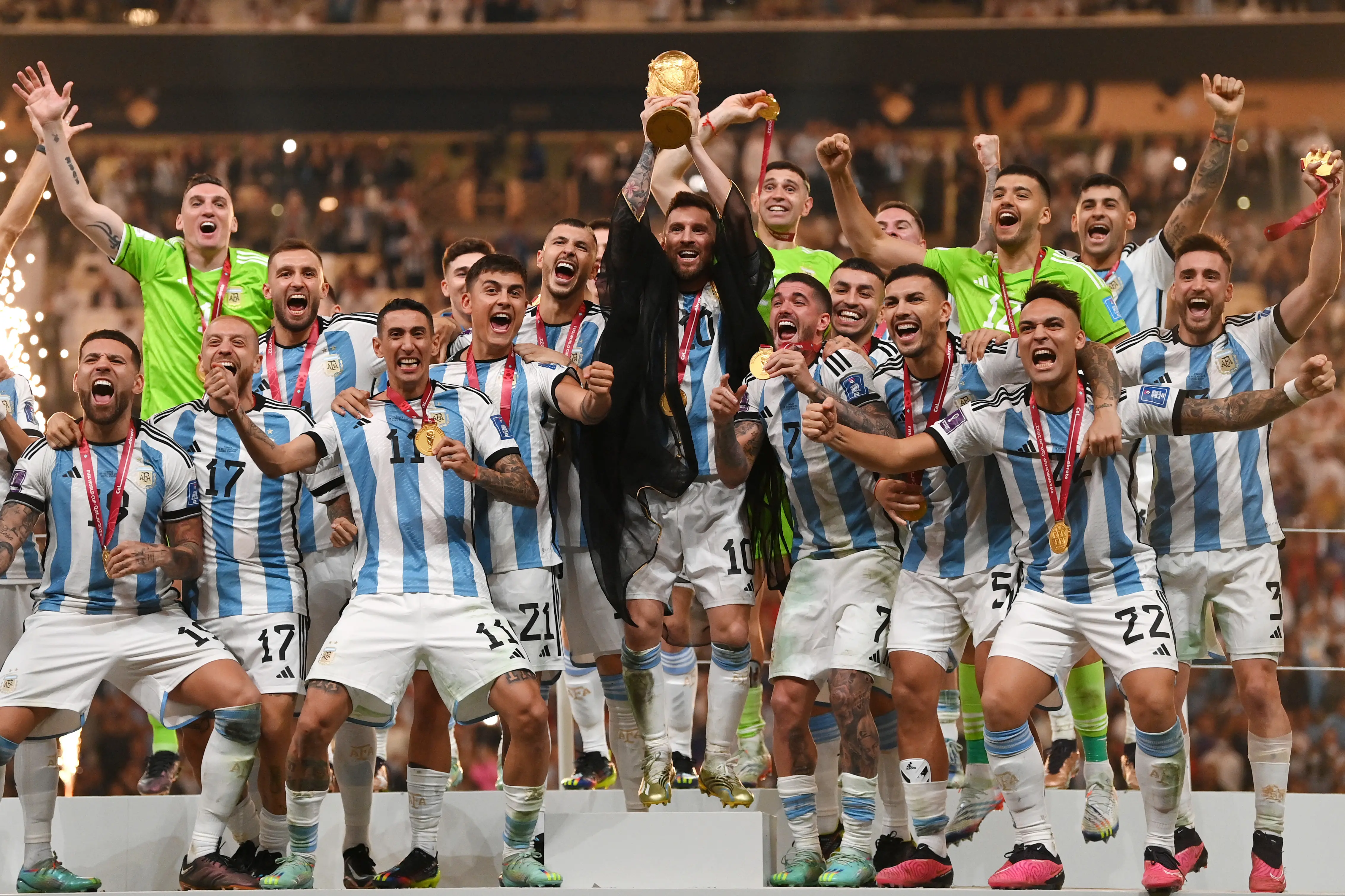
When a team like Argentina, Portugal, or Brazil opens as a massive minus-odds favorite on the two-way line against a lower-ranked opponent, the pregame moneyline is rarely worth the price.
The structural alternative – betting those teams to advance out of the group – consistently offers better value. You are getting exposure to the same outcome over three games rather than one, and the odds are proportionally more generous.
If you want more on building those positions, the 2026 World Cup outright betting tips breaks down where the structural value sits on group advancement and deep-run markets right now.
The three-way moneyline is always preferable to the two-way line in group stage matches. The draw is a live result in every group stage game, and the three-way line prices the draw explicitly – which means both team odds are higher than they would be on a two-way market.
If you are confident in a favorite, taking them on the three-way line at better odds beats the two-way favorite price every time.
Matchday 3 is the most structurally distinct betting environment of the entire group stage. Teams that have already secured qualification often rotate their starting XI – resting key players ahead of the knockout rounds or giving fringe players tournament experience.
Meanwhile, the side still fighting for survival plays with maximum intensity and zero tactical conservatism. That motivation gap is real and consistently underpriced.
The 2022 World Cup example is instructive: Cameroon defeated already-qualified Brazil 1-0 in the final group game, with Vincent Aboubakar scoring in extra time. Brazil had clinched top spot.
Cameroon was fighting for their tournament lives. The outcome was not a shock – it was a structural consequence. Look for those dead rubber dynamics actively in the third round of group matches.
Beyond the moneyline, both teams to score (BTTS) and totals markets often carry more edge in group stage games than the result market.
Teams managing qualification rather than hunting wins tend to drop deep, limit their own attack, and make the goal environment more predictable than a wide-open match. The group stage edge lives in market selection, not match selection.
How to Approach World Cup Knockout Round Betting
The knockout stage transforms the betting environment in two important ways.
First, the tactical premium on not losing rises dramatically – teams entering elimination football prioritize defensive structure over offensive expression, which historically compresses goal totals and produces more matches decided by a single goal or penalty sequence.
Second, the market mechanics change, and bettors who do not adjust their market selection accordingly pay for it.
The settlement distinction on the 90-minute line is the most critical rule in knockout round betting. If you back a team to win on the standard three-way result market and the match goes to extra time, your bet has already lost – regardless of what happens next.
For knockout matches where you expect a tight, competitive game, draw no bet (DNB) and double chance markets are structurally better instruments.
DNB returns your stake if the match ends level after 90 minutes. Double chance covers two of three outcomes. Both cost you odds, but in elimination football where a single counter-attack can decide the match, that protection is structurally justified.
The ‘to advance’ or ‘to qualify’ market is the correct product for knockout rounds when you want exposure to a team progressing regardless of how extra time and penalties play out.
Spain at +450 to win the tournament (implying roughly an 18% probability) will be priced very differently on a match-by-match advancement basis – and that per-match implied probability is often where the sharpest value sits once the bracket takes shape.
For building those positions across multiple sportsbooks to capture the best available number, the guide to the best 2026 World Cup betting sites for US players covers where line depth and market breadth are strongest across the elimination rounds.
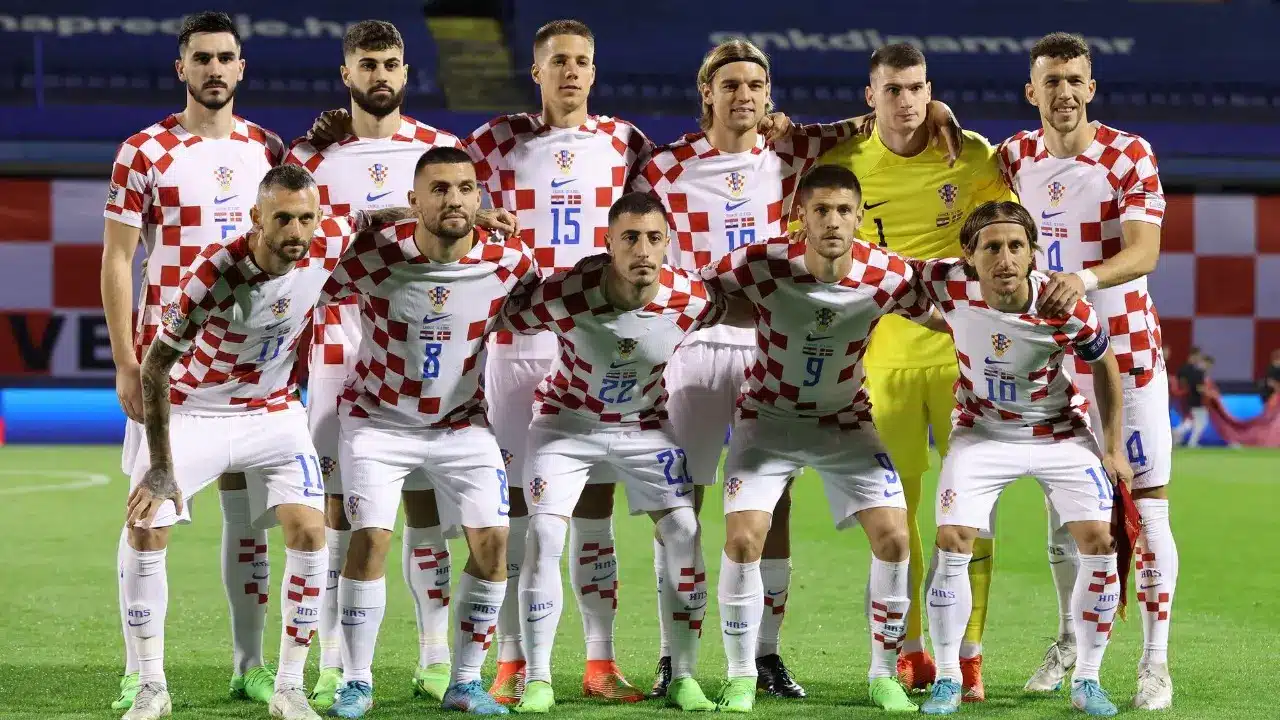
Knockout upsets happen structurally, not randomly. In 2022, Croatia eliminated Brazil in penalties in the quarterfinals.
In 2018, host nation Russia knocked out 2010 champions Spain on penalties. In both cases, the losing side was favored on implied probability.
That is not a coincidence – it reflects the reality that in a single-elimination format, variance compresses form advantages significantly.
Backing the structural upset at plus odds in the knockout rounds, particularly in the Round of 32 and Round of 16 when mismatches are most pronounced, is a legitimate part of a sound World Cup betting strategy.
In-play value concentrates around the 60-70 minute mark in knockout matches. When a team goes ahead and shifts to a low defensive block, the in-play line on the trailing team often overreacts to their nominal pressure – books shade the lines toward the chasing side, creating value on the leader to hold.
Size down stakes relative to group stage volume in the knockout rounds. Fewer matches means fewer edges, and the correct response is selectivity, not frequency.
The Mistakes That’ll Cost You
Betting heavy favorites on the two-way group stage line. This is the single most common error in early-tournament World Cup betting. Oddsmakers know Argentina, France, and Brazil attract enormous public action, and they price accordingly. Argentina at +900 to win the tournament (roughly 10% implied probability) offers structurally better value than backing them at -400 on the two-way line to beat a well-organized lower-ranked opponent in a group stage match where a draw keeps both teams’ qualification hopes alive. Betting heavy favorites early in the group stage is one of the quickest ways to lose money – the price you pay rarely reflects the actual difficulty of a short, high-pressure match against a side playing for its tournament life.
Confusing 90-minute result markets with advancement markets in the knockout rounds. This is a mechanical mistake, not a judgment error, and it is alarmingly common. If you bet Team A to win on the three-way line in the Round of 16 and the match finishes 1-1 after 90 minutes, your bet loses – even if Team A wins in extra time or via penalties. The settlement terms are different. Read them before placing the bet. The advancement market and the 90-minute result market are not the same product, and conflating them in a tournament where knockout matches regularly go to extra time is an expensive habit.
Chasing losses across the group stage volume. Over 100 group stage games across roughly two and a half weeks is the highest-volume betting environment in global sports. Losing runs are statistically inevitable at that volume, and the response most bettors have – increasing stakes to recover – is the mechanism by which bankrolls collapse before the knockout rounds even start. The group stage is the most dangerous phase for discipline, not because the betting is harder but because the sheer number of games creates the illusion that the next bet is always right around the corner.
Over-staking outright futures before the bracket implications are priced. Outright World Cup odds compress rapidly once group stage results clarify which favorites face favorable bracket paths and which draw brutal quarterfinal matchups. England at +700 (roughly 13% implied probability) before the groups play out may offer materially better value than the same bet placed mid-tournament when their knockout bracket is known and public money has already narrowed the price. Size outright futures early and treat them as a fixed allocation – do not chase the position by adding to it as confidence builds, because by then you are buying a shorter price.
Ignoring dead rubber dynamics on Matchday 3. This overlaps with the group stage strategy section, but it is worth naming as a specific betting mistake because the financial cost is concrete. Backing a qualified, rotating favorite at minus odds on Matchday 3 – simply because they are the stronger team on paper – ignores the structural reality that their manager has already moved on to the knockout rounds mentally and operationally. Germany won the 2014 World Cup and has missed the knockout stages in the two tournaments since. Roster turnover, form cycles, and tournament variance are real. Reputation is not a betting edge.
World Cup Bankroll Planning for the Full Tournament
The most common depletion pattern in World Cup betting is straightforward: too much capital committed too early, chasing excitement in the group stage, nothing left of meaningful size when the knockout rounds offer the clearest structural edges. Avoiding that pattern requires a budget that is set before the first kick-off and treated as fixed. Bankroll management is not a supplementary concern in a six-week tournament – it is the primary strategic decision.
Split the tournament budget across three phases. Allocate roughly 40% to the group stage – more bets, smaller individual stakes, maximum selectivity on market type. The group stage is where you build information, not where you concentrate capital. Allocate roughly 35% to the Round of 32 and Round of 16, where the field narrows, lineup stability increases, and pre-match modeling carries more weight. Reserve the final 25% for the quarterfinals onward – fewer bets, maximum stake size per bet, full selectivity. That is where the tournament’s sharpest edges tend to materialize, and it is where recreational money flooding in from casual fans creates the most pricing distortion.
Use a fixed-unit system rather than flat dollar amounts. Betting a consistent percentage of your remaining bankroll per bet – typically between 1% and 3% depending on edge confidence – means variance in week one does not eliminate your capacity to bet in week four. One genuine concern with the unit system: bettors tend to inflate their ‘confidence level’ on bets they like emotionally. Build a rule that nothing exceeds 3 units regardless of how strong the case feels, and stick to it even when Argentina opens the tournament.
Futures deserve a dedicated allocation, placed early. Spain at +450, England at +700, and Argentina at +900 on DraftKings represent the current market hierarchy for tournament winner. Those prices will shorten as the tournament progresses and public favorites survive their group. The structural case for sizing outright futures early – before the group stage compresses prices – is straightforward: you are buying implied probability at a higher number than you will be able to access three weeks from now. If you want to explore same-game parlay structures that combine futures exposure with individual match angles, the World Cup 2026 same game parlay betting options covers which books offer the most flexible parlay structures for tournament betting.
The final rule on bankroll management for a tournament of this scale: set the budget before the first game. Do not reload it. If you exhaust your allocation in the group stage, that is the information – not a prompt to fund the account again for the knockouts. The reload is where recreational bettors turn a disciplined tournament into a loss that takes months to process. Set the number. Hold the line.
World Cup Betting Bankroll Betting Strategy
The structural argument for a differentiated World Cup 2026 betting approach is not complicated: group stage games and knockout matches operate under different incentive structures, different market mechanics, and different settlement terms.
Bettors who treat them identically – applying the same market selection and staking logic across all 104-plus matches – are not making analytical errors on individual games. They are ignoring the format entirely.
The clearest edges in the group stage live in market selection: advancement odds over individual match lines, three-way moneylines over two-way, and motivated underdogs on Matchday 3 over rotating, already-qualified favorites.
In the knockout rounds, the edge shifts to settlement-term discipline – knowing exactly what your market covers before you place the bet – and structural upset exposure at plus odds in the earlier elimination rounds.
These are not soccer betting tips built on narrative. They are structural observations about how tournament format shapes team behavior and market pricing.
The tournament bracket opens June 11. The outright markets are priced now. The group stage advancement odds offer value before public money floods them in week one. The structural case holds regardless of which co-host city the opening ceremonies favor. The value is there now.