
We’re rapidly approaching the dawn of the 2026 NBA Draft cycle. The college basketball season tips off in under two months and some international seasons, like the Australian NBL, tips off this month. Before those games begin and we receive swathes of new data, let’s dive into our second preseason 2026 NBA Draft first-round mock.
It’s nearly impossible to predict what will happen this early out from a draft, so I’ll determine each pick based on what I would do, not what I expect to happen. We determined the order for the draft through a random Tankathon simulation. Plenty will change in the first month or two of play, so this mock establishes somewhat of a baseline for us.
1. Brooklyn Nets – Darryn Peterson, G, Kansas
Darryn Peterson enters the college season as one of the more talented and decorated high school guard prospects in quite some time. He’s a special on-ball creator oozing dribbling, scoring and playmaking talent, all while dominating on the defensive end. At his ultimate ceiling, Peterson could compete become a multi-decade franchise centerpiece in Brooklyn fueled by his elite offense initiation and defensive playmaking
2. Atlanta Hawks – Cameron Boozer, F, Duke
Trading for New Orleans’s 2026 first-round pick on draft night in 2025 pays major dividends here, landing them the second pick and aj. Boozer projects as an elite offensive forward, blending dominant interior scoring, snappy processing and promising outside shooting to beat all manner of defenders. He’d provide an ideal long-term second offensive option to Trae Young for the Hawks.
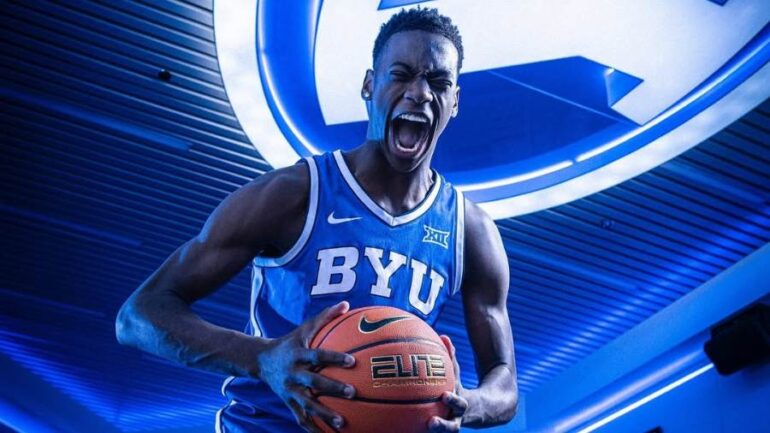
3. Chicago Bulls – AJ Dybantsa, F, BYU
After years of denying reality, the Bulls finally land a potential franchise cornerstone in the top-3 of this draft. Dybantsa might have the highest scoring upside of the big three, too skilled and strong at shooting for most bigger players and too quick and strong for most smaller ones. He’ll need to improve his decision making and defensive motor, but he could develop into one of the league’s more productive offensive wings.
4. Washington Wizards – Nate Ament, F, Tennessee
Washington just misses out on the vaunted 2026 top three, but Ament is a solid consolation prize. He’s this draft’s premier two-way forward, bringing NBA quality shooting versatility and defensive upside to the table. Ament must add more size and strength to hang in the pros and score more effectively in the paint, but it’s easy to imagine him slotting in easily in different lineup configurations.
5. Utah Jazz – Karim Lopez, F, NZ Breakers
Despite their efforts in recent drafts, the Jazz are still light on two-way wings and forwards. Lopez is a polished slasher despite his age and impressive physical tools with enough shooting and passing flashes to project forwards. He must continue to refine his technique on defense, especially defending away from the ball, but his enticing two-way potential and driving upside make him an easy sell here.
6. Charlotte Hornets – Jayden Quaintance, C/F, Kentucky
The Hornets desperately need a defensive anchor and Quaintance provides that to an offensively-slanted Charlotte team. He doesn’t space the floor much at this point, but the glimpses of power driving and connective passing suggest offensive growth. Despite lacking traditional center height (listed 6’9), his exceptional athleticism, length and shot blocking instincts offer Quaintance a massive defensive ceiling.
7. Portland Trail Blazers – Mikel Brown Jr., G, Louisville
Aside from Darryn Peterson, Brown Jr.’s combination of 3-point shooting, passing and dribbling outmatch nearly every other guard in the class. He’s a dynamic on and off-ball shooter with elite vision, especially skipping audacious passes across the court. Another underwhelming season from Scoot Henderson and/or Shaedon Sharpe could lead the Blazers to address guard early in 2026.
8. Memphis Grizzlies – Elyjah Freeman, F, Auburn
Elyjah Freeman played Division II basketball last season, but that won’t keep him away from draft discussions if he thrives in the SEC this season. Players with unique paths and skillsets like Freeman aren’t for every team, but historically forward-thinking organizations like Memphis could swing and benefit from his unique offensive upside, especially as a driver.
9. Sacramento Kings – Caleb Wilson, F, North Carolina
The Kings have lacked rim protection from their forwards and centers for years and Wilson is one of the best defensive wing prospects to enter the NBA in quite some time. He’s an elite weak side rim protector who can switch on defense and disrupt passing lanes. Even without a reliable outside shot or creation chops, Wilson’s enormous defensive upside looks well worth a top-10 pick.
10. Miami Heat – Hannes Steinbach, F, Washington
If Steinbach plays as he did against German League and FIBA competition this summer, he’s primed to eviscerate college defenses. He’s a bit of a tweener between forward and big man, but Steinbach’s elite traits — feathery touch, incredible strength, hands and coordination — outweigh his positional questions. More traditional scouts could fade him for his developing outside shot and defense, but a sharp organization like the Heat might value how he’s produced to this point.
11. Toronto Raptors – Bennett Stirtz, G, Iowa
After a historic season at Drake last year, Stirtz will hope to replicate his offensive dominance at the power conference level. He’s a rare pick-and-roll initiator with veteran feel and pacing who counters with effective driving and outside shooting. Older college point guards often don’t land this high in th4e draft, but Stirtz could be a major outlier here, as he has been for much of his basketball career.
12. Memphis Grizzlies – Dash Daniels, G, Melbourne
Daniels is the youngest prospect in the 2026 NBA Draft, which means his game isn’t as developed as some of his peers. Offense is where his primary issues come, as his lack of outside shooting or handling prowess limits his current scope. He’s a defense-first prospect though who thrives as an on-ball stopper and off-ball disruptor with a high enough ceiling to make him worth exercising some patience.
13. Indiana Pacers – Patrick Ngongba II, C, Duke
Indiana will enter the center market after losing Myles Turner this offseason. In a class devoid of many true center bets, Ngongba II’s blend of physical strength and modern skill make him an easy player to value. He dominated his small-sample minute share as a freshman and he should thrive for the Blue Devils as a sophomore as a two-way big with ample passing and dribbling aptitude.
14. San Antonio Spurs – Kam Williams, F, Kentucky
Williams adds more badly needed floor spacing to San Antonio’s core. He’s a volume movement shooter at 6’8 with the passing chops to punish defenses who sell out on his jumper. His exceptional instincts, size and length allow Williams to wreck on defense. Though he can’t do much with the ball as a creator, the Spurs would only ask Williams to defend and space the floor at the highest levels.
15. Milwaukee Bucks- Labaron Philon, G, Alabama
A talent-devoid Milwaukee team will hope Philon becomes their point guard of the future. He’s potentially in for a breakout sophomore year at Alabama, especially if he can add more strength and become a more aggressive downhill scorer. If those improvements happen, Philon’s speed, handle and passing vision all indicate plenty of NBA offensive utility.
16. Detroit Pistons – Braylon Mullins, G, UConn
Even after signing Duncan Robinson in free agency, the Pistons could use more long-term off-ball shooting next to Cade Cunningham. Mullins is a dynamic, high-volume movement shooter with enough passing and finishing chops to keep defenses honest. While Mullins might not bring much as a creator or defensive stopper, the NBA will value his shooting and skill on the wing.
17. Boston Celtics – Chris Cenac Jr., C, Houston
The Celtics will certainly search for a new long-term answer in the middle after losing all of their centers this offseason. Cenac Jr. will be a major project for Boston, especially on the offensive end, as he must improve his decision making and ball skills. His height, strength and fluidity on the perimeter offer the switching potential the Celtics covet for bigs.
18. Oklahoma City Thunder – Anthony Robinson II, G, Missouri
Robinson was one of the nation’s best perimeter defenders last season, generating turnovers at the clip Oklahoma City will love. While Robinson’s perimeter defensive stopping upside is high, he’s an equally intriguing offensive prospect. His rare foul-drawing, passing vision and shotmaking potential could help Robinson develop into another two-way guard that OKC’s opponents despise.
19. Dallas Mavericks – Cayden Boozer, G, Duke
Dallas will likely look to address their lack of backcourt talent and playmaking next offseason, especially considering Kyrie Irving’s health. Boozer is a phenomenal passer with the feel to run pick-and-rolls, push in transition and add value as a connective passer. He’ll need to improve his outside shot to thrive as an NBA offensive player, but his size, passing and defense are first-round traits.
20. Atlanta Hawks – Kingston Flemings, G, Houston
After drafting Cameron Boozer early in the draft, the Hawks swing on another point guard option to pair with Young. Flemings could struggle to find playing time early at Houston, but he’s one of the more physically talented guards in the class. His incredible speed and explosiveness and passing vision are positive signs for his ultimate NBA ceiling, especially if his pull-up jumper crystallizes.
21. Golden State Warriors – Koa Peat, F, Arizona
An impending split with Jonathan Kuminga could lead the Warriors to look for another forward option in the 2026 NBA Draft. Peat is a dominant athlete and interior scorer who adds most of his value as a face-up driver and versatile defender. Improving his outside shot will be key for him to find a home as a complementary forward at the NBA level.
22. Oklahoma City Thunder – Tounde Yessoufou, F, Baylor
Yessoufou sports some of the highest defensive upside in the class, loaded with explosive athleticism, playmaking instincts and a large frame fit for on-ball defense and flying around off the ball. He currently functions like a short big man on offense, but more 3-point shooting improvement this season at Baylor will help counterbalance his power driving and interior scoring upside.
23. Minnesota Timberwolves – Isiah Harwell, G, Houston
Harwell should find a role on the court for Houston fairly quickly as his perimeter defense and outside shooting make him an easy fit next to other great players. The NBA will value that scalability as well, especially if Harwell’s flashes of drive creation and pull-up shotmaking translate to the college level. Minnesota adds more perimeter depth here, drafting a player who shouldn’t have trouble fitting next to Anthony Edwards and Julius Randle.
24. Los Angeles Lakers – Malachi Moreno, C, Kentucky
The Lakers will still be searching for long-term center options next offseason barring something shocking. Moreno might struggle to find playing time in a strong Kentucky frontcourt, but he’s one of the most talented true center prospects in this class. His rim protection, interior scoring and perimeter flashes fit the description of effective modern centers and pairs him smoothly with Luka Doncic.
25. Charlotte Hornets – Dame Sarr, F, Duke
Sarr’s physical potential understandably has generated significant excitement; he’s 6’8, fast with flashes of driving and shooting that suggest high NBA potential. The Hornets should continue to add more defensive versatility and athleticism on the wing and Sarr should bring that with potential to be even better with a strong offensive season at Duke.
26. New York Knicks – Adrian Wooley, G, Louisville
Wooley would add another true backcourt difference maker next to and behind Jalen Brunson. He’s already a seasoned off-ball player, adept at hitting spot-up threes and attacking tilted defenses. Improvement to his live-dribble creation could help Wooley find a starting role in the NBA as a guard who can moonlight as a primary while spelling star initiators,
27. Oklahoma City Thunder – Neoklis Avdalas, F, Virginia Tech
Avdalas boasts the ball skills and size the NBA, and especially teams like the Thunder, covet. He’s 6’8 with dribbling and passing chops that mirror most guards, not wing or forward sized players. Avdalas isn’t a dynamic athlete, but his pick-and-roll ability, driving game and on-ball defense give him a chance to carve out an NBA role.
28. Cleveland Cavaliers – Nate Bittle, C, Oregon
Cleveland still doesn’t have a reliable third center behind Evan Mobley and Jarrett Allen and Bittle would hold up in a pinch, especially on offense. Bittle’s age and injury history might turn some teams off to him, but seven-footers like him who space the floor, score at the hoop, pass and block shots can always find homes in the NBA
29. Denver Nuggets – Shelton Henderson, F, Miami
Henderson has a chance to break out for a relatively in-flux Miami roster. He’s a power wing with exceptional athleticism and enough dribbling and connective passing chops to keep defenses honest. His ceiling as a creator and off-ball wing likely depends on 3-point improvement, but Henderson’s two-way package compares to some of the best young two-way wings in the NBA.
30. Washington Wizards – Jaden Toombs, C/F, SMU
Toombs will enter college basketball ready to excel on offense. He’s a seasoned offensive player with a deep post bag, ball skills, passing feel and a workable outside shot. The Wizards are an ideal landing spot for a shorter center without great rim protecting skills, as Toombs and Alex Sarr are a theoretically synergistic pairing.