
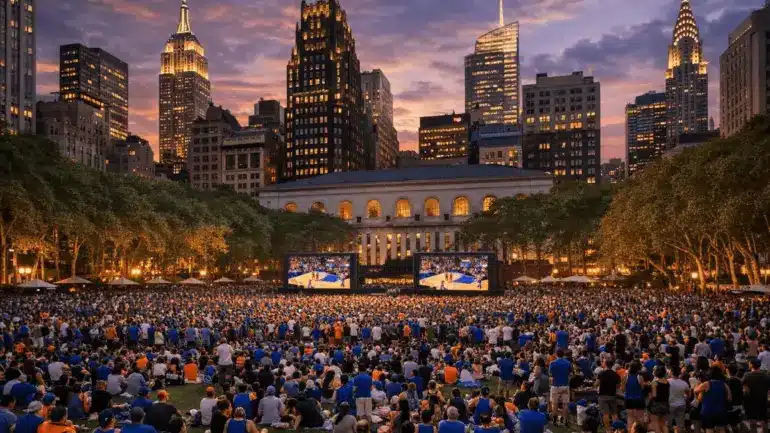
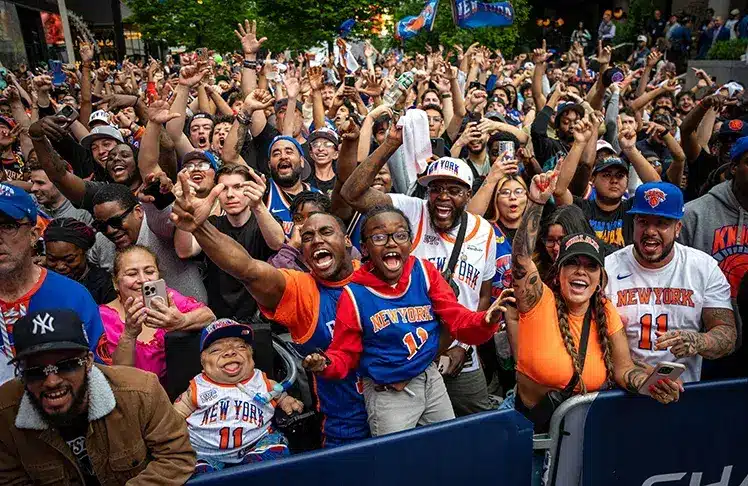
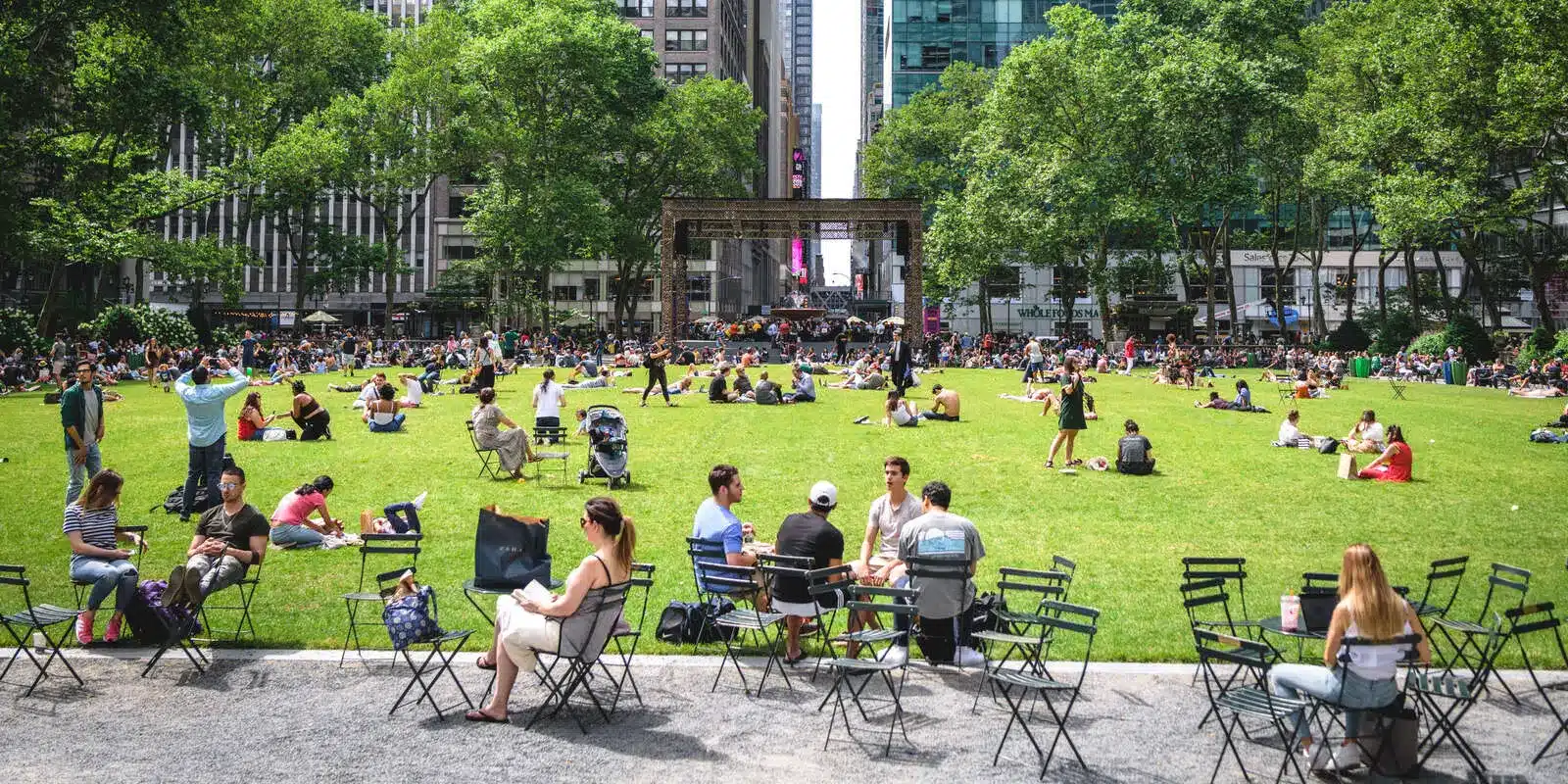
NYC Mayor Zohran Mamdani announced a free, 5,000-person watch party at Bryant Park for NBA Finals Game 3 on Monday night after the city’s permitting office – coordinating directly with the Secret Service – rejected the original watch party application.
That was because because President Donald Trump would be attending the game in person.
This is not just a logistical workaround. It is a sitting mayor using the machinery of city government to keep a cultural moment alive in the face of a presidential security perimeter – and the combination of sports fever, political authority, and urban identity that produces is something that travels well beyond the box score.
The machinery here is worth unpacking carefully, because what happened Monday in New York is a specific kind of story: one where the Knicks‘ first NBA Finals appearance at the Garden since 1999 collides with Secret Service logistics, a nationally prominent mayor, and a fan base that has spent two rounds turning Midtown Manhattan into an outdoor arena. That collision is the story – and it has pull that standard Finals coverage simply does not generate.
What Actually Happened – The Full Sequence
The sequence began Sunday, when the NYPD released a statement confirming the outdoor watch party outside MSG would not happen for Game 3. The statement was direct: “There will be no watch parties outside of Madison Square Garden for Game 3 only. This was done fully in coordination with the Secret Service because of the presidential visit. We expect watch parties at Madison Square Garden to resume for Game 4.” The framing of that statement – “Game 3 only” – was deliberate, a signal to fans that the city was not abandoning the tradition, just pausing it for one night under extraordinary security pressure.
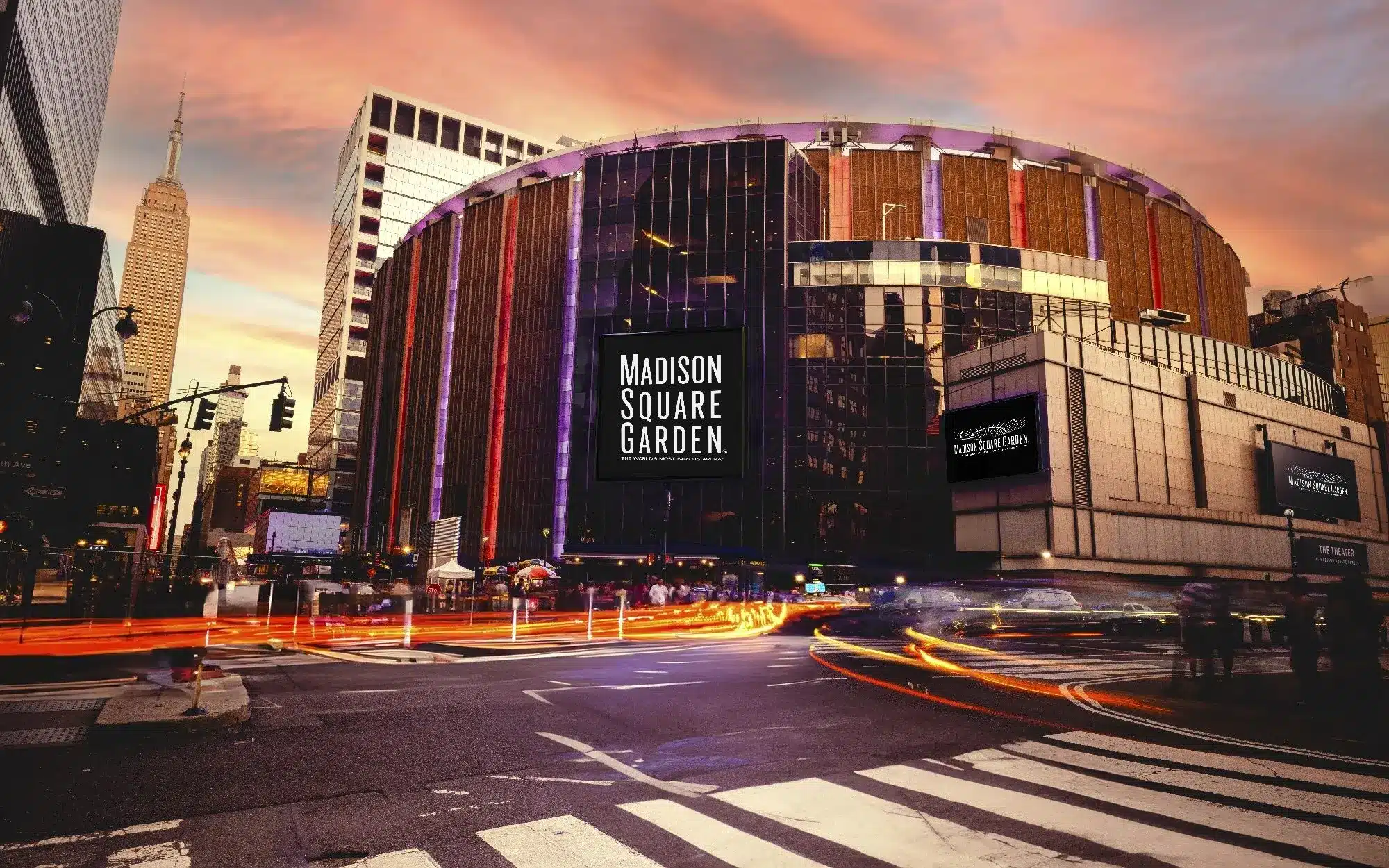
The Secret Service’s involvement was not abstract. Trump’s attendance triggered an expanded security perimeter around MSG that the city advised ticketed fans to arrive at least two hours early for, with a strict no-bag policy and TSA-style screening in effect around the arena.
The permit application for the outdoor watch party was not pulled after approval – it was rejected outright during the coordination process, a distinction that underscores this was a security call, not a policy reversal.
Mamdani moved quickly. He announced the Bryant Park alternative on Monday, with registration opening at noon ET for the 5,000-capacity free event.
The Knicks simultaneously activated team-sanctioned watch parties at Wollman Rink in Central Park and Brooklyn Bowl, both of which required advance registration and reached capacity rapidly.
The multi-venue pivot was not improvised – it reflected a city that has been building out a distributed watch-party infrastructure across this entire Finals run, a strategy designed to diffuse crowd pressure from Midtown while preserving the communal viewing experience that has defined the electric street-level energy of this Knicks postseason.
The crowd control stakes are real. For Game 2, NYPD Commissioner Jessica Tisch confirmed more than 20 people were detained at the MSG-area watch party as celebrations turned chaotic – a warning sign that had already put the city’s permitting approach under scrutiny before Trump’s visit added a second layer of complexity.
The watch parties were also briefly canceled before Game 1 before that decision was reversed, meaning Monday’s Bryant Park pivot was the third distinct permitting episode of this series in fewer than two weeks.
Mamdani, the Knicks, and the City – Why This Combination Has This Kind of Pull
Three elements are operating simultaneously here, and none of them alone would generate the reach that all three together produce.
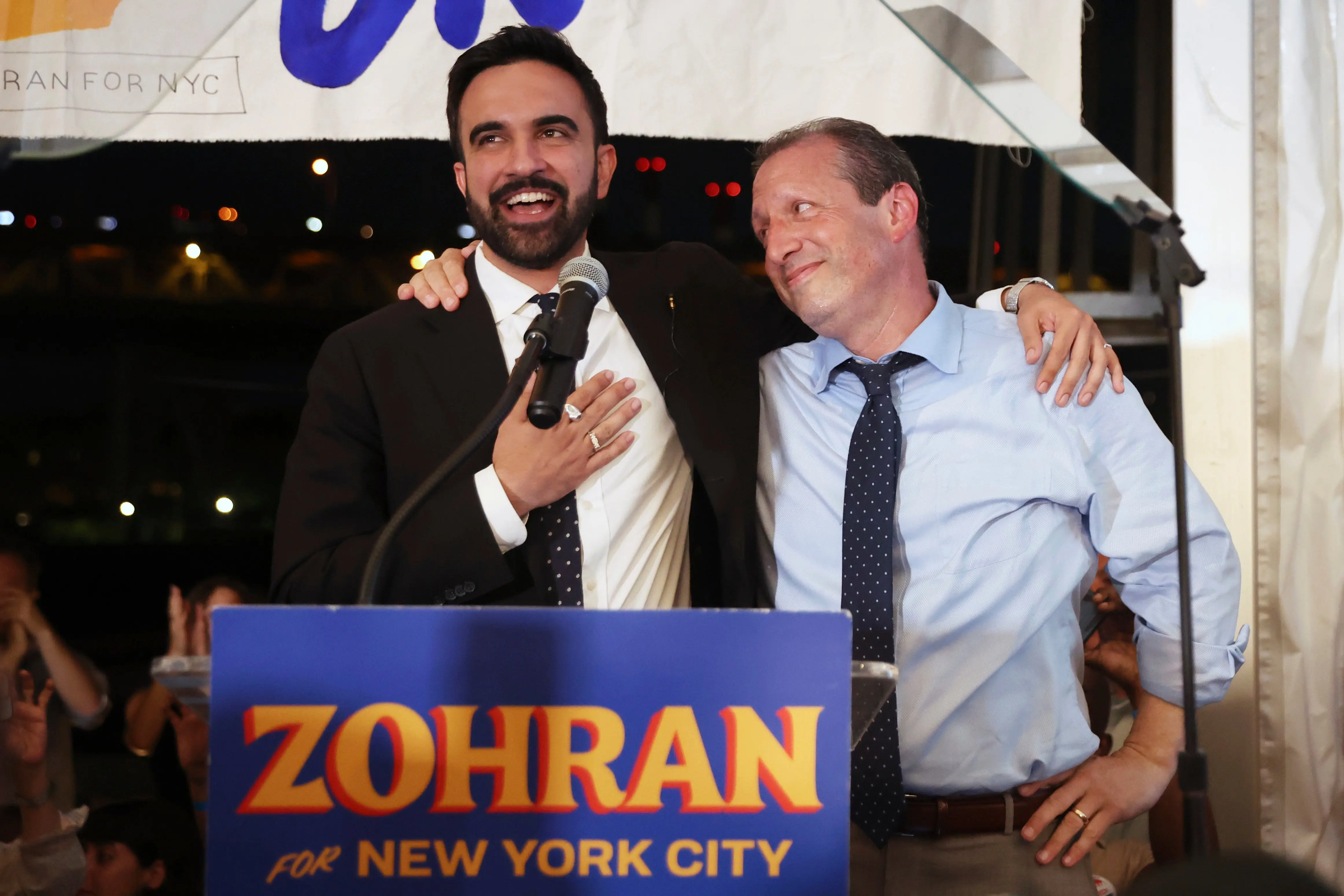
Mamdani is not a background figure in this story – he is a newly elected mayor who has made a point of showing up at these watch parties personally, framing them as a way to “bring the whole city together,” and who told 1010 WINS he personally bought a ticket to Game 3 days in advance.
That is not a mayor doing obligatory sports optics. That is a politician whose public identity is actively bound up in this cultural moment.
The Knicks themselves carry a weight that goes beyond a good team having a good year. This is the franchise’s first Finals appearance at the Garden since 1999 – 26 years of a city’s sports identity waiting for a moment that finally arrived.
The cultural investment New York has built into this run is not casual fandom; it is decades of deferred expectation now exploding into public space.
The Knicks’ Finals fever has already reshaped the city’s cultural landscape in ways that extend well beyond the arena – restaurants renaming menu items, celebrities filling courtside seats, a civic pride that has annexed entire neighborhoods for game nights.
The Trump dimension is the third element – and the one that makes this story travel into media ecosystems that would otherwise never touch an NBA Finals watch-party logistics story.
Trump attending Game 3 is not background context. It is the structural reason the whole sequence happened: the permit denial, the Secret Service perimeter, the mayoral pivot, the distributed venue strategy.
That is not a small thing. A presidential visit to Madison Square Garden for the first Finals game there in 26 years, in a city whose mayor is a prominent progressive voice, with 5,000 fans relocated to Bryant Park as a direct result – the framing of that story writes itself across political media, sports media, and local news simultaneously.
The celebrity-and-politics crossover that has defined this Knicks Finals run at every level found its sharpest expression yet on Monday night.
The Social Mechanics – Why This Travels Beyond the Core Audience
The audience compounding at work in this story is unusually clean, because the communities it activates do not significantly overlap in their normal media consumption – and each gets a distinct entry point.
First: the core Knicks fan base, which is already activated at maximum intensity for a potential 3-0 series lead in the first Finals at MSG since 1999.
This audience does not need a reason to engage – it is already inside the story. The Bryant Park watch party is their logistics update, their community gathering point, their shared experience. Standard Finals coverage reaches them without difficulty.
Second: the New York City civic audience – residents and former residents who track city politics, mayoral decisions, and the question of what kind of mayor Mamdani is proving to be in his early tenure.
This audience does not follow NBA coverage closely, but a story about a mayor redirecting 5,000 people to Bryant Park in response to a Secret Service permit denial is squarely in their lane. Mamdani’s personal ticket purchase, his watch-party appearances, his framing of these events as civic gatherings – that is political identity content distributed through a sports channel.
Third: the national political media audience, which is tracking every public intersection of Trump’s activities with major cultural events.
A presidential visit that physically displaces thousands of fans from a 26-year milestone game at one of America’s most iconic arenas is not a sports story for this audience – it is a politics-meets-culture story with concrete, photographable consequences. The Bryant Park crowd is the visual evidence.
Fourth: the urban events and public space audience – journalists, urban planners, policy observers, and culture writers who cover how cities manage large-scale public gatherings.
The city’s multi-venue distributed strategy – Bryant Park, Wollman Rink, Brooklyn Bowl, the Great Lawn – is a case study in real-time crowd management that has nothing to do with who wins Game 3. That audience arrives through a completely different door. The aggregate reach of all four communities combined exceeds what any single-audience Finals story could generate, and the overlap between them is minimal. That is the mechanism.
What’s Confirmed and What Isn’t
What is confirmed: Mayor Mamdani announced a free, 5,000-capacity watch party at Bryant Park for Game 3, with registration opening at noon ET on Monday.
The NYPD released an official statement Sunday confirming the MSG-area watch party was canceled for Game 3 only, explicitly citing coordination with the Secret Service due to Trump’s attendance. Team-sanctioned alternatives at Wollman Rink and Brooklyn Bowl were made available and reached capacity. NYPD Commissioner Tisch confirmed more than 20 detentions at the Game 2 watch party.
The permit for the Game 3 MSG-area event was denied during the coordination process, not revoked after approval. The NYPD statement explicitly said watch parties outside MSG are expected to resume for Game 4. Game 3 is the first NBA Finals game at MSG since 1999.
What is not confirmed: the exact security perimeter dimensions and how they interacted with the specific permit application geography; whether Mamdani’s Bryant Park announcement was coordinated in advance with city agencies or announced unilaterally; final attendance figures for Bryant Park and whether the 5,000 capacity was reached; and whether the Game 4 watch party permit will be approved without additional conditions if the Knicks close out the series.
None of those uncertainties undermine the core story – a mayoral watch party triggered by a presidential visit to a 26-year Finals milestone is documented and significant regardless of the operational details that emerge later.
What to Watch Next
The first concrete signal to monitor is how Bryant Park actually runs on Monday night – crowd size relative to the 5,000 registered capacity, NYPD presence, and whether the distributed venue model successfully absorbs the fan energy that would have concentrated outside MSG.
A clean, high-energy Bryant Park event strengthens the case for the city leaning into this multi-venue strategy for the remainder of the series; any crowd-control incidents will complicate the Game 4 permit conversation significantly.
The second thing to watch is whether the NYPD follows through on the Game 4 MSG watch party commitment – and under what conditions.
If the Knicks win Game 3 and hold a 3-0 series lead, the potential for a Game 4 closeout at MSG creates a crowd-management scenario that dwarfs anything the city has managed so far this series.
The difference between permitting a watch party for a Game 4 with the series still alive and permitting one for a potential championship-clinching game is not administrative – it is a different security and public-safety calculation entirely.
For the latest on the New York Knicks, Mayor Zohran Mamdani, and everything at the intersection of sports and culture, keep it locked to Sportscasting.com.