
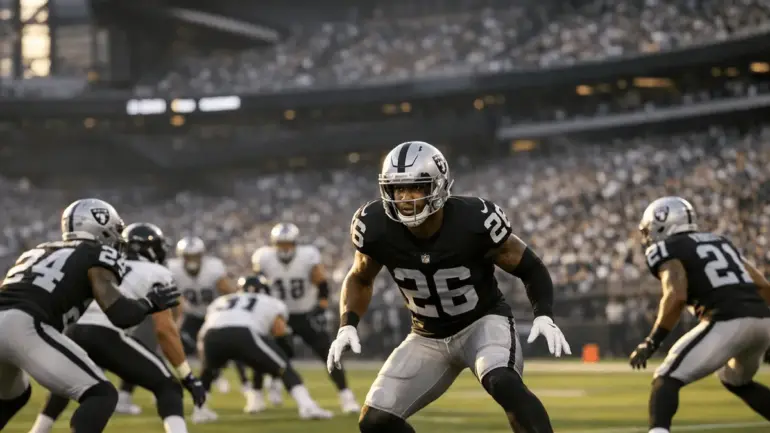
The Las Vegas Raiders finished 3–14 in 2025, ranked bottom-10 in defensive EPA for the third time in four seasons, and fired Pete Carroll before the calendar flipped to January. What came next – a full secondary rebuild, a scheme overhaul, four defensive backs drafted in a single class, and a trade for a nine-year veteran corner – is being framed as a routine offseason reset. That is not a routine offseason reset. That is a structural repositioning that moves the needle on 2026 totals, division futures, and the long-term betting identity of this franchise.
The conventional read is that Las Vegas added depth in the secondary, brought in some veteran experience, and is hoping for improvement. The honest read is that new defensive coordinator Rob Leonard is installing a fundamentally different defensive system – one built around scheme disguise, positional versatility, and a front-seven capable of generating pressure without forcing the secondary to survive in isolation. That is not addition by addition. That is a reset from the ground up, and it has direct implications for how this defense prices in 2026 markets.
The Triggering Signal – What the Raiders’ Secondary Overhaul Actually Means Schematically
The sourcing here is layered, and that layering matters. The SI.com Raiders beat reported the surface-level facts – Eric Stokes retained, Jeremy Chinn back for a contract year, four rookies drafted, Taron Johnson traded in. ESPN’s Raiders beat confirmed the broader schematic context at the 2026 combine: head coach Klint Kubiak confirmed Leonard will install a 3–4 base defense, moving Maxx Crosby into a stand-up edge role and prioritizing a true nose tackle and additional linebackers.
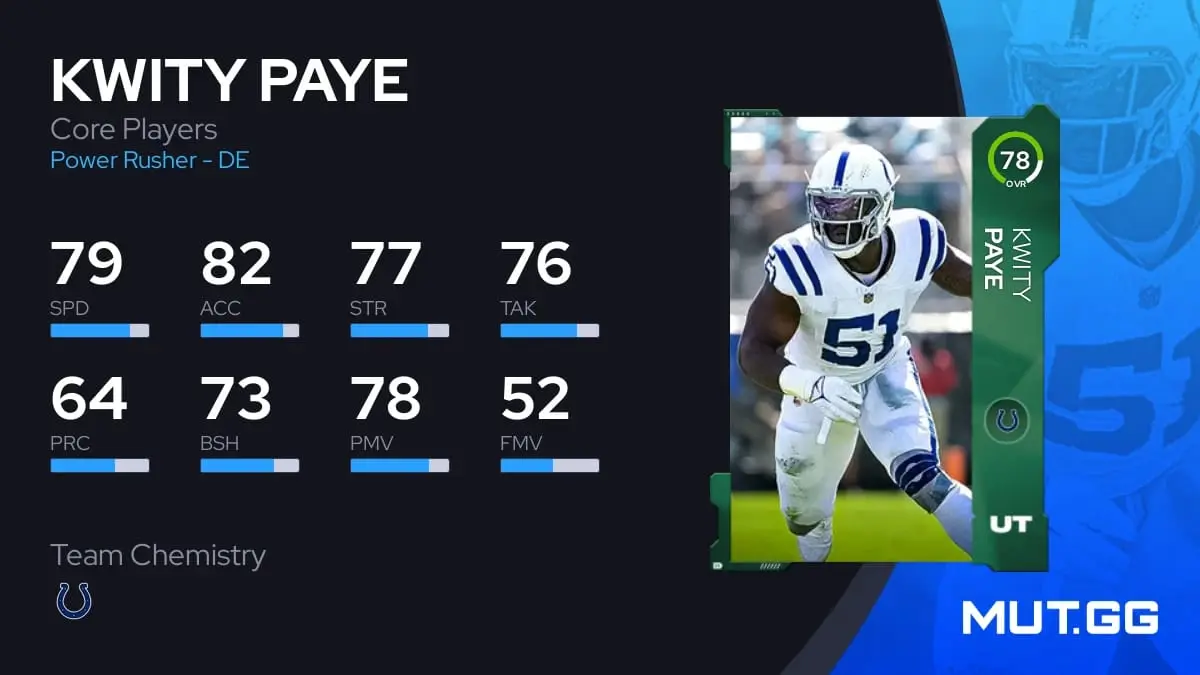
To support that front-seven transition, Las Vegas signed LB Nakobe Dean, LB Quay Walker, and DE Kwity Paye in March 2026. Those are not secondary signings. Those are the structural pillars that make the secondary investment coherent. A reworked secondary that still plays behind a porous front gets torched on schematic reads. A reworked secondary that plays behind a disguised 3–4 with legitimate linebacker depth and an edge rusher operating in his optimal alignment – that is a different calculation entirely.
The four rookie defensive backs drafted – CB Keon McCoy, safeties Treydan Stukes and Dalton Johnson, and CB Hezekiah Masses – were selected with scheme fit as the organizing principle. ESPN described McCoy specifically as a “scheme-versatile outside corner” with the length to play press in Leonard’s system. That descriptor is load-bearing. Leonard himself was direct at minicamp: “It’s a matchup league, you can’t out-scheme people all day – but being multiple is important.” The wording matters because it signals Leonard is not installing a rigid system. He is building a personnel-flexible defense, and the secondary acquisitions were designed for exactly that flexibility.
Why the Raiders’ Rebuilt Defense Matters – The Football and Betting Logic
Start with what the 2025 defense actually cost Las Vegas in betting markets. A bottom-10 EPA defense inflates opponent scoring, which inflates totals, which burns over bettors who trust the over. The Raiders went over their game total at a rate that made them one of the more reliably painful fades in the AFC West – opponents scored at will, Las Vegas gave up explosive plays without consistent pressure, and the secondary had no schematic answer for mismatches because it lacked versatility. That changes structurally in 2026, not just in personnel.
Chinn’s role is the clearest example of the upgrade’s depth. He posted 114 total tackles in 2025 as a hybrid safety/linebacker, deployed primarily as a “star” defender in box and slot packages. Sportsnaut characterized Leonard’s 3–4 installation as a “necessary reset” built around exactly that kind of positional versatility – Chinn spinning coverages late, masking pressure looks, and functioning as the connective tissue between the front and the back end. His 114-tackle output came in a scheme that undersold his skill set. In Leonard’s system, that production floor holds while the ceiling rises.
For bettors: The primary market to watch is Raiders team totals. Las Vegas was consistently torched on over-unders in 2025 because the defense couldn’t hold leads or force punts in critical windows. If the front-seven investments and secondary versatility translate to even a league-average pressure rate in Weeks 1–6, the total line will need to be recalibrated. Early-season Raiders totals – set before in-season defensive data accumulates – are the highest-value spot. The direction of the adjustment is 55/45 in favor of unders once the new scheme has had a full training camp to install, but that edge collapses quickly if rookie integration stalls.
For fantasy managers: Jeremy Chinn is the IDP asset to prioritize. A contract year, a scheme that leans on his versatility, and a front-seven that should generate more disruption than 2025 – that combination points toward a tackle floor that remains elite with upside on pass-rush contribution as Leonard deploys him in hybrid blitz packages. Our breakdown of how offseason roster moves reshape fantasy boards and futures pricing covers the broader NFL context, but Chinn specifically is undervalued at his current IDP ADP.
The division futures angle is harder to quantify this early – the AFC West remains KC’s conference barring a Patrick Mahomes injury – but the Raiders’ defensive investment shifts their ceiling from “rebuilding floor” to “competitive wildcard fringe” if the scheme clicks. That is the difference between a 5-win projection and a 7-8 win projection, and that gap has real value in win-total markets if the line doesn’t adjust. The probability the Raiders clear seven wins in 2026 given a functional defense sits at roughly 45/55 against – not a lean play, but not the automatic under it was in 2025.
The Complication – Honest Pushback on a Rebuild That Could Still Unravel in Year One
Here’s the honest pushback: scheme changes in Year 1 under a new coordinator historically produce more growing pains than immediate improvement, and Leonard is installing a 3–4 base with a roster that spent multiple seasons in a different defensive identity. Maxx Crosby transitioning to a stand-up edge role is an adjustment – a manageable one given his athleticism, but an adjustment nonetheless. And Crosby’s own trade buzz hasn’t fully died, which introduces a non-trivial roster continuity risk that undermines the entire defensive architecture if it resurfaces during camp.
The rookie defensive backs drafted in 2026 are scheme fits, not proven commodities. McCoy, Stukes, Dalton Johnson, and Masses will all be asked to contribute in a system none of them have played in at the NFL level, under a coordinator who has not yet run a game-week defensive operation at the top job. Leonard’s pedigree is legitimate – senior defensive assistant Al Holcomb and defensive line coach Travis Smith provide experienced infrastructure – but the gap between OTA install and Week 1 execution is where secondary rebuilds most often fail to deliver on their projections.
Johnson’s addition as a nine-year veteran provides insurance, and Chinn’s own assessment of Johnson’s value underscores the organizational intent: “When you get to that point, technique has carried you a long way.” But technique from a veteran corner doesn’t fix a rookie who blows an assignment on third-and-seven in a two-minute drill. The pushback is real. It doesn’t change the structural argument – this defense is meaningfully better-constructed than it was in 2025. What it does change is the timeline for when that construction translates to market-moving results. Year 1 of a two-year rebuild is the wrong frame for expecting an immediate defensive turnaround. It is the right frame for identifying the inflection point before the market prices it in.
What Happens Next – The Training Camp and Preseason Checkpoints That Determine Whether This Is Real
- Watch for Leonard’s base-to-sub-package ratio in preseason: If the Raiders are spending more than 55% of defensive snaps in nickel or dime in Weeks 2–3 of the preseason, that signals the 3–4 base installation is slower than projected and the front-seven investments haven’t yet unified the system. ESPN’s Raiders beat reporter is the primary credentialing source to monitor for depth chart and package usage updates through training camp.
- Watch for Keon McCoy’s slot-vs.-outside deployment: McCoy was drafted as a press-man outside corner, but early slot reps would indicate Leonard is using him as a developmental chess piece rather than a Day 1 starter. That distinction matters for how quickly the secondary can play multiple looks and – for betting purposes – whether the Raiders can disguise coverages early in the season before opponents adjust.
- Watch for any Maxx Crosby transaction or contract development: A Crosby extension before Week 1 effectively ends the trade discussion and locks in the defensive identity Leonard is building around. No extension – combined with any renewed trade chatter – is a significant negative signal for the defensive rebuild’s durability. FOX Sports’ Jay Glazer and NFL Network’s Ian Rapoport are the reporters most likely to surface movement on that front.
- Watch for early-season pressure rate data: The single most actionable betting checkpoint in Weeks 1–4 is the Raiders’ pressure rate versus 2025 baselines. If Las Vegas is generating pressure on 30% or more of passing plays – compared to a bottom-third rate in 2025 – the totals adjustment case becomes immediate and the under lean hardens substantially. That data will move the needle on mid-season win-total adjustments faster than any roster announcement.
Bottom Line
What is confirmed: the Las Vegas Raiders have rebuilt their secondary with a coherent schematic logic – retaining Eric Stokes and Jeremy Chinn, trading for Taron Johnson, drafting four scheme-fit defensive backs, signing three front-seven contributors, and installing a 3–4 base under coordinator Rob Leonard with legitimate coaching infrastructure around him. What is not confirmed: that any of this translates to immediate defensive improvement in a Year 1 scheme install with a young, unproven secondary learning a new system. The single variable that determines whether this is a market-moving development or a future-year story is training camp and preseason execution – specifically, pressure rate, package versatility, and which rookies crack the sub-package rotation before Week 1. The betting edge is real, but it is early-season and totals-based, not a division futures swing. For the latest on the Las Vegas Raiders, 2026 NFL defensive overhauls, and everything at the intersection of roster construction and betting markets, keep it locked to Sportscasting.com.