
It’s mid-February, pitchers and catchers have reported, and yet a 30-homer threat with elite plate discipline is still sitting on his couch.
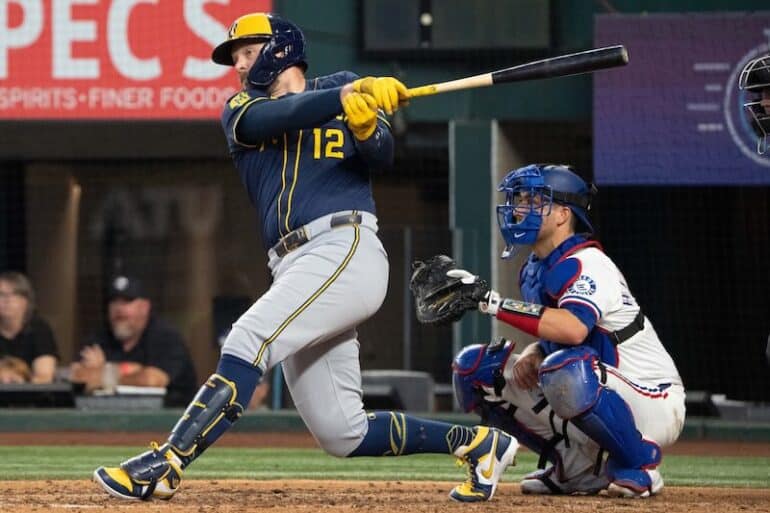
Rhys Hoskins is the definition of plug-and-play power: a right-handed bat with a 20-homer floor, elite walk skills, and a reputation for being a reliable middle-of-the-order option.
Entering his age-33 season after a 2025 hampered by a Grade 2 UCL sprain and bone bruise in his left thumb — the bottom hand on a right-handed swing — he’s not a long-term centerpiece.
No matter where he lands, Hoskins provides insurance, mentorship, and predictable production wrapped into one manageable short-term contract. For contenders and rebuilders alike, that combination has clear appeal.
Here are the four clubs that make the most sense for Hoskins, who is one of the best remaining MLB free agents available ahead of Opening Day.
1. Washington Nationals
Why it fits: The Nationals are still smoothing out a rebuild and need veteran steadiness around a young infield. Signing Hoskins lets the club keep Luis Garcia Jr. off a forced move to first base, preserves prospect development timelines, and adds a postseason-tested presence to a clubhouse that badly lacks it.
Breaking Down His Role in Washington:
- Immediate role: Everyday DH or first-base option to let Garcia stay at his natural position and keep Nuñez in a low-pressure development path. A veteran bat hitting fifth or sixth buys the youngsters’ lineup protection they’ve been lacking.
- Trade-deadline value: Before his thumb injury last July, Hoskins was slashing .242/.340/.428 with a 115 wRC+ — comfortably above league average — while his walk rate had actually improved from 10.3% to 11.9% and his strikeout rate had dropped to 26.7%. If that production holds through June, he becomes a clean, controllable rental with real market value for a contender at the deadline.
- Contract fit: A one-year deal with a club option or a low AAV with performance bonuses minimizes risk and maximizes upside for both sides. Given Milwaukee’s $4 million buyout on his declined 2026 option, Hoskins enters the market with modest expectations — which is exactly when value gets created.
2. Arizona Diamondbacks
Why it fits: In a tight NL West, Arizona can’t afford swing-for-the-fences experiments at DH. The Diamondbacks prize clubhouse chemistry and veteran polish; Hoskins supplies both while offering a proven right-handed power presence that doesn’t shrink in late-game situations. His Statcast profile — a 90.2 mph average exit velocity, 46.4% hard-hit rate, and 10.3% barrel rate in 2025 — shows the bat speed hasn’t left him, even in an injury-shortened year.
Breaking Down His Role in Arizona:
- Immediate role: Rotational DH and occasional first-base start, a safety valve against slumps and injuries in a lineup that needs dependable run production.
- Why it works: His near .790 career OPS, combined with his ability to consistently draw walks, gives Arizona a middle-of-the-order bat who stabilizes at-bat quality and punishes pitchers who try to work around the heart of the lineup. He won’t be a star here — he’ll be the hitter who quietly goes 2-for-4 with a walk while everyone watches Corbin Carroll.
- Budget reality: Fits the D-backs’ model for targeted, inexpensive veteran additions rather than long-term-heavy gambles — which matters in a division where the Dodgers are eating everyone’s lunch financially.
3. Pittsburgh Pirates
Why it fits: The Pirates acquired Spencer Horwitz from Cleveland last offseason specifically to anchor their first base situation, and he delivered — Horwitz was the only Pirate to post an OPS+ over 100 in 2025, becoming the offensive centerpiece of a roster that desperately needed one. But Horwitz bats left-handed and spent the majority of the season sitting against southpaws. That platoon gap is real, and Hoskins is precisely the bat to fill it.
The Platoon and Leadership Advantage:
- Platoon fit: Hoskins can serve as Horwitz’s right-handed complement at DH or first base against left-handed starters — a role that gives Pittsburgh two legitimate threats at the position for the first time in years, and lets Horwitz rest without the lineup cratering.
- Leadership: A veteran presence for a young core anchored by Paul Skenes — someone who’s stood in a playoff lineup and can speak credibly to younger hitters about handling pressure situations.
- Philosophy match: Hoskins’ career walk rate north of 13% and improved 11.9% figure from 2025 align with Pittsburgh’s approach-first offensive identity. He doesn’t expand the zone, he doesn’t sell out for power, and in a lineup that still lacks menace, that discipline matters.
4. Minnesota Twins
Why it fits: Minnesota’s first base and DH situation in 2025 was less “volatile” and more “structurally vacant.” With Carlos Santana gone and Alex Kirilloff retired, the Twins entered the season with Ty France — signed for $1 million on a non-guaranteed deal — as their projected starter at first, and no single player projected to make more than 50 DH starts. The position cycled through over 15 contributors at DH alone. Hoskins offers something Minnesota hasn’t had in years at that spot: a defined answer.
Target Field Fit and Durability Questions:
- Role: Everyday DH or set-and-forget middle-of-the-order presence to stabilize the lineup while younger options like José Miranda continue developing behind him.
- Park note: Target Field plays slightly pitcher-friendly to center but rewards pull-side power from right-handed hitters — a profile that aligns well with Hoskins’ pull-heavy approach and above-average hard-hit numbers.
- Health caveat: The thumb injury was a tag-play collision, not a mechanical issue. His pre-injury exit velocity and barrel numbers were intact. Short-term deals or performance triggers can hedge the risk.
Final Verdict on the Hoskins Market
There aren’t many sure things left on the free agent market heading into Opening Day.
Right now, Rhys Hoskins is about as close as it gets.
A one-year pact buys a team predictable power, heavy on walks, with a Statcast profile that still grades out as a legitimate middle-of-the-order threat.
In a market that prizes upside and appetite for risk, Hoskins quietly offers the opposite: reliable, measurable value.
Sign him, and you know exactly what you’re adding.
And in baseball, that level of certainty is often underpriced.