
Stacey King – former Chicago Bulls player, three-time NBA champion, and the broadcast voice that accompanied nearly two decades of Bulls basketball – has died.
The Bulls announced the news after being notified by a family member, and the reaction across Chicago and the broader NBA community was immediate and unambiguous: this is not a routine sports obituary. This is a community losing someone who was present, in an intimate and daily way, for millions of fans across two very different chapters of their lives.
King’s death lands differently because he did something rare – he played for the franchise during its dynasty years, then chose to stay and become its voice long after the spotlight moved on. For Bulls fans, he was the sound of the game, not just a figure from a historical roster. That combination of championship legacy and broadcaster intimacy is what makes the loss reverberate far beyond a standard tribute cycle.
Stacey King – Who He Was and Why He Mattered
King was selected sixth overall by the Bulls in the 1989 NBA Draft out of Oklahoma, arriving just as the franchise was assembling the pieces that would become one of the most dominant dynasties in professional sports history. He was part of Chicago’s first three-peat, winning back-to-back-to-back titles from 1991 to 1993 alongside Michael Jordan, Scottie Pippen, and Phil Jackson.
His on-court role was a supporting one – he averaged 6.6 points and 3.3 rebounds across five seasons in Chicago – but the context of those numbers matters. King was on the floor during the construction and execution of a dynasty, which gave him a credibility and a connection to that era that never fully transferred to any resume line. After stints with Minnesota, Miami, Boston, and Dallas across eight NBA seasons and 438 regular-season games, he stepped away from playing and eventually found his way back to Chicago through coaching in the Continental Basketball Association.
He joined the Bulls’ broadcast team in 2006 and built something that no championship ring could manufacture: a relationship with a fanbase built one game at a time. His catchphrases – none more celebrated than “I like my meatballs spicy!” – became part of the shared language of Bulls fandom. The Emmy-winning broadcaster didn’t just call games. He became the franchise’s emotional connective tissue across a long, often difficult post-dynasty era. That is not a small thing – that is an institution.
The Bulls Community Reacts – What His Death Set Off
The Bulls organization called King “a treasured member of the Bulls family” in their initial statement, a phrase that reads less like corporate boilerplate and more like an honest accounting of what he meant inside the building. The NBA said King’s “passion, knowledge and unmistakable energy resonated with generations of fans,” framing his legacy explicitly as a multi-generational one – which tracks for someone who was active in Chicago basketball from 1989 through his broadcasting tenure.
The response from players, media peers, and fans reflected the same dual identity that defined King’s career: people mourned both the champion and the broadcaster simultaneously, often in the same sentence. That dual grief is itself a signal of how completely he had woven himself into the franchise’s identity across two eras. Specific tributes from former players and broadcast colleagues were still emerging in the first wave of reporting, and a fuller accounting of individual reactions is expected as the news spreads through the day.
The breadth of the reaction – from the organization, from the league office, from fans on social media – confirms what anyone who followed Bulls basketball already understood: King was not a peripheral figure who happened to be on the roster. He was central to what the Bulls meant to Chicago across thirty-plus years of presence.
Why Stacey King’s Death Lands So Hard in Chicago
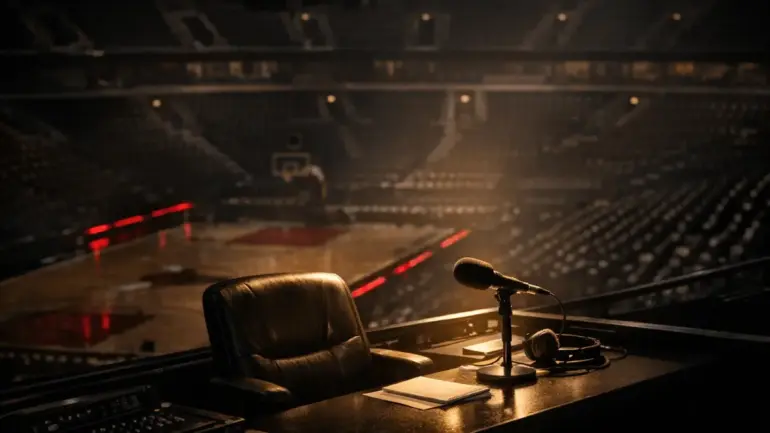
Here is the honest accounting: a broadcaster’s death hits a fanbase differently than an executive’s death or even a former player who left and built a life elsewhere. A broadcaster is in your living room on every game night. His voice is the soundtrack to wins that mattered and losses that stung. Over eighteen years in the booth, King became part of the sensory experience of being a Bulls fan – not a historical artifact, but a living, present part of how Chicago consumed its team.
The Chicago sports community has absorbed its share of difficult news in recent years, but the King story carries a particular weight because it removes something irreplaceable – not a player who can be replaced on a roster, but a voice that cannot simply be reassigned. The intimacy of that broadcaster-fan relationship is something that builds slowly, over years of shared experience, and it cannot be reconstructed. What Bulls fans lose here is not just a beloved personality. They lose the sound of their team.
What’s Confirmed and What Isn’t
What is confirmed: Stacey King has died. The Chicago Bulls announced his death after being notified by a family member. King was a sixth overall pick in 1989, a three-time NBA champion with the Bulls, and a broadcaster with the franchise since 2006. He was an Emmy Award winner and one of the most recognized voices in Chicago sports media.
What is not confirmed: No cause of death was included in the Bulls’ initial statement. No family statement beyond the notification to the team had been made public as of first reporting. No details about memorial services or funeral arrangements had been released. Specific tribute plans from the Bulls organization for the upcoming season had not been formally announced.
What to Watch Next
The next meaningful developments in this story are the release of a formal cause of death and any statement from King’s family, neither of which had been made public in the initial wave of reporting. Beyond that, watch for the Bulls to announce a specific tribute plan – a pregame ceremony, a booth dedication, a retired number equivalent for a broadcaster – as the organization moves from initial grief to formal remembrance.
The broadcast booth situation for the upcoming season will also draw attention, as will any championship reunion events or legacy conversations that King’s death may accelerate. This story is not finished – it is just beginning to move through the community that loved him, and the tributes still to come will define how his legacy is formally enshrined in Bulls history.
For the latest on Stacey King, the Chicago Bulls, and everything at the intersection of sports and culture, keep it locked to Sportscasting.com.