
The NFL didn’t stumble into its Super Bowl halftime decision. Bad Bunny was chosen because he is one of the most streamed artists on the planet, because his tours sell out instantly, and because his music sits at the centre of where pop culture actually is right now. Early reports suggest a hit-heavy set built around tracks like “Tití Me Preguntó,” “Dakiti,” and “Callaíta,” with strong expectations of at least one guest appearance, given how often he collaborates across hip-hop, Latin pop, and mainstream rap.
The reaction from Turning Point USA isn’t about production quality or audience reach. It’s about who the NFL decided to platform.
Turning Point USA Halftime Show And Why It Exists At All
Turning Point USA has announced its own “All-American Halftime Show,” scheduled to run at the same time as the Super Bowl halftime break. It will stream online, outside the stadium, and outside the NFL broadcast ecosystem.
The framing is deliberately oppositional. This is positioned as an alternative for viewers who feel alienated by the official choice. The issue is that the grievance is never clearly defined in practical terms. What’s objected to is cultural presence, not performance details.
Turning Point Halftime Show As A Political Statement Disguised As Entertainment
The project leans heavily on patriotic language, but the substance underneath it is political signalling. Bad Bunny performs primarily in Spanish. He represents a version of American pop culture that isn’t centred on English-only country or rock traditions. That alone has been enough to trigger the counterprogram.
Nothing about the NFL’s decision required a response this theatrical. The decision to stage a rival show is about visibility and discomfort, not about fixing a problem with the halftime format.
All American Halftime Show Performers And What That Lineup Signals
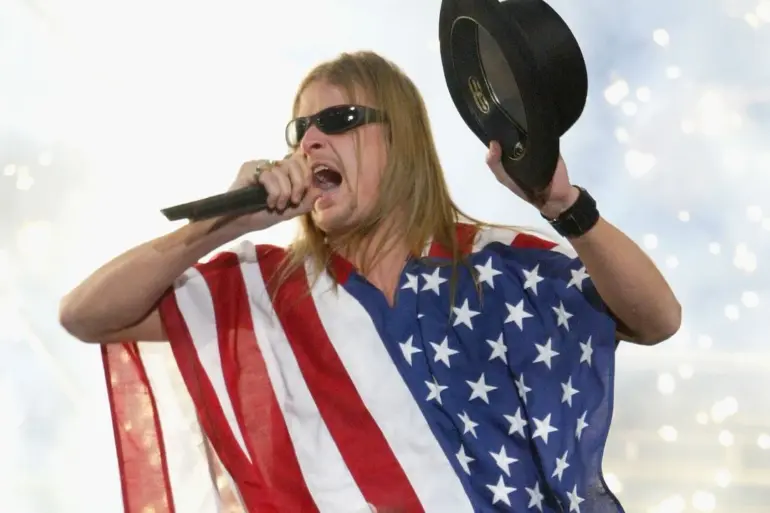
THE LINEUP FOR THE ALL-AMERICAN HALFTIME SHOW IS HERE! 🔥
Watch Kid Rock, Brantley Gilbert, Lee Brice, and Gabby Barrett THIS SUNDAY 🇺🇸 pic.twitter.com/xwurEhdB13
— Turning Point USA (@TPUSA) February 2, 2026
The confirmed lineup is intentionally safe and familiar:
- Kid Rock
- Brantley Gilbert
- Lee Brice
- Gabby Barrett
There’s nothing inherently wrong with any of these country artists. The point is how they’re being used. The lineup functions as a cultural marker, not as an attempt to compete on scale, reach, or relevance. It reassures a specific audience that the world they prefer still exists, untouched.
What The All American Halftime Show Is Really Reacting To
Turning Point USA talks about values and tradition, but the reaction only makes sense when viewed through a narrower lens. The discomfort isn’t about lyrics, choreography, or broadcast standards. It’s about who gets to occupy the most watched stage in American sports.
Bad Bunny doesn’t need to make a political statement for his presence to be read as one. His language, his background, and his audience already challenge an idea of pop culture that some people are invested in preserving.
Why The Counterprogram Feels Smaller Than The Moment
The Super Bowl halftime show works because it tries to capture the centre of popular culture at a given moment. This counterprogram opts out of that entirely. It doesn’t aim to reach everyone. It aims to reassure a group that feels bypassed.
That choice turns the event inward. Instead of celebration, it becomes insulation. Instead of spectacle, it becomes affirmation.
Bad Bunny Super Bowl Halftime Show And The Cultural Gap It Exposes
Bad Bunny’s selection highlights how far American pop culture has shifted. Spanish-language music dominates global charts. Cross-genre collaborations are normal. Audiences are international by default.
The backlash, and the need to build a parallel halftime show around it, shows a refusal to engage with that reality. The response isn’t to compete creatively. It’s to retreat.
41.4% of NFL players recently said that they opposed Bad Bunny as the Super Bowl Hafltime Show performer, so maybe they can tune in here instead.
Why This Will Fade While The Halftime Show Won’t
The NFL halftime show will be replayed, dissected, clipped, and discussed for weeks. The Turning Point USA stream will circulate within its intended audience and largely stop there.
As an entertainment product, it lacks ambition. As a cultural response, it says more about anxiety than pride. And as a protest, it never quite explains what outcome it wants beyond being seen saying no.
That’s why the whole thing lands the way it does. Not bold. Not defiant. Just small.