
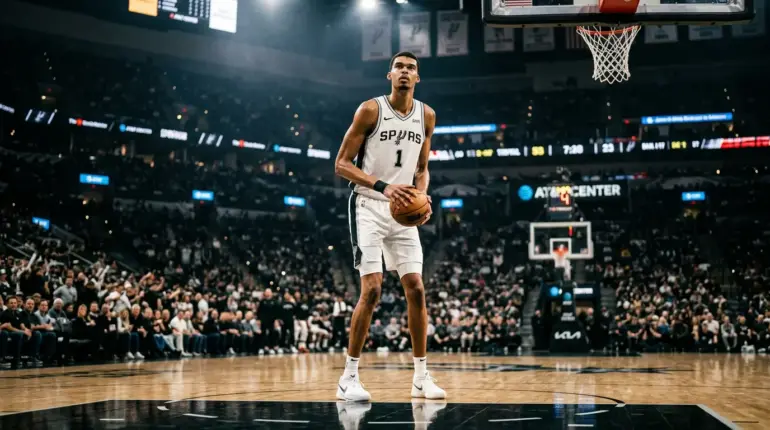
Victor Wembanyama looked at 26 points, 12 rebounds, and three blocks in his NBA Finals debut and called himself bad – and that unsolicited, unhedged self-criticism tells you more about the Spurs’ series outlook than the final score does. San Antonio fell 105-95 to the New York Knicks in Game 1 on Wednesday, blowing a 14-point third-quarter lead and surrendering 11 unanswered points in the final two minutes. The loss stings. Wembanyama’s mindset after it should worry Knicks fans more than it worries Spurs fans.
Why Wembanyama’s Self-Criticism Is a Signal, Not a Problem
When a generational player volunteers that he was bad – before anyone asks, without a publicist softening the language – it signals something specific: he knows exactly what went wrong and he already knows how to fix it. Wembanyama shot 6-of-21 from the field and committed six turnovers, numbers that sit well below his playoff baseline of 51.5% from the field and 22.9 points per game across this postseason. That gap between his Game 1 output and his established standard is the entire story.
After the game, Wembanyama was filmed telling his teammates in the locker room, “We just played as bad as we can possibly play and we still should have won” – a line that has circulated widely and frames the loss as a missed opportunity rather than a structural problem. That is not bravado. That is a player who understands his own floor and ceiling well enough to recognize when an aberration occurred. It’s also worth noting that Wembanyama previously drew an NBA formal warning for skipping media availability after a poor shooting night against Oklahoma City; his direct, accountable comments after this Finals debut represent a deliberate shift in public posture – one that bettors and analysts should register. His coach has spoken at length about what makes Wembanyama’s competitive self-awareness so unusual at his age.
What Wembanyama’s Game 1 Numbers Actually Showed
The raw shooting line – 6-of-21 – is bad by any standard, not just his. But the surrounding context complicates the verdict. Wembanyama still posted a double-double, protected the rim with three blocks, and generated enough gravity that the Spurs led by 14 points in the third quarter. Six turnovers against a disciplined Knicks defense is genuinely problematic, but turnovers in a first Finals game, for a 21-year-old making his championship debut, carry different weight than they would in Game 5 of a series he’s had time to adjust to.
Jalen Brunson shot 12-of-31 overall and 2-of-9 from three – numbers nearly as ugly as Wembanyama’s – and still won the game on 13 fourth-quarter points, including the go-ahead three at 97-95. Wembanyama called Brunson “elite” postgame, which is the correct read: Brunson’s efficiency was poor and he still found a way. Wembanyama’s efficiency was poor and the Spurs still led with under two minutes left. Bad shooting night does not mean bad series position.
The Spurs held a 95-94 lead with under two minutes remaining before going scoreless on an 11-0 Knicks run. That is a late-game execution problem, not a talent gap.
What This Means for Game 2 and the Series Odds
The precedent within this very playoff run is relevant. San Antonio lost Game 1 of the second round to Minnesota, then won the series in six. They fell behind 3-2 to Oklahoma City in the Western Conference Finals and closed it out in seven – with Wembanyama posting 41 points and 24 rebounds in Game 1 of that series and 33 points and 8 rebounds in Game 4. The bounce-back pattern is documented, not hypothetical. The pre-series odds already reflected how evenly matched these teams are, and a single blowup game from Wembanyama in San Antonio doesn’t move that needle significantly.
For bettors approaching Game 2 on Friday at 8:30 p.m. ET, Wembanyama’s scoring and turnover props deserve the most attention. His season-long efficiency suggests regression toward 22-plus points on better than 28.6% shooting is a near-certainty; the question is whether the Knicks’ physical scheme can replicate the turnover pressure from Game 1. AI-driven betting analysis on this series has been tracking exactly how Wembanyama’s usage patterns shift in bounce-back spots. Odds referenced here are for entertainment purposes only.
Bottom Line
Wembanyama shot 28.6% in his Finals debut, called himself bad, and then explained to his teammates why the Spurs should have won anyway. That is not the response of a player rattled by the moment – it is the response of a player who already knows what Game 2 looks like. The Spurs have been down before in these playoffs and climbed back every time. The only real question after Game 1 is whether Wembanyama’s next performance looks more like his 6-of-21 outlier or the 41-point, 24-rebound version that has defined this run. History, and his own unsentimental self-assessment, point toward the latter.