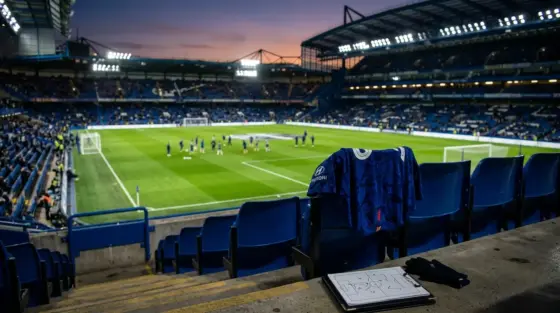

The final Premier League games of the 2024-25 season take place on Sunday – with all 10 matches scheduled to kick off simultaneously.
Keeping tabs on multiple games is a nightmare for fans. However, from the organisers’ perspective, it is the most foolproof way to ensure integrity on the final day of the league campaign.
Ahead of Gameweek 38, SportsCasting examines the reason behind concurrent kick-offs, tracing its roots all the way back to the 1982 FIFA World Cup.
Why do All Premier League Final Matches Kick Off at the Same Time?
There are two reasons why the last round of Premier League matches have long been kicking off at the same time.
To Ensure Integrity and Fair Play
With multiple teams battling for the title, European places, and relegation, stakes are always sky-high on Matchday 38 of the Premier League season. Teams do everything in their power to finish strongly. It is their last chance to clinch the title, that last Champions League spot, or to avoid relegation.
Ideally, teams would love to do it all by the book, without depending on results from other matches. Reality, however, is markedly different.
It all comes down to this… pic.twitter.com/ljNVUSqCIq
— Premier League (@premierleague) May 23, 2025
If the clubs knew the results of other games before their own goal, they could adjust their game accordingly. They could either take fewer risks or go all out, compromising the integrity of the beautiful game. With simultaneous kick-offs, doing this becomes almost impossible, as it is much more difficult to adjust plays in real time.
Since there are no prior outcomes to evaluate, simultaneous kick-off times also keep match fixing allegations at bay.
To Increase Drama and Excitement
Football is one of the most unpredictable sports in the world, and there is nothing quite as nerve-wracking as watching your favourite team battle fate in the final game of the season. From Manchester City’s last-gasp title-winning victory over QPR in 2022 to Leeds United and Leicester City’s heart-breaking relegation in 2023, Matchday 38 has delivered some unforgettable matches over the years.
From fans to managers, everyone keeps checking their smart devices every other minute, eager to get updates from the other games around England. This adds to the charm and excitement of the Premier League, creating real-time drama. The stadiums cheer or boo the developments, adding to the spectacle of the most popular league in the world.
Almost every major European league now follows the simultaneous kick-off for the last Matchday of the season. However, it was not always a tradition. It became the norm after the disgraceful incident in Gijon at the 1982 FIFA World Cup.
‘Disgrace of Gijon’ at the 1982 FIFA World Cup — A Dark Day in Football
On June 25, 1982, West Germany were set to face Austria in the final World Cup Group 2 match at El Molinon stadium in Gijon, Spain. The night before, Algeria beat Chile 3-2, finishing with four points.
West Germany and Austria knew that a 1-0 victory for Germany would ensure their both progression at Algeria’s expense. Only 10 minutes in, West Germany went 1-0 up, and then both teams decided to stop attacking. Fans in Gijon were furious and booed both teams, while some commentators refused to speak as a sign of protest.
It was the 1982 World Cup and West Germany and Austria were facing off in the last game of Group 2.
The other members of the group had played the day before so both teams knew that a narrow West Germany win would see them both progress… pic.twitter.com/blZe3JrnQu
— COPA90 (@Copa90) November 29, 2022
The game finished 1-0, and Algeria crashed out of the competition, paying the price for playing a day early. The “disgrace of Gijon” sparked a shift, with all final group matches being kicked off at the same time since the 1986 World Cup. Nearly every domestic league, including the Premier League, LaLiga, and the Bundesliga, has also adopted the rule to preserve integrity.