
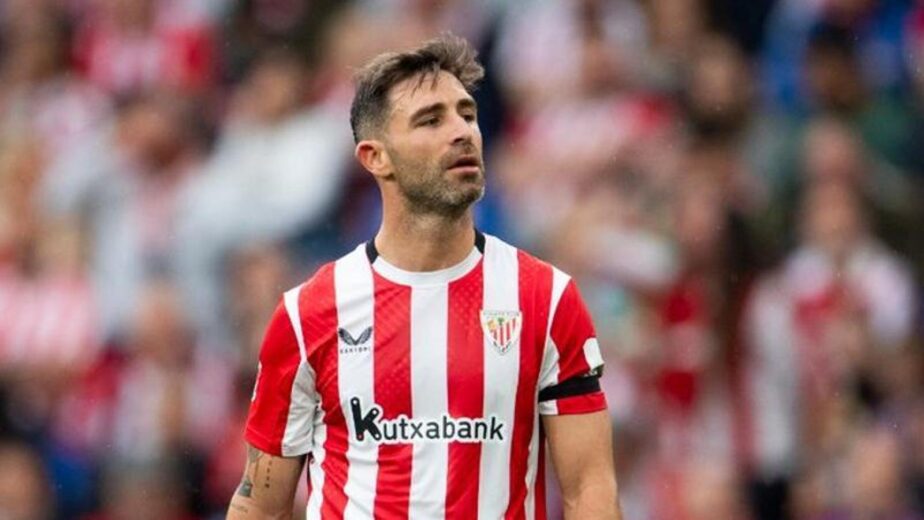
Athletic Bilbao defender Yeray Alvarez has been suspended for 10 months after testing positive for a banned substance.
UEFA has confirmed that Alvarez is not permitted to train or use facilities of a club for sporting reasons until February 2026. Unless he appeals and secures a positive ruling, Alvarez will not be available until April 2026.
Despite the big blow, Bilbao remain one of the favourites to secure a Champions League spot. Athletic Bilbao are 4/5 with football betting sites to secure a top four finish in LaLiga this season.
Yeray Alvarez Explains Doping Test Fail
Bilbao centre-back Yeray Alvarez failed a doping test after his team’s 3-0 defeat to Manchester United in the second leg of their UEFA Europa League semi-final in May 2025.
Alvarez tested positive for an antimineralocorticoid steroid called Canrenone. Football players are prohibited from using it in and outside of the competition.
In June, Alvarez voluntarily agreed to a provisional suspension. The following month, he claimed that he had unintentionally taken Canrenone, as it entered his system through a medicine he was taking to treat hair loss. Alvarez beat testicular cancer in 2016 and was admittedly taking the medicine as part of his treatment for alopecia.
🚨 𝗕𝗥𝗘𝗔𝗞𝗜𝗡𝗚: UEFA have banned Athletic Club's Yeray Álvarez from football for 10 months.
He failed a doping test after the 3-0 loss to Manchester United back in May. pic.twitter.com/JzG5pOLOmh
— Transfer News Live (@DeadlineDayLive) September 8, 2025
UEFA has seemingly accepted Alvarez’s justification, as the governing body has categorised the violation as unintentional. However, Yeray is still set to spend a long time on the sidelines.
Athletic Bilbao Defender Alvarez Suspended for 10 Months
After their ruling, UEFA announced:
“At its meeting on 19 August 2025, the relevant Uefa disciplinary body decided to suspend the player for 10 months, starting from the date of the provisional suspension (2 June 2025) and ending on 2 April 2026, for committing a non-intentional anti-doping rule violation.
“In accordance with Article 10.14.2 of the Uefa Anti-Doping Regulations, the player may return to train with a team or use the facilities of a club in the last two months of his period of ineligibility, i.e. as of 2 February 2026.”
🚨🇪🇸 𝐁𝐑𝐄𝐀𝐊𝐈𝐍𝐆 | Athletic Club defender Yeray Alvarez (30) has been given a 10 month BAN by UEFA! ⛔️
He tested positive for a prohibited substance in a Europa League match against Manchester United.
UEFA acknowledged that there was no intent on the part of the player,… pic.twitter.com/jnueQRZPOu
— EuroFoot (@eurofootcom) September 8, 2025
Alvarez came through Athletic Bilbao’s youth system before joining the senior team in 2016. He has since played 257 games, scoring five goals and winning one Copa del Rey and one Supercopa de Espana.
The football world has seen its fair share of doping bans lately. Last year, Chelsea forward Mykhailo Mudryk was suspended after failing a drug test.
Before Mudryk, former Manchester United star Paul Pogba served a big ban, which saw his Juventus career upended. The Frenchman recently signed for Monaco after serving an 18-month suspension.
Footballers Who Have Served Doping Bans
Here are some of the footballers who have served bans after testing positive for a banned substance:
| Player | Competition | Nature of Ban | Duration |
|---|---|---|---|
| Diego Maradona | Serie A (Napoli, 1991) | Tested positive for cocaine (recreational drug) | 15 months |
| Diego Maradona | 1994 World Cup | Tested positive for ephedrine (stimulant) | 15 months |
| Paul Pogba | Serie A (Juventus, 2023) | Tested positive for dehydroepiandrosterone (DHEA, testosterone booster) | 18 months (reduced from 4 years) |
| Andre Onana | UEFA (Ajax, 2021) | Tested positive for furosemide (diuretic, unintentional use) | 9 months (reduced from 12 months) |
| Abel Xavier | UEFA Cup (Middlesbrough, 2005) | Tested positive for dianabol (anabolic steroid) | 18 months |
| Adrian Mutu | Premier League (Chelsea, 2004) | Tested positive for cocaine (recreational drug) | 7 months |
| Pep Guardiola | Serie A (Brescia, 2001) | Tested positive for nandrolone (anabolic steroid, later overturned) | 4 months (provisional suspension) |
| Claudio Caniggia | Serie A (Roma, 1993) | Tested positive for cocaine (recreational drug) | 13 months |