
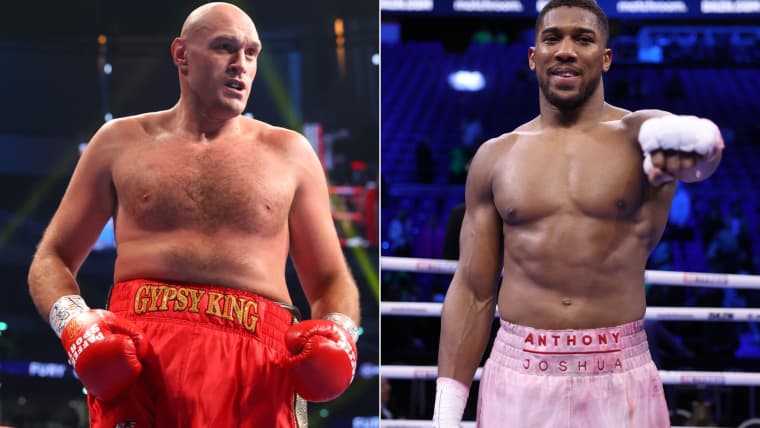
The most anticipated British boxing match in years is finally happening.
Anthony Joshua and Tyson Fury are set to meet later this year in a fight that promises to be a blockbuster — both inside the ropes and in the boardroom.
But while both men are expected to pocket around £100 million each from the bout, the financial consequences of losing could be far greater than the purse itself.
Robert Watts, compiler of the prestigious Sunday Times Rich List, put it bluntly: “No one wants to be seen associating themselves with a loser.”
It’s a brutal truth — and one that could define both fighters’ financial futures long after the final bell.
AJ vs Fury: What’s at Stake Financially Beyond the Fight Purse
The two men reportedly signed a two-fight deal, with each expected to earn around £100 million from the first contest alone.
These aren’t just elite athletes — they’re fully-fledged business empires.
Watts, who trawls through Companies House data for the Rich List, revealed that Tyson Fury has around £160 million sitting on his balance sheet in publicly visible company accounts.
Joshua, who is slightly older and has been building his financial portfolio longer, has been quietly investing in London real estate — think Bond Street and Mayfair — with one eye already on retirement.
But here’s the uncomfortable reality. A fighter’s commercial appeal doesn’t just rest on talent — it rests on perception.
And nothing shifts perception quite like a knockout defeat in front of 80,000 people at Wembley Stadium or in Riyadh.

Does Losing a Fight Cost You Brand Deals? Sponsors Think Carefully
Anthony Joshua knows this better than most. He’s been KO’d on that Wembley stage before — and in spectacular, painful fashion.
While he remains one of the most marketable sportsmen in Britain, the question of whether a high-profile defeat chips away at his brand appeal is a live one.
“When you see someone absolutely KO’d on the floor, do brands look at that and think, ‘Maybe I’m not sure whether we’re going to invest in him’?” Watts mused.
The concern is legitimate. Global brands want their ambassadors to project success, strength and winning.
Being floored in a sold-out arena is about as far from that image as it gets.
For Tyson Fury — who has never been knocked out professionally — that particular risk sits squarely with Joshua going into this fight.
Why the British Public Love a Boxing Comeback Story
And yet, it isn’t quite that simple. Sport, and boxing in particular, has always had a complicated relationship with defeat.
Because as much as brands shy away from losers, the British public are suckers for a redemption arc.
“We love a comeback story,” Watts said. “We love the idea of someone who’s taken the slings and arrows of fortune, taken their defeat, and bounced back. Some people like that even more.”
There’s a commercial argument for that too. A fighter who loses, then fights back, then wins — that’s a narrative sponsors can actually sell.
It’s human, relatable and emotionally compelling in a way that unbroken success rarely is.
Anthony Joshua has already shown he can rebuild after adversity.
Whether he can do it again, at this level, against this opponent, is the question.
How AJ and Fury Are Building Wealth Beyond Boxing
One thing both men have in common — and which sets them apart from many fighters before them — is financial transparency and smart long-term planning.
Unlike many sporting stars whose wealth is shrouded in offshore structures, both Joshua and Fury file clear, readable accounts through Companies House.
Watts praised them for this: “Any of us could trawl through Companies House and see the data right there.”
Joshua has been particularly strategic, investing heavily in prime London real estate while still at the peak of his fighting career.
Fury, meanwhile, has relocated to the Isle of Man — a move that reduces his tax burden considerably.
Both are behaving less like fighters and more like CEOs who happen to box.
Watts noted that sportsmen at the top level are increasingly surrounded by sophisticated financial infrastructure — advisors, agents, investment managers — all geared towards turning peak earning years in their 20s and 30s into lasting wealth decades beyond retirement.
The Fight That Could Reshape Both Men’s Commercial Futures
When Joshua and Fury finally meet, the stakes extend far beyond prize money and pride.
The winner gets to stand atop British boxing — and potentially charge premium rates for sponsorships, endorsements and personal appearances for years to come.
The loser faces the harder road: proving to brands, fans and themselves that they still have what it takes.
“What do the next year or two hold for Joshua?” Watts asked. “Are we watching the dying days of a fantastic career, or are we about to see a great bounce back — a story that becomes even more attractive to the world’s sponsors?”
It’s a question that applies equally to Fury. Because in this fight, there is no draw.
One man walks away with everything. The other has to find out exactly how much a comeback story is worth.