
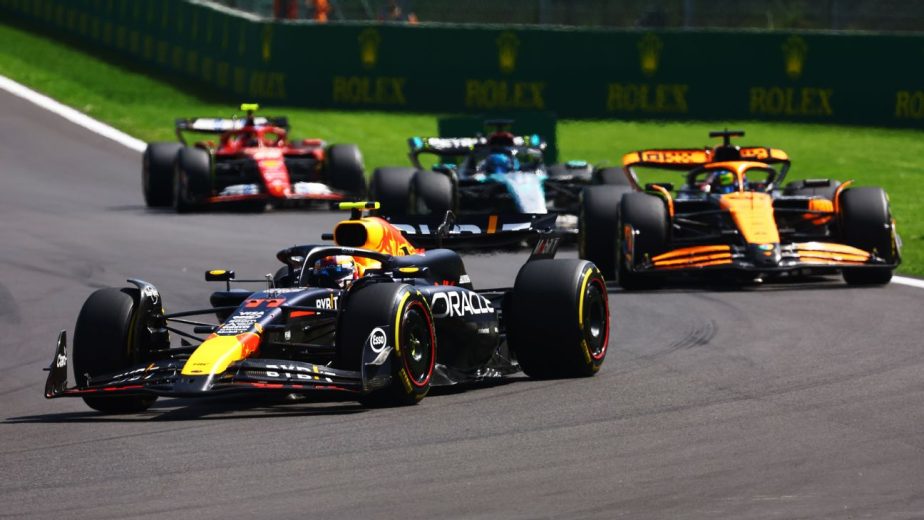
Formula One (F1) has hit the apex of its popularity, with millions of fans tuning in every Race Week to watch the 20 best drivers take to some of the most challenging tracks on the planet.
Getting into F1 is pretty straightforward, as there is never a dull moment in this sport of adrenaline, speed, and high-stakes battles. But to enjoy the sport to its fullest, it is important to familiarise oneself with some key terms and phrases.
Today, SportsCasting has prepared a comprehensive F1 glossary, decoding everything, both casual and technical, that you must get to grips with.
Let’s begin!
SportsCasting Explains Key F1 Terms & Phrases
What is an Apex / “Hitting the Apex”?
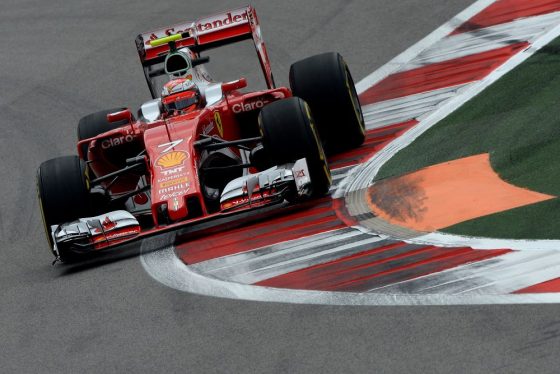
You must have heard the phrase “hitting the apex” numerous times. The apex is the innermost portion of the driving line. When a driver ‘hits the apex’, they are on the straightest possible line out of the corner, resulting in the highest exit speed.
What are Backmarkers / “Going through the Backmarkers”?
Slower Formula One cars are often lapped by the leaders during a race. During the pass, the backmarkers — the slower cars who would be lapped by the leaders — are shown a blue flag, instructing them to move out of their way, safely, as soon as possible. The term “going through the backmarkers” denotes the process of a leading car overtaking its slower opponents under the blue flag.
What is a Chicane?
F1 tracks test every aspect of these finely-tuned cars, demanding them not only to be quick in straights/high-speed corners but also nimble enough to manoeuvre low-speed turns. A chicane — a series of corners — is the ultimate test of low-speed manoeuvrability, as it features at least two consecutive changes of direction. Chicanes are also hot spots for overtaking, with the late-brakers reaping the rewards for their bravado.
What Does Clean Air Mean?
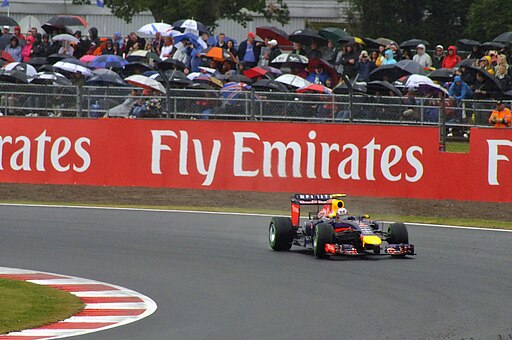
Every team and driver wants to maximise downforce, and to do so, they need a smooth stream of steady, undisturbed air. This can happen only when there is no car in front or it is sufficiently far ahead.
When a car runs in clean air, the aerodynamic parts work as expected, ensuring optimal, predictable performance.
What is Degradation?
The term degradation or ‘deg’ is used frequently to denote tyre wear. When the tyres see enough degradation, drivers need to come into the pits for a fresh set.
What is F1 Term Delta?
Delta is the umbrella term to denote the time difference between two laps or the lap times of two drivers. A negative delta denotes an improvement — lap 2 quicker than lap 1 — while positive delta signifies a dip in performance.
What is Dirty Air / “Sitting in Dirty Air” in F1?
Dirty air is the turbulent air left behind by the car in front. While F1 cars are predictable in clean air, they are rather difficult to manage when going through dirty air. Mastering the unpredictability of dirty air driving is one of the key ingredients of being a successful F1 driver.
What is Downforce?
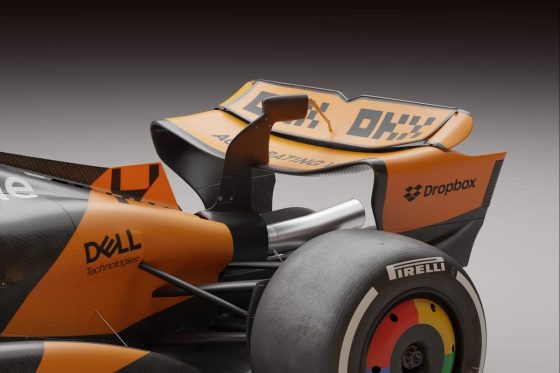
Formula One cars attack corners at eye-watering speeds. They get to do that thanks to the magical thing called downforce, which keeps the cars planted to the ground, offering maximum grip. The front and rear wings are the most prominent downforce tools, but placing air ducts in strategic places also makes a big difference.
Based on the nature of the track, teams shuffle between low-downforce and high-downforce setups.
What is DRS / are DRS Zones?
The greatest overtaking instrument in F1, the Drag Reduction System or DRS, significantly reduces the downforce of the car. If the pursuing car is within a second of the car in front when passing the DRS detection point — placed strategically before a DRS zone — the driver can open the adjustable flap of the rear wing to boost the top speed. With DRS activated, the chasing car gets the upper hand during overtaking.
What is a Drive-Through Penalty?
If a driver receives a drive-through penalty, they must enter the pit lane and cross it at a speed of 80 km/h before rejoining the field. They cannot pit for fresher tires while serving the penalty.
What is a DRS Train?

DRS Train is the finest execution of camaraderie on the track. In a three-car race, the car in front takes it upon themselves to slow down a bit and bring their teammate within a second of them, thus giving him access to DRS. With DRS on, the car in the middle can keep the third car at bay, even if it has access to the mechanical boost.
Carlos Sainz has deployed this strategy multiple times in his career. The most recent instance came in the 2025 Saudi Arabian Grand Prix, as Sainz gave Alex Albon DRS to finish ahead of Isack Hadjar.
What is ERS / “Recharging/Deploying Battery”?
Modern Formula One cars come with V6 Hybrid engines. The hybrid power unit has a battery component, which offers a temporary surge of power to facilitate overtaking or boost qualifying pace. The Energy Recovery System (ERS) recharges the battery during hard braking or when the pilot drives slower.
What is Flow-vis?
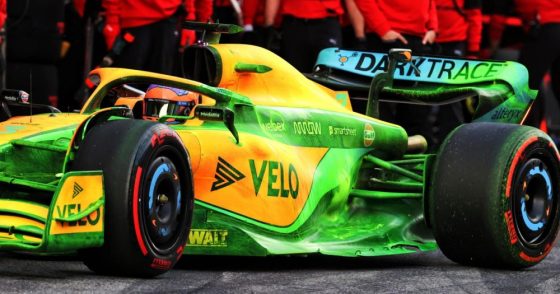
Every other practice session, some F1 cars sport special, uneven paint in one or multiple areas of the body. That special paint, called flow-vis, is used to make airflow patterns visible. Teams compare the wet/dryness of paint to analyse which areas are catching more airflow.
What is Graining?
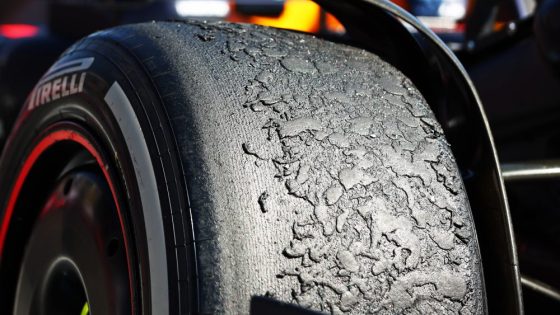
Graining is the physical manifestation of tyre degradation or ‘deg.’ After being under stress for prolonged periods, rubber bits from the tyres are displaced in the form of ‘grains’. Generally, not all tyres grain equally. Graining is heavily dependent on the track, temperature, and the driving style of the F1 pilots.
As graining makes the contact patch uneven, performance takes a toll until it is cleared.
What is the Meaning of Ground Effect Cars?
Every F1 era has had some speciality, some design language to tie all of the grid together. The current F1 era is of ground effect cars, as a large chunk of the downforce comes from the floor of the car, away from the public eye.
What are Marbles?
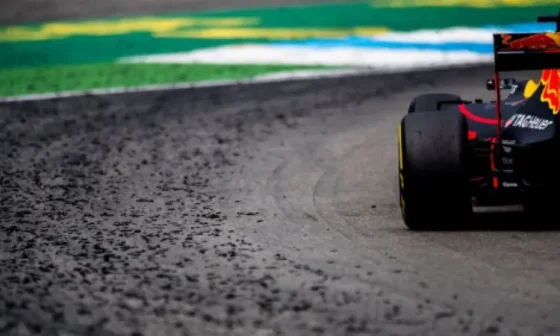
Discarded rubber from the tyres deposits on the sides of the track, generally away from the racing line. During races, drivers avoid them at all costs, as they reduce grip levels. However, during the cooldown lap — the lap after the race ends — they pick up as much rubber as they can to increase car weight and avoid disqualification.
What is the Overcut Strategy?
In this pit stop strategy, the pursuing car pits after the car in front, hoping to set faster laps in clean air during their extended run. If the move works, the chasing car can come out ahead after they have completed their stops. This strategy works best when tire degradation is low and the driver in front is stuck in traffic.
What is Oversteer?
Oversteer is a phenomenon where the car’s front end steers or turns more than the driver intends. Most drivers and teams use oversteer to increase corner entry speed and boost lap times. However, it often comes at the cost of stability.
What Does Parc Fermé Mean?
“Parc Fermé” or “Closed park (in English)” comes into effect as soon as the driver leaves the pit lane during Qualifying. Under Parc Fermé rules, the teams cannot make any significant changes to the car’s setup.
What is a Safety Car?
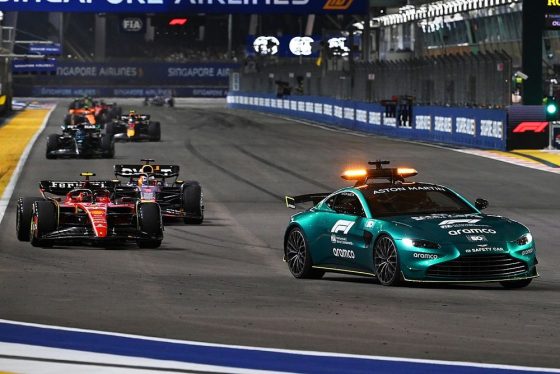
Safety Car is an FIA-elected road car (Aston Martin Vantage / Mercedes-AMG GT Black Series in 2025) that enters the track to ensure safety after an accident or due to extreme weather conditions. The Safety Car runs in front of the leading car, slowing them down and changing course if required until the track is clear.
After the Safety Car retreats, the race leader can resume the session at any time by putting the pedal to the metal.
What is Slipstream?
In straights, a slipstream or draft allows the following car to maintain speed while using less power than the car in front. With the leading car punching a hole in the air, the chasing F1 car can sit in the low-pressure area just behind, before pulling away at an opportune time. This ‘dirty air’, however, can cause all sorts of problems during cornering.
What is a Stop-and-Go Penalty?
The stop-and-go penalty is one of the harshest penalties in F1. The Stop-and-Go brings the racer to the pit and makes them wait for five or ten seconds before the crew can touch their car. After the pitstop, the driver is free to join the race.
What is an Undercut?
Undercut is the complete opposite of the overcut pit stop strategy. In an undercut, the pursuing driver pits before the car in front to put on fresher rubber and gain track position during his opponent’s pit stop.
Undercut has to be timed perfectly, as it is crucial to avoid traffic during the pit exit.
What is Understeer?
The opposite of oversteer, understeer, is when the car does not turn as much as the driver intends it to. Almost all drivers prefer oversteer to understeer.
What is a Virtual Safety Car?
Since 2015, a Virtual Safety Car (VSC) has been used in Formula One to caution drivers after an incident. Under VSC rules, the drivers must reduce their speed by 35 per cent in the affected section.