
FIFA has confirmed the full lineup for the 2026 World Cup opening ceremony in Mexico City, anchored by actress and producer Salma Hayek Pinault serving as an official tournament ambassador.
There will also be a joint performance by J Balvin and Ryan Castro, and an international roster that includes Shakira, Burna Boy, Maná, Belinda, Los Ángeles Azules, Lila Downs, and Danny Ocean.
This is not just a music lineup for a pre-match ceremony. It is a precisely engineered audience-compounding machine – one that activates Hollywood, reggaeton, traditional Mexican culture, African music, and global football communities simultaneously, each through a different distribution channel, none of them significantly overlapping.
The mechanics of why this particular combination generates reach well beyond the 48-team tournament’s already-historic scale are worth breaking down carefully.
Every name on that stage carries a distinct audience infrastructure, and the structural reasons they were chosen together explain exactly how FIFA intends to make the largest World Cup ever staged feel like a global cultural event rather than simply a football tournament.
Mexico’s 2026 World Cup Opening Ceremony Announcement
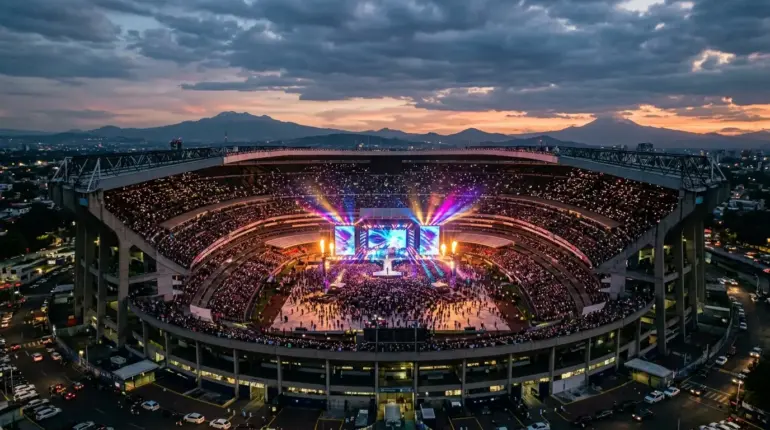
FIFA announced the ceremony details this week, confirming that the opening show will begin at 11:30 local time at Estadio Ciudad de México – 90 minutes before the inaugural match kicks off.
Stadium doors will open four hours before the match, with fans given access to activations, entertainment experiences, and dedicated ceremony programming throughout that window.
Alejandro Fernández will perform the Mexican National Anthem, while South African artist Tyla will sing the South African national anthem in the pre-match ceremony segment.
Salma Hayek Pinault – described by FIFA as the official Ambassador of the 2026 FIFA World Cup – will welcome fans at the stadium and participate in segments celebrating the union of cultures through football.
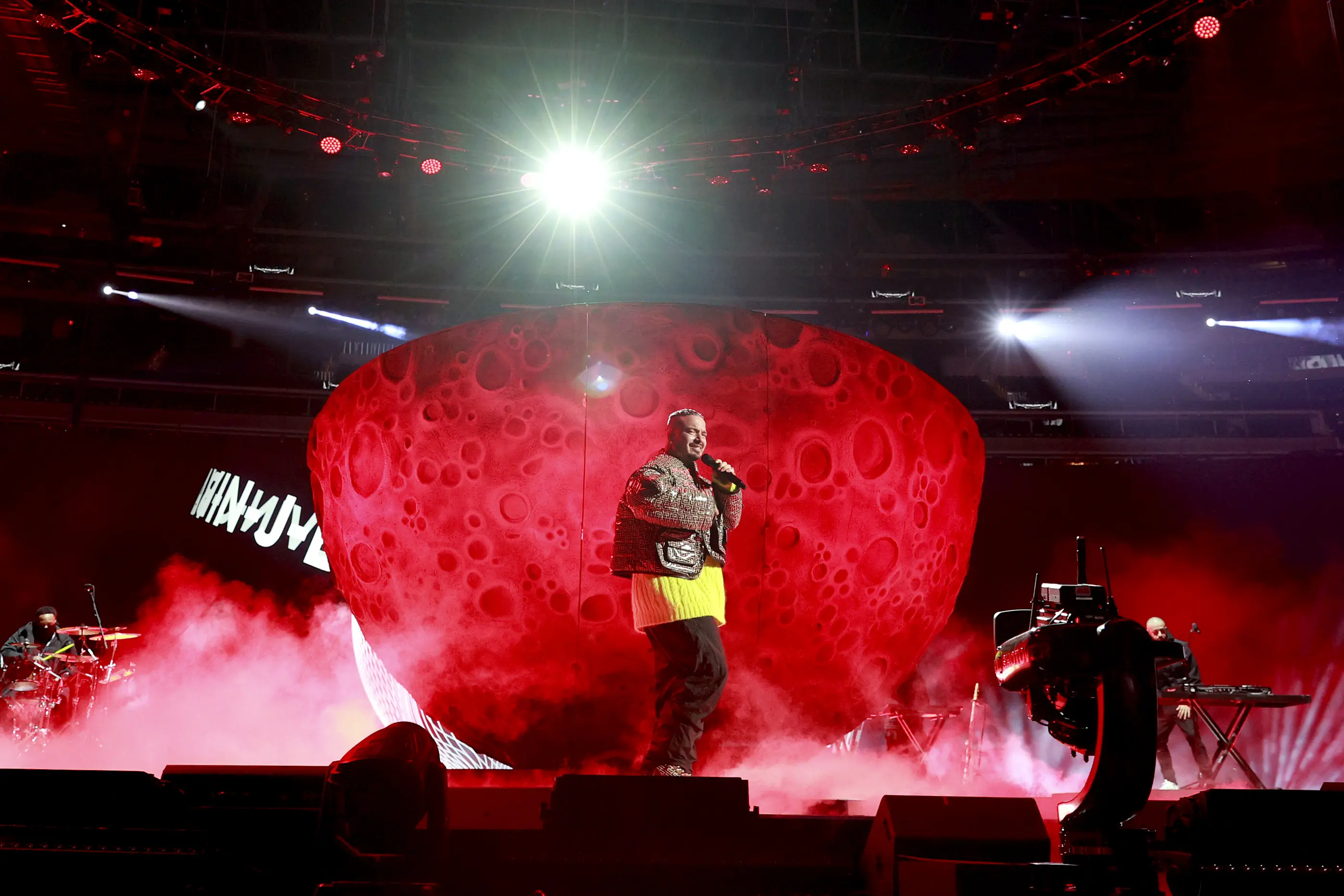
J Balvin and Ryan Castro will share a special joint performance, joining a bill that includes Shakira, Burna Boy, Danny Ocean, Lila Downs, Los Ángeles Azules, Maná, and Belinda.
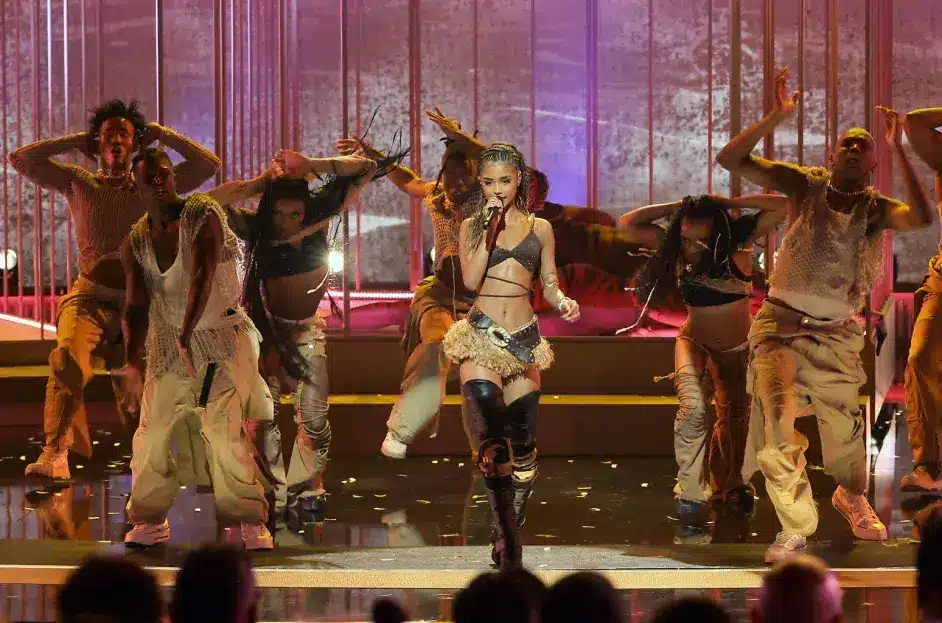
The Mexico City show is positioned as the curtain-raiser for the entire tournament – the flagship of three separate opening ceremonies, one in each host nation.
Canada‘s ceremony at BMO Field in Toronto will feature Alanis Morissette and Michael Bublé, and the U.S. ceremony at SoFi Stadium in Los Angeles will be headlined by Katy Perry, Anitta, LISA, and Rema.
Mexico’s show carries the weight of being first – and the lineup reflects that responsibility fully.
Salma Hayek and J Balvin To Headline Mexico Opening Ceremony
Salma Hayek Pinault is not a celebrity cameo. She is one of the most globally recognized Mexican women alive – an Oscar-nominated actress, producer, and businesswoman whose profile bridges Hollywood, Latin America, European prestige media, and the fashion and beauty industry simultaneously.
Her social media reach alone spans tens of millions of followers across demographics that have no primary relationship with football. When Hayek steps onto that stage as official ambassador, she is not performing.
She is signaling to an entire global audience that this is a moment worth paying attention to. Full stop.
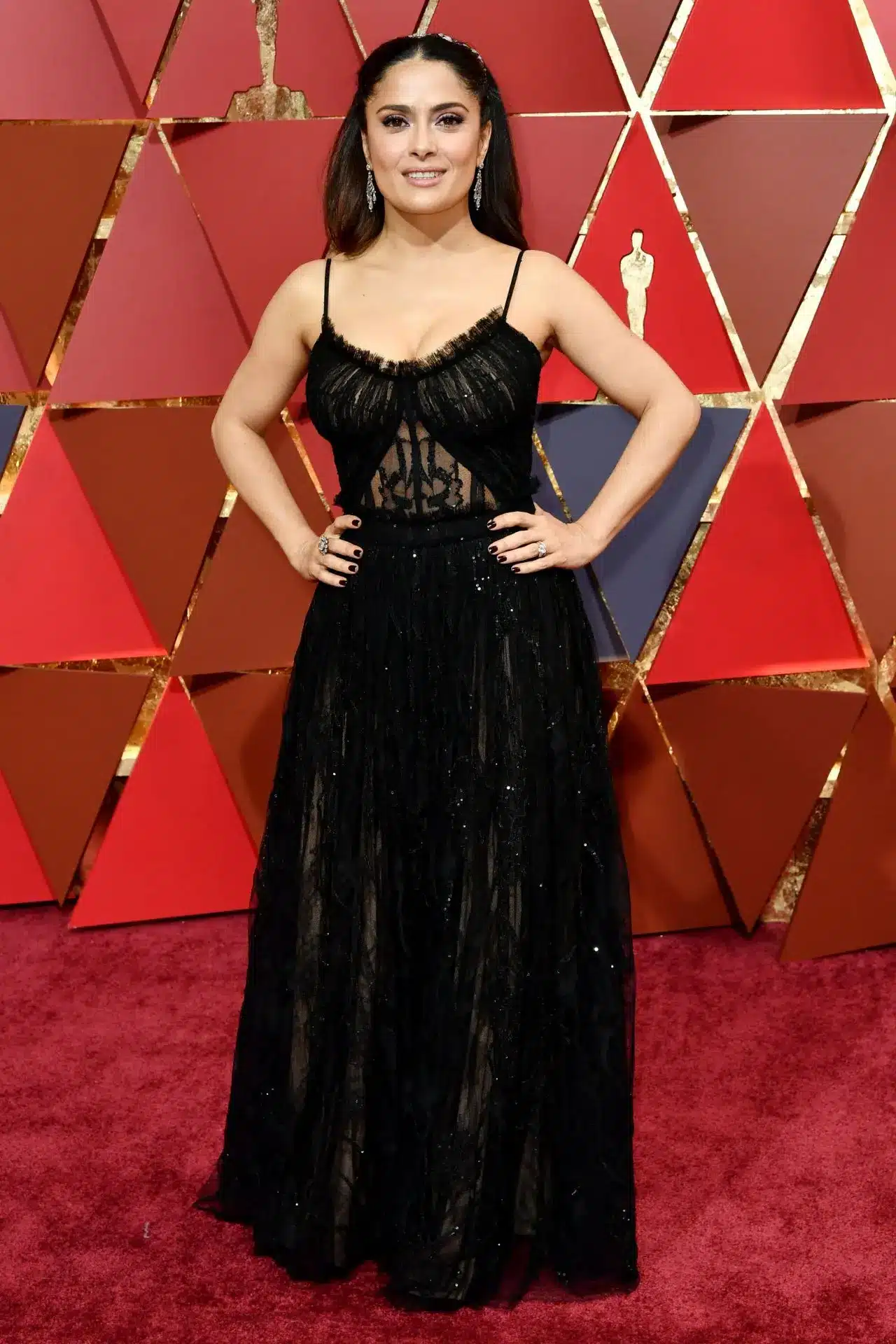
The structural function of an ambassador like Hayek is distribution. Her presence generates press coverage in entertainment media – Vogue, Hola!, Variety, entertainment desks in every Spanish-language market – that would never otherwise carry a World Cup ceremony story.
That is not a small thing. That is audience infrastructure that FIFA cannot buy with advertising spend. It has to be earned through a name that carries its own gravitational pull, and Hayek is one of the few figures on the planet who pulls from Hollywood and Latin America with equal force.
This dynamic – of crossover stars transcending their primary domain into broader cultural moments – is something that defines the biggest sports-culture intersections of this era, and Hayek‘s role here fits exactly that pattern.
J Balvin operates on a different but equally powerful axis. He is one of the architects of the global reggaeton and Latin urban music explosion – an artist whose streaming numbers are measured in billions, whose audience is genuinely global, and whose collaboration with Ryan Castro specifically targets a younger, digitally native Latin music community that consumes content primarily through short-form video and streaming platforms.
The pairing of J Balvin and Ryan Castro is not a nostalgia booking. It is a forward-facing signal about which audience FIFA is actively trying to recruit into the game’s next generation of fans.
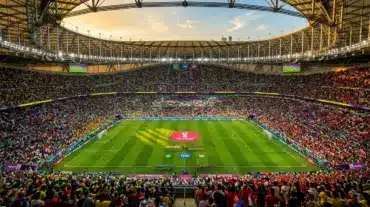
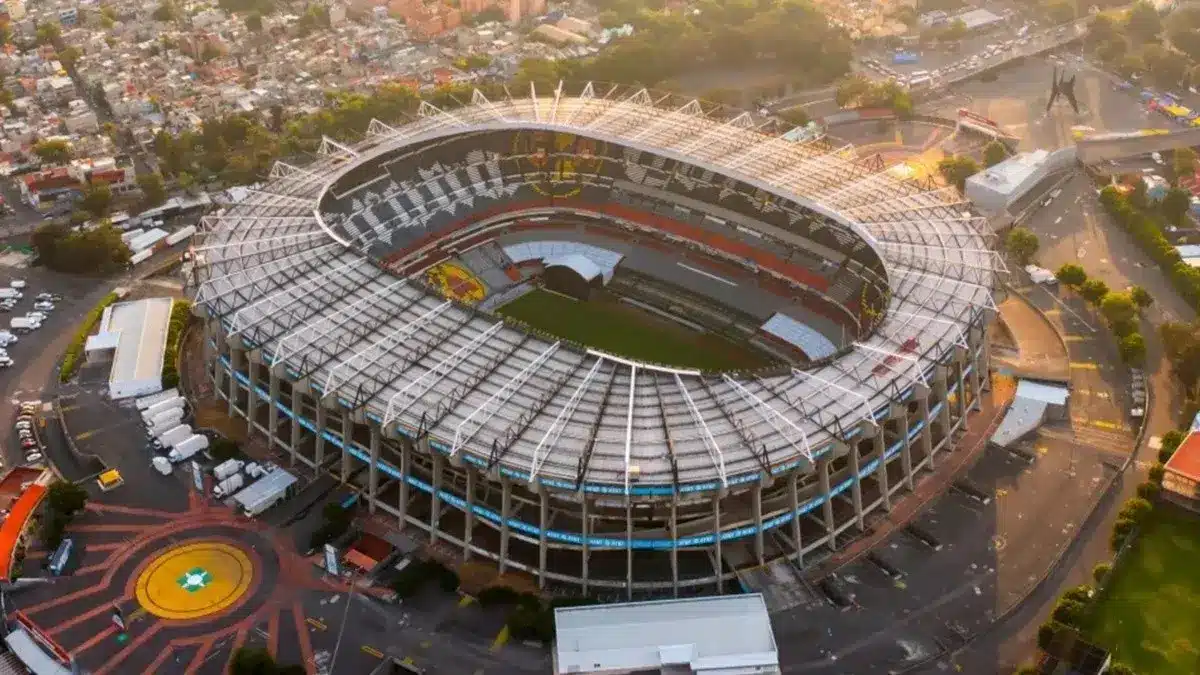
Then there is the historical weight of the venue itself. Estadio Ciudad de México – formerly Estadio Azteca – is the only venue in history to have hosted two previous World Cup opening matches, in 1970 and 1986.
This ceremony will make it the first stadium to host three. That fact does not travel on its own, but it compounds the story’s authority for football history audiences who understand exactly what that lineage means.
The 1994 World Cup opening ceremony featured its own unforgettable celebrity moment – Diana Ross and a penalty kick that became one of sports culture’s most durable viral artifacts.
The Mexico City show is being built with the same understanding that the ceremony itself can generate a lasting cultural legacy that outlives the tournament.
Mexico’s 2026 World Cup Opening Ceremony Set For Huge Social Impact
At least four distinct audience communities are activated by this story, and they do not significantly overlap. The reach produced by their simultaneous activation is multiplicative, not additive.
The first community is the global football audience – the core base of World Cup viewers who will watch the ceremony because it precedes the inaugural match of the largest tournament in the competition’s history.
This audience is already engaged. They do not need to be recruited. They are the floor, not the ceiling.
The second community is the Latin music audience – the global fanbase of reggaeton, Latin urban, and Mexican regional music that follows J Balvin, Ryan Castro, Shakira, Maná, Belinda, Los Ángeles Azules, and Alejandro Fernández.
This community is enormous, digitally active, and spread across North America, South America, Europe, and beyond.
Their engagement with the ceremony will be driven by artist loyalty, not football fandom – and they will distribute the content through music-first channels that the football audience does not typically occupy.
The third community is the Hollywood and global entertainment press audience – the readers of entertainment publications, fashion media, and celebrity coverage who follow Salma Hayek Pinault‘s career and public appearances.
This audience skews heavily toward women, toward premium entertainment consumers, and toward people who have never watched a full football match.
They will encounter this story through entertainment desks and celebrity coverage, not through sports media. That is a structurally non-overlapping channel.
The fourth community is the African music and global afrobeats audience activated by Burna Boy‘s inclusion – a segment that is younger, globally distributed, and currently the fastest-growing music audience demographic in the world.
Burna Boy‘s presence on this stage is not incidental. It is FIFA‘s explicit acknowledgment that the 2026 World Cup‘s 48-team format, which brings in more African national teams than any previous edition, requires a ceremony that speaks to African music and cultural audiences as peers, not afterthoughts.
That community will distribute Burna Boy‘s ceremony performance through channels entirely separate from anything the Latin music or Hollywood audiences use.
Four communities. Four distribution channels. Near-zero overlap. That is the fuel.
What’s Confirmed and What Isn’t on the 2026 World Cup Opening Ceremony
What is confirmed: FIFA has officially announced the full performer lineup including Salma Hayek Pinault as tournament ambassador, Alejandro Fernández performing the Mexican National Anthem, and Tyla performing the South African national anthem.
J Balvin, Ryan Castro, Shakira, Burna Boy, Belinda, Danny Ocean, Lila Downs, Los Ángeles Azules, and Maná will also be involved.
The ceremony begins at 11:30 local time at Estadio Ciudad de México, 90 minutes before the inaugural match, with doors opening four hours prior.
The 2026 FIFA World Cup is the first to feature 48 teams and the first to be jointly hosted by three nations – Mexico, the United States, and Canada. Separate opening ceremonies are confirmed for Toronto and Los Angeles.
What is not confirmed: the precise running order of performances, the specific staging format and set lengths for individual artists, and the exact structural role Hayek will play beyond her ambassador designation.
Shakira‘s role in the Mexico City ceremony versus her reported involvement in a separate World Cup halftime show later in the tournament has not been officially delineated.
Additional performers for the Toronto and Los Angeles ceremonies beyond initial announcements have not been fully confirmed. Broadcast rights details and streaming arrangements for the ceremony have not been publicly disclosed.
The cultural impact of this lineup – and the audience compounding mechanics it sets in motion – is real and fully sourced regardless of those open questions.
What to Watch Next After the 2026 World Cup Opening Ceremony Lineup
Watch specifically for FIFA‘s release of a detailed running order and staging preview closer to June 11 – the date that will signal how much of the ceremony is built around the football match itself versus designed as a standalone entertainment broadcast.
The proportion of that ratio will tell bettors and analysts a great deal about how FIFA is positioning the 2026 World Cup against competing entertainment events.
Watch whether Shakira‘s role is formally split between the Mexico City ceremony and the reported halftime show on July 19 – and whether that halftime show, reportedly also featuring Madonna and BTS, receives official confirmation from FIFA in the weeks ahead.
If confirmed, it represents the most significant step toward a Super Bowl-style entertainment tentpole that FIFA has ever attempted, with implications for broadcast deals, sponsor activations, and the long-term commercial architecture of the tournament.
Watch specifically for audience metrics on the ceremony broadcast – particularly streaming numbers across Latin American markets and the share of viewers who are not primary football fans.
Those numbers will validate or challenge the audience-compounding thesis that this lineup is clearly built around.
For readers tracking Mexico‘s on-pitch performance alongside the ceremony spectacle, the full betting preview and odds breakdown for Mexico’s World Cup campaign is worth consulting before the tournament kicks off.
Watch whether the three-ceremony structure – Mexico City, Toronto, Los Angeles – produces three genuinely distinct cultural moments or whether the Mexico City show dominates global coverage so thoroughly that the other two become footnotes.
The lineup suggests FIFA is betting heavily on the former. The cultural gravity of this particular bill suggests the outcome may be the latter.