
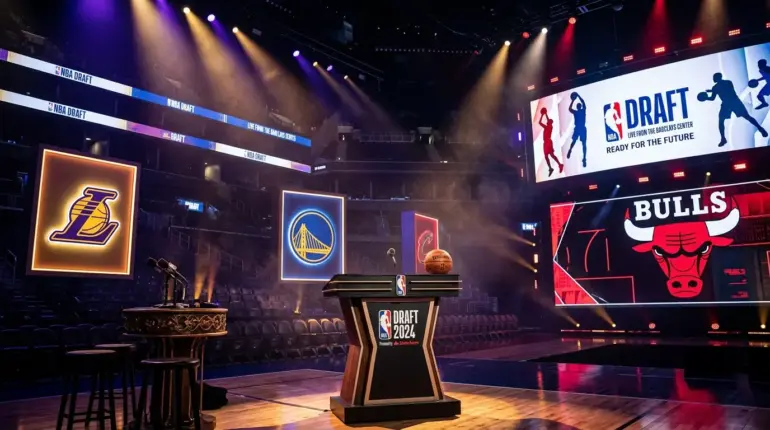
Three mock draft experts from Bleacher Report, ESPN, and CBS Sports have reached consensus on a top four that places AJ Dybantsa to the Washington Wizards at No. 1, Darryn Peterson to the Utah Jazz at No. 2, Cameron Boozer to the Memphis Grizzlies at No. 3, and Caleb Wilson to the Chicago Bulls at No. 4.
Below that tier, the Golden State Warriors and the Los Angeles Lakers are the franchise flashpoints: their picks generate the most divergent predictions, and each divergence tells a different story about organizational philosophy under pressure.
This is not simply a mock draft round-up. This is a window into how three franchises are reading their roster futures, and how differently smart analysts can interpret the same set of needs.
The Triggering Signal – Why This NBA Mock Draft Carries Weight
The projections come from Jonathan Wasserman of Bleacher Report, Jeremy Woo of ESPN, and Adam Finkelstein of CBS Sports – three of the most consistently sourced draft analysts working the pre-draft circuit.
Their mocks carry weight not because they are infallible, but because they reflect the convergence of combine performance, private workout intel, and front-office positioning in the days immediately preceding June 23. Post-combine windows are when mock drafts stop being projections and start functioning as informed approximations of actual team intentions.
The Bulls hold picks at No. 4 and No. 15, giving new executive vice president Bryson Graham two distinct opportunities to reshape a roster that has produced three decades of mediocrity since the dynasty years.
The Warriors – still anchored by Steph Curry but increasingly outside the playoff picture – hold a mid-lottery pick where the gap between win-now and build-for-later choices is sharpest. The Lakers, swept by the Oklahoma City Thunder in the Western Conference playoffs, pick 25th with a documented need at center that has been exposed repeatedly in high-leverage moments.
The Lakers’ pre-draft workout activity has already signaled that the front office is actively stress-testing frontcourt options ahead of draft night.
Why the Move Makes Sense – The Logic Behind the NBA Mock Draft
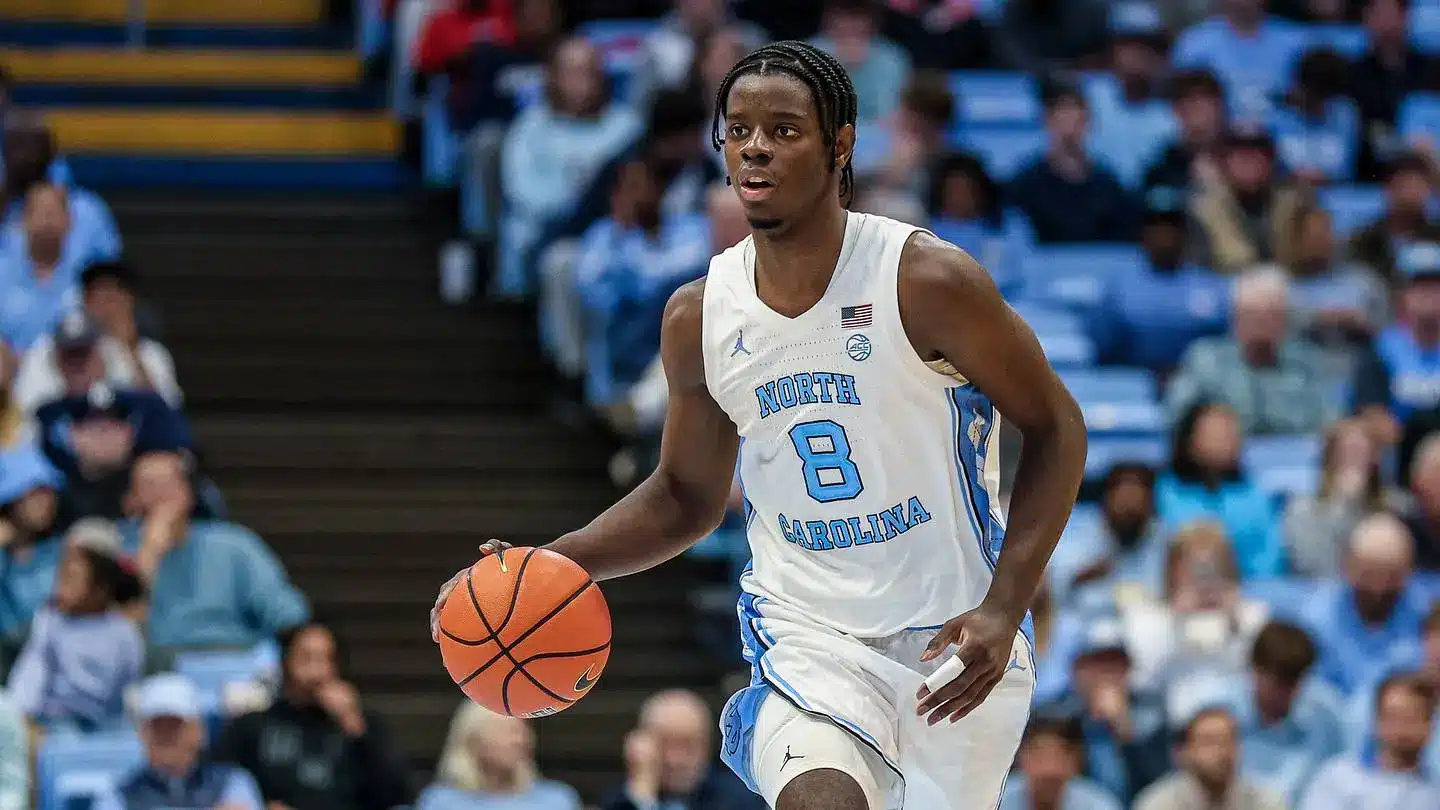
Start with the consensus. All three analysts project Caleb Wilson to the Bulls at No. 4, and the production case is straightforward: Wilson averaged 19.7 points, 9.4 rebounds, 2.7 assists, and shot 57.8 percent from the floor at the University of North Carolina.
Those numbers, produced as a power forward who can credibly play center, represent the kind of two-way positional flexibility that Graham‘s front office – described across the industry as coveting size, length, athleticism, and physicality – would logically prioritize above almost anything else available in the mid-lottery range.
The No. 15 pick is where the Bulls‘ story gets analytically interesting. Wasserman and Woo both project Baylor guard Cameron Carr, with Woo noting that Chicago ‘has a need on the wing and could see Carr as a viable fit, assuming the Bulls wind up with Boozer or Wilson earlier in the draft.’
Finkelstein breaks from that consensus entirely, projecting Kentucky sophomore center Jayden Quaintance, and framing the selection directly through Graham‘s stated philosophy: ‘no player left on the board checks those boxes better than Quaintance.’
Finkelstein adds that Quaintance has ‘sneaky mobility, good hands, real passing ability, and provides vertical spacing’ – attributes that map cleanly onto a roster trying to build a sustainable frontcourt identity. Whether the Bulls double down on size with Quaintance or address the wing with Carr, the organizational logic of addressing a specific positional need at both picks holds either way.
For the Warriors, the divisiveness of their pick reflects something real about the franchise’s position. Wasserman projects Karim Lopez, the 19-year-old power forward from the New Zealand Breakers, citing his potential to provide physicality, spot-up shooting, and ball-screen playmaking.
Finkelstein goes with center Aday Mara, whose skill set he frames as fitting head coach Steve Kerr‘s preferred system. Woo takes a different angle entirely with Brayden Burries, the freshman shooting guard from Arizona, writing that his ‘sturdy build should also help him defend wings’ while acknowledging that the positional fit is nuanced.
At No. 25, Woo and Finkelstein converge on Henri Veesaar, the junior big out of North Carolina, as the solution to the Lakers‘ center problem. Woo writes that Veesaar ‘could figure into their rotation next season’ – a meaningful qualifier at pick 25, where most selections carry at least a one-year development buffer.
Finkelstein acknowledges the team ‘may prefer a more defensive-oriented’ center but argues that Veesaar’s size-and-skill combination is ‘too much to pass up.’ His shooting range from beyond the arc makes him a viable floor-spacer alongside the Lakers‘ existing perimeter-heavy core, which is the specific attribute that separates him from a purely developmental big.
Wasserman diverges here, projecting Texas point guard Dailyn Swain, whom he describes as a ‘Swiss Army knife’ prospect with improved creation and passing – a different need, but one the Lakers demonstrably have.
At the top, the consensus is clean. Dybantsa‘s raw tools and size make him the logical No. 1 pick for the Wizards. Peterson, described by analysts as arguably the best player in the entire draft, goes to Utah at No. 2 despite injury history that introduces genuine uncertainty about his long-term availability. Boozer – potentially the most complete player in the class but limited by a lack of vertical skill – lands at No. 3 with Memphis.
The Complication – Honest Pushback on Each NBA Mock Draft Projection
The consensus on Wilson to the Bulls at No. 4 is real, but it carries an embedded assumption: that Boozer or a higher-upside prospect is not available at that slot in a way that changes the calculus. Boozer is described as the more complete player; if teams above Chicago re-rank in the final days before June 23, Wilson’s placement is not as locked as three-way agreement implies.
Additionally, the gap between Wilson’s floor-facing production (57.8% from the field) and questions about his three-point range at the next level is a real scouting concern – NBA floors require spacing that pure power production does not guarantee.
The Warriors‘ situation is the most genuinely complicated in the draft. Three respected analysts cannot agree on a position, let alone a player. That disagreement maps onto a franchise that has not publicly committed to a rebuilding timeline, which means the front office itself may not have resolved the tension between complementing Curry now and building around the next core later.
The 40/60 probability against any single projected player landing in Golden State reflects that organizational ambiguity, not analytical failure.
For Veesaar to the Lakers, the pushback centers on defensive ceiling. Finkelstein himself acknowledges the team may prefer a more defensive-oriented center, and at pick 25, teams have enough options to be selective on two-way profiles.
Peterson‘s injury history – flagged explicitly by analysts covering the Utah selection – is the most structurally significant uncertainty in the entire draft. The phrase ‘if he can stay on the court, he has superstar potential’ is analytically accurate and practically devastating in the same breath: front offices drafting at No. 2 cannot afford conditional superstar projections.
What the complications do not resolve is the structural logic driving each projection – the needs are real, the picks are confirmed, and the class at the top is as consensus-aligned as any in recent memory.
The Social Mechanics – Why This Story Travels Beyond the Core Audience
The compound reach effect here operates across four distinct, non-overlapping communities. The first is core NBA draft bettors and dynasty fantasy managers, who are tracking mock draft movement in real time because every position shift in the final week before June 23 carries betting and roster-building implications.
The divergence on the Warriors‘ pick alone – three different players projected by three credible analysts – is precisely the kind of market inefficiency that sharp dynasty managers and futures bettors look to exploit before lines adjust.
The second community is the franchise fanbases themselves. Bulls fans, carrying three decades of post-dynasty frustration, have an emotional and analytical investment in understanding what Bryson Graham‘s philosophy actually means in practice – the broader context of the Bulls franchise gives this draft moment added weight for a fanbase hungry for organizational coherence.
Lakers and Warriors fans share different versions of the same anxiety: aging cores, shrinking windows, and mid-first picks that have to count.
The third community is the general NBA discourse audience drawn to the top three picks. Dybantsa, Peterson, and Boozer have been tracked since at least 2023-24 as the anchors of this class, and their placement – universally agreed upon by every credible analyst – functions as a social proof signal that validates years of preparation-era coverage.
The fourth community is the college basketball audience following programs like UNC, Duke, BYU, Kansas, and Kentucky, each of whom has a prospect in the discussion and a built-in reason to share coverage of their player’s draft positioning.
What’s Confirmed and What Isn’t Ahead Of the NBA Draft
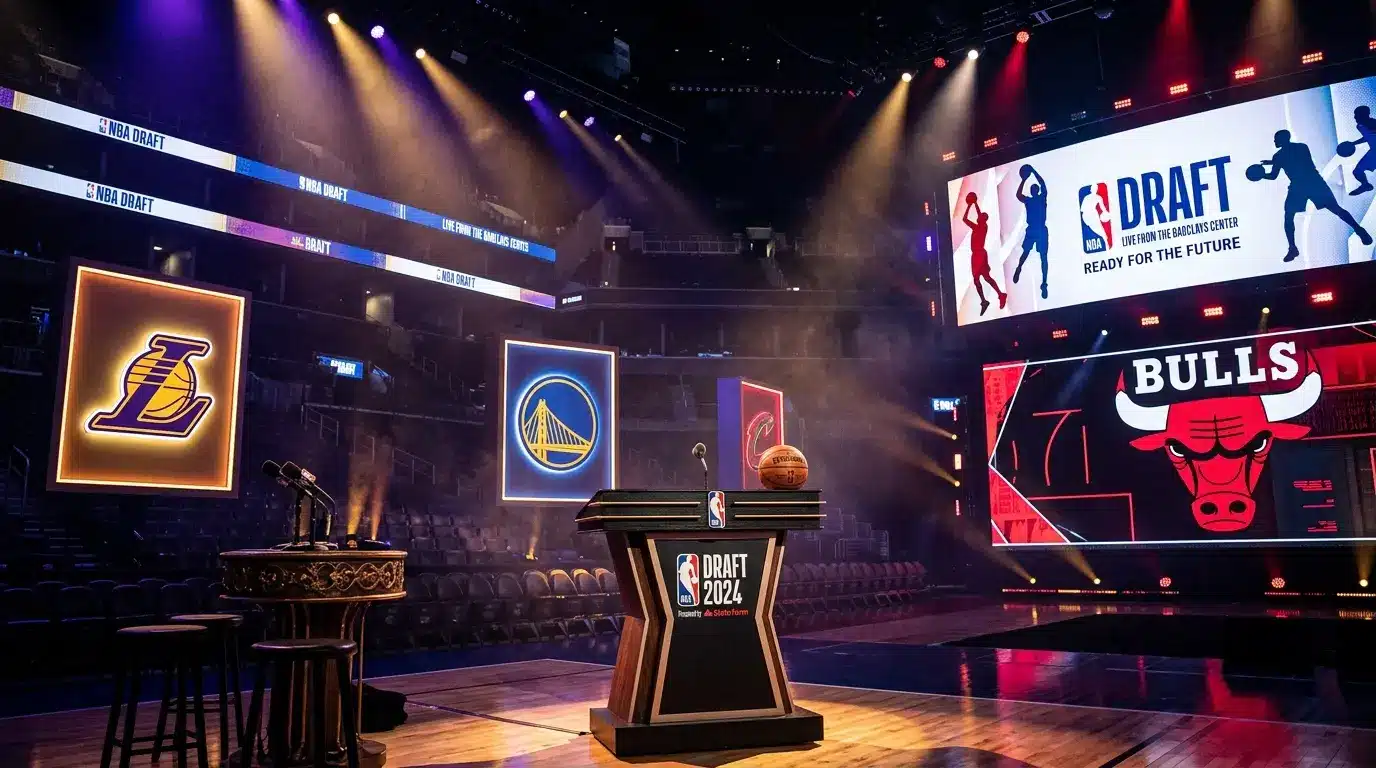
What is confirmed: The NBA Draft takes place Monday, June 23. The Washington Wizards hold the No. 1 pick, the Utah Jazz hold No. 2, the Memphis Grizzlies hold No. 3, the Chicago Bulls hold No. 4 and No. 15, and the Los Angeles Lakers hold the No. 25 pick. All three analysts – Wasserman, Woo, and Finkelstein – agree on the same four players in the same four slots at the top of the draft.
Caleb Wilson shot 57.8% from the floor and averaged 19.7 points and 9.4 rebounds at UNC. The Lakers were swept by the Oklahoma City Thunder and have a documented need at center. Steph Curry remains the operational anchor of the Golden State Warriors.
What is not confirmed: Whether any of the projected players actually get selected by the teams listed. Whether the Bulls use No. 15 on a wing or a center. Which of three completely different players the Warriors will actually select.
Whether the Lakers prioritize center or guard depth at 25. Whether Darryn Peterson‘s injury history will cause a team to bypass him at No. 2. Whether any of the picks in the 15–25 range gets packaged in a trade rather than used on a drafted player. Post-workout intel and late medicals remain the primary variables capable of reshuffling the 5–25 range before draft night.
What to Watch Next
Watch Woj and Shams Charania for any language escalation around the Warriors‘ pick in particular – when a team’s projected target shifts from three separate names to one name in the 72 hours before the draft, that convergence almost always reflects a front-office decision having been made. The Warriors‘ pick is the most publicly unresolved selection in this draft and will generate the most pre-draft sourcing activity.
Watch the Lakers‘ final private workouts for any signal on whether the organization is leaning Veesaar or pivoting entirely. The Lakers’ pre-draft workout with Koa Peat already signals the front office is actively evaluating frontcourt options beyond those currently dominating the mock draft consensus – beat reporters covering the workout circuit will flag any last-minute additions or cancellations that tighten the target list.
The probability of Veesaar landing at 25 sits roughly 55/45 in favor given two-analyst consensus, but that number is soft until final workout reports close.
Watch Bleacher Report‘s Wasserman and ESPN‘s Woo for final board updates scheduled for the weekend before June 23. Both outlets have historically released post-workout revisions that reflect the most current team intelligence available before the draft room opens. Any movement on Cameron Carr versus Jayden Quaintance at No. 15 will signal whether Bryson Graham‘s stated SLAP philosophy is driving the Bulls‘ second pick or whether positional flexibility is winning the internal debate.
For the latest on the Los Angeles Lakers, Golden State Warriors, Chicago Bulls, and everything at the intersection of sports and culture, keep it locked to Sportscasting.com.