
The 2025 NBA offseason now has a few weeks under its belt. This cycle, we’ve been blessed with a myriad of thought-provoking transactions. So, I wanted to take a second to highlight some of the best (and worst) moves of the offseason to this point.
User’s note: For the sake of simplicity, I’ll only be discussing trades and signings. There will be very little mention of anything involving 2025 draftees. Also, since I’ve already written about all of them, there will be no mention of the Desmond Bane, Kevin Durant and Norman Powell trades. I will say, though, the Orlando Magic trading for Desmond Bane would indeed crack the top five on this list.
5 Best Moves Of The Offseason
No. 5: Indiana Pacers Trade For Jay Huff
Front offices shouldn’t be applauded for cost-cutting or disrespecting franchise icons (hell of a run, Myles Turner), but if there was ever a way to bounce back from something like that, it’s hard to top trading for Jay Huff.
For the price of just a second-round pick (and a second-round pick swap), the Pacers were able to land one of the few players in the Association who can (mostly) approximate Turner’s value.
What makes Turner so special is his ability to protect the rim and space the floor. Plenty of bigs can provide strong rim protection, and there are a handful who can hoist threes at a rate/efficiency that forces teams to respect them from outside. But very few can do both.
Turner is one of those unicorns, and coincidentally, so is Huff. Last season, Huff was in the 92nd percentile in 3-point volume (9.2 threes per 75 possessions, per Dunks & Threes) and the 88th percentile in 3-point efficiency (40.5 percent). On top of that, he was in the 96th percentile in block rate.
The icing on the cake is Huff is getting paid a fraction (roughly $2.7 million each of the next three years) of what Turner will be making ($26.8 million over the next four). What a move Indiana, what a move.
To learn more about Huff’s underrated brilliance, check out the equally brilliant piece our Ben Pfeifer wrote on him.
No. 4: Los Angeles Clippers Sign Brook Lopez
Ivica Zubac has been everything for the Los Angeles Clippers over the last few years. However, they haven’t always done a great job of supplying him with a strong backup (last season especially).
In response, the Clippers brought in one of the league’s better starting-caliber centers in Brook Lopez to back Zubac up. What really amplifies this move is the value at which they signed him.
Lopez will be getting paid $9 million next season. However, based on my formula for estimating production value, he’s worth closer to $25 million. That $16 million difference makes this the best signing of the offseason by the numbers.
Of course, there is the whole issue of him getting played off the floor against the Pacers in the first round this past postseason. But this Clippers team won’t be relying on Lopez the way the Milwaukee Bucks were. He just needs to give them 15-20 minutes a night behind the excellent, trustworthy Zubac.
No. 3: Atlanta Hawks Trade For Kristaps Porzingis
Yes, Kristaps Porzingis gets injured quite frequently. But when Porzingis is on the floor, his impact is indisputable. He’s ranked in the top 20 in Estimated Plus-Minus (EPM) each of the last three seasons. When healthy, he’s an even better version of the archetype we outlined with Turner and Huff earlier.
The Atlanta Hawks took advantage of the Boston Celtics’ desire to shed his $30.7 million salary and avoid the dreaded second apron, landing him for pennies on the dollar. And just like the Clippers, the Hawks have a reliable starting big (Onyeka Okongwu) to keep the wear and tear off Porzingis.
If this doesn’t work, no biggie, the Hawks hardly gave up anything and Porzingis will be a free agent in 2026. But if Porzingis can stay healthy, the Hawks may have added a fringe All-Star to their already loaded roster.
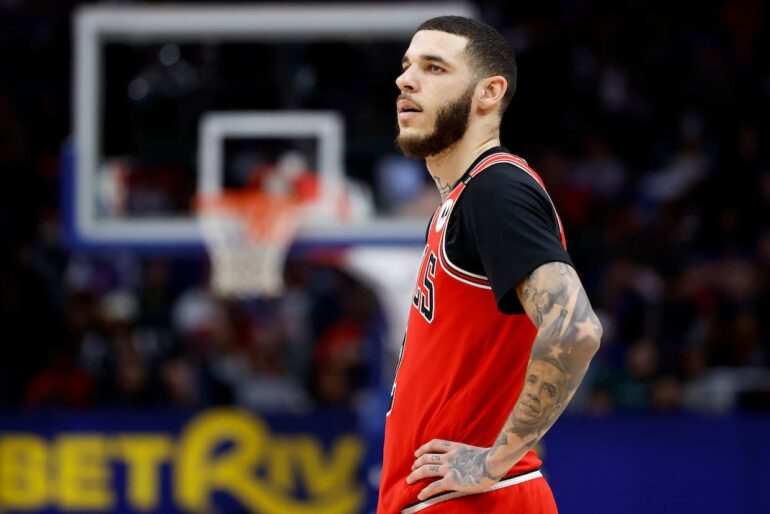
No. 2: Cleveland Cavaliers Trade For Lonzo Ball
For years, the Cleveland Cavaliers have been marred by a predicament some refer to as the “hour glass problem.” Their best players are bigs (Jarrett Allen and Evan Mobley) and smalls (Darius Garland and Donovan Mitchell) with very little in between.
This roster desperately needed more wings who can hold their own at both ends of the floor. At 6 feet 6 inches with a 6-foot-9 wingspan, Ball is just what the doctor ordered. He can shoot at will (87th percentile in 3-point volume per 75 possessions), defend with the best of them (91st percentile defensive EPM) and distribute the basketball like few players in the league today (89th percentile Passer Rating).
Ball’s prime has been plagued by a devastating knee injury, but he’s made a herculean effort to get back on the court. While he was relegated to just 35 games last season, he showed enough to prove he could be useful to a contender like the Cavaliers. Factor that all in with the reality they only had to part with a fringe rotation player who normally gets played off the floor in the playoffs (more on that later) and you have one of the two best moves of the offseason.
No. 1: Denver Nuggets Trade For Cameron Johnson
To be fair, Cameron Johnson is functionally not that much different than Michael Porter Jr. He is a big dude, who can absolutely stripe it, and has a questionable history as a defender. Johnson will play a very similar role to the one Porter played with the Denver Nuggets last season.
On-court impact isn’t why this move lands at No. 1 on my list. It’s the fact Johnson is making nearly half of what Porter will over the next two seasons. This opened the door for the Nuggets’ notoriously cheap ownership group to add some much-needed depth in the form of Tim Hardaway Jr., Bruce Brown Jr. and Jonas Valanciunas.
Add that in with the internal growth which could come from youngsters like Christian Braun, Julian Strawther (I know the leap is coming!) and Peyton Watson, and a team knocked out of the playoffs last year because they weren’t deep enough now enters next season as one of the deepest teams in the Association.
Honorable Mentions (in no particular order): Hawks sign Nickeil Alexander-Walker, Charlotte Hornets trade for Collin Sexton, Memphis Grizzlies sign Ty Jerome, Houston Rockets sign Dorian Finney-Smith, San Antonio Spurs sign Luke Kornet, New York Knicks sign Guerschon Yabusele, Cavaliers sign Larry Nance Jr., Bucks re-sign Ryan Rollins
5 Worst Moves Of The Offseason
No. 5: Detroit Pistons Re-Sign Paul Reed
Paul Reed is a solid NBA player who did a good job filling in for Isaiah Stewart when Stewart went down with a knee injury during the Detroit Pistons’ first-round series against the Knicks.
However, as it stands, he’s slotted as their third-string center. Usually, you want that player under contract for the veteran’s minimum. Here, the Pistons retained Reed on a contract worth $5.3 million each of the next two years ($2.6 million more than his minimum).
Yes, this could be to make his salary more matchable in trades down the road. But on the surface, I don’t love this deal. And I know I’m being nit-picky, but (most) teams have been getting smarter, so it made this part of the exercise trickier.
No. 4: Los Angeles Lakers Sign Deandre Ayton
The main priority for the Los Angeles Lakers this offseason was to find themselves a starting-caliber center. With Luka Doncic on the roster, that job is relatively easy. All you need is someone who can set good screens, roll to the rim and protect the paint.
I’ve never noticed anything wrong with Deandre Ayton’s screening abilities, and he’s been a good finisher for his career. But he’s run into problems in the past because of his disdain for being relegated to this role (no pun intended). On top of that, Ayton has never had strong rim protection indicators (last season, he was in just the 50th percentile in block rate among centers, per Cleaning the Glass).
I was also expecting Ayton to sign for his veteran’s minimum amount since he accepted such a lofty buyout from the Portland Trail Blazers. But the Lakers had to cough up $16.2 million over the next two years (the second season is a player option) to bring him on board, which dings them a little bit in my rankings.
Ayton is still immensely talented and has all the tools to excel in this role, if he so chooses. Those variables keep the Lakers from placing even worse on this list.
No. 3: Phoenix Suns Trade For Mark Williams
Man, who ever knows what the Phoenix Suns are thinking? They started to take a step in the right direction by getting some assets in return for Durant. Then, they use the 10th overall pick, which they received from the Rockets, to draft a promising young center in Khaman Maluach. And then, they trade two precious first-rounds picks for… another young center?
I understand they still have Devin Booker and productive players like Dillon Brooks, Jalen Green and Bradley Beal (for now), and you want to have an adult in the room at the five spot. But Mark Williams is still very much an unfinished product at 23 years old.
And if you’re going to take a swing at a prospect who hasn’t had luck with the team which drafted them, why Williams? He’s a great roller and offensive rebounder, but he has some serious question marks on defense — at a position where defense is paramount. The whole situation makes no sense to me but it still isn’t as baffling to me as these last two moves.
No. 2: Chicago Bulls Trade For Isaac Okoro
For the second straight year, the Chicago Bulls traded a valuable two-way role player for no draft picks and a player with a history of faltering in the postseason. At least last season, you could talk yourself into Josh Giddey’s upside and how he could flourish with a higher usage rate (and, for the record, he was pretty darn good last year).
But what’s the selling point now? While I understand Ball has his injury concerns, you should at least be able to get a second-round pick or two for him. Instead, all they have is Isaac Okoro.
He’s a splendid on-ball defender who doesn’t faze defenses beyond the arc (43rd percentile in 3-point volume per 75 possessions) and doesn’t do the things other non-shooting wings do to stay on the floor in the playoffs (something I wrote about extensively a year ago). God bless this fanbase.
No. 1: Sacramento Kings Sign Dennis Schroder
How fitting the team many people refer to as the Bulls’ Western Conference doppelgänger is the one to finish first on this infamous list? You can’t make this stuff up (well, I guess you can, since this list is subjective).
Heading into the offseason, if they chose to retool instead of a full-scale rebuild, the Sacramento Kings needed to add size, shooting and ball-handling. They definitely got some ball-handling with the addition of Dennis Schroder, but at 6 feet 1 inches with a career clip of 34.2 percent from downtown, he offers neither size nor shooting. To make matters worse, the Kings had to offload Jonas Valanciunas, one of their few big people, to make the money work.
Now, they have an abundance of guards (Schroder, Malik Monk, Zach LaVine, Devin Carter and Keon Ellis) and a shortage of high-level forwards and centers (DeMar DeRozan, Keegan Murray and Domantas Sabonis). This move hardly improves the Kings and makes their roster construction far more confusing (I could reconsider this stance if they end up moving Monk or DeRozan).
Also, the Kings bought in on Schroder’s stock at a high point after a first-round series where his quickness made him a good matchup for Jalen Brunson and his 3-point shot was falling at a higher rate than usual (47.6 percent). Personally, I don’t view Schroder as a $15 million player in today’s financial landscape (three-year, $44.4 million deal).
Dishonorable Mentions
As a bonus, here are two moves I haven’t yet shared my public opinion about and want to offer some expanded thoughts on them.
New Orleans Pelicans Trade For Jordan Poole
I’m one of Jordan Poole’s greatest supporters. He got back on track on offense last year with the Washington Wizards while also being a sneakily more engaged defender. With that said, I don’t think he’s good enough to warrant the New Orleans Pelicans trading CJ McCollum, who is on an expiring contract and a notoriously awesome locker room presence.
I also don’t like parting ways with Kelly Olynyk, who could have made for a nice change-of-pace big man when the Pelicans weren’t actively developing Yves Missi or Derik Queen. Still, I think Poole will have a good year in 2025-26, which is why this didn’t crack my bottom five.
Orlando Magic Sign Tyus Jones
I know a lot of people loved the Orlando Magic adding Tyus Jones in free agency. I get it, they’re a sloppy half-court team (19th in turnover rate) which needed someone to steady the offense. As the owner of the NBA’s highest single-season assist-to-turnover ratio (7.35:1), Jones will surely help in this area.
My disdain with this deal solely comes from how high I am on Jase Richardson. For what my money is worth — which, admittedly, is not much when it comes to prospect talk — Richardson was the biggest steal of the Draft last month. All his indicators point to him having a long and prosperous NBA career. Adding Jones only takes away opportunities for him and Anthony Black to grow.
Then again, it’s only a one-year deal. So, it’s not particularly damaging at the end of the day.