
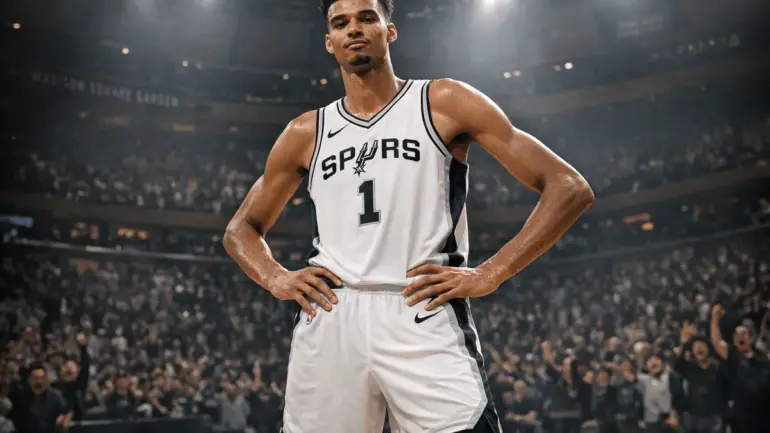
Victor Wembanyama dropped 32 points on 11-of-18 shooting, shoved Jalen Brunson hard enough to draw a stadium full of profane chants, and then walked out of Madison Square Garden with a 115–111 win – and a grin. The San Antonio Spurs‘ 22-year-old centerpiece is not merely performing well in New York. He is leaning into the hostility, drawing explicit comparisons to Trae Young‘s 2021 villain breakout at MSG, and doing it with the self-aware ease of someone who studied the template before arriving.
That is not just a personality quirk surfacing at an inconvenient moment. That is a structural narrative event – a deliberate reframing of who the protagonist of these NBA Finals is supposed to be, executed in the building where that kind of reframing carries the most cultural voltage.
What Actually Happened – The Full Sequence
Through Games 1 and 2, Wembanyama looked every bit like a 22-year-old in his first Finals. The Knicks’ defensive schemes made him uncomfortable, his turnovers came at punishing moments, and his confident public posture after a rough Game 1 performance felt more like managed messaging than genuine command. New York held a 2–0 series lead, and the narrative was forming around the idea that the Spurs’ generational prospect had been exposed by the moment’s weight.
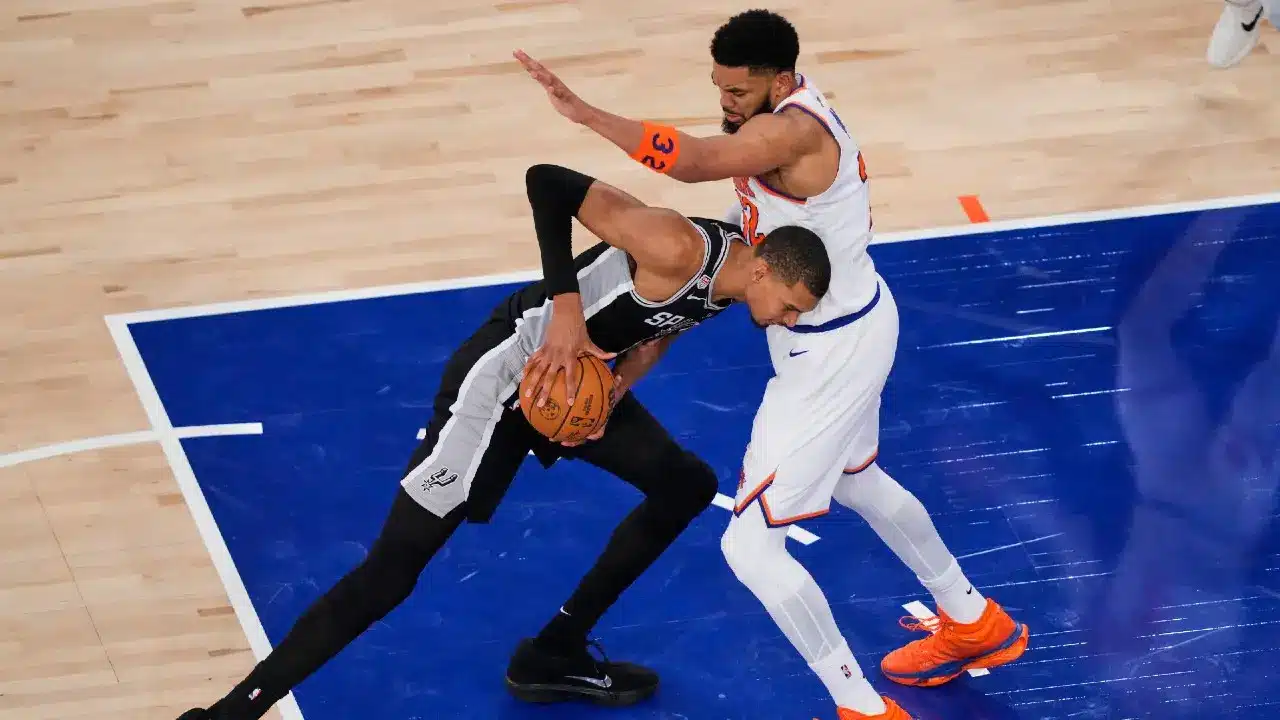
Game 3 at MSG changed the register entirely. Early in the game, Wembanyama delivered a two-handed shove to Brunson’s back and neck area while fighting for position. Brunson stumbled forward. No foul was called. The Garden erupted in chants that cannot be printed in full, and Wembanyama did not flinch. What followed was 32 points, 8 rebounds, 6 assists, 3 blocks, and 2 steals – a performance that snapped New York’s 13-game postseason win streak and cut the series deficit to 2–1.
Postgame, Brunson was asked directly about Wembanyama’s physical play. His answer was clipped and deliberate: “Whatever you saw is what you saw.” It is the kind of non-denial denial that validates the moment without escalating it – and it fed the story exactly as much oxygen as Brunson intended. Wembanyama, meanwhile, embraced the villain framing publicly, invoking Trae Young’s 2021 MSG run as a benchmark and signaling that the hostility of the crowd is fuel rather than friction. The accountability he showed after his Game 2 turnover issues has now transformed into something sharper – a player who has processed the early-series adversity and arrived at antagonism as his answer.
Wembanyama at MSG – Why This Has This Kind of Pull
Madison Square Garden is not simply a venue. It is the sport’s foremost stage for villain construction – a place where hostile crowds have historically elevated the players they hate most, turning them into figures who transcend the series they are playing in. Trae Young understood this in 2021. He blew kisses at the crowd, savored every booed free throw, and left New York carrying the most culturally resonant narrative of that postseason. The Knicks lost that series. Young became iconic for winning it.
Wembanyama is operating from a structurally stronger position than Young held in 2021. Young was a point guard with a pre-existing reputation for flopping and late-game drama. Wembanyama is a 7-foot-4 anomaly who blocked 3 shots and physically moved a starting NBA point guard without consequence from the officials – a detail that makes the crowd’s fury feel simultaneously justified and powerless. That is not a minor distinction. That is the specific combination that generates sustained narrative energy: a villain the crowd genuinely cannot stop.
His age amplifies everything. A 22-year-old in his first Finals leaning into antagonist framing – rather than deferring to veterans, rather than staying neutral, rather than letting the moment dictate his posture – is genuinely unusual. Most young stars manage their image in high-stakes situations. Wembanyama is doing the opposite, and doing it in the building where that choice carries maximum weight. The series flip from 0–2 down to a credible 1–2 with momentum is the structural fuel. The villain framing is the accelerant.
The comparisons to Trae Young being circulated online are also self-aware in a way that adds a layer beyond simple antagonism. Wembanyama is not merely playing the villain – he is acknowledging the archetype, referencing the lineage, and positioning himself within a specific tradition of MSG-villain basketball. That is a media-literate move from a player the basketball world is still learning how to categorize.
The Social Mechanics – Why This Travels Beyond the Core Audience
This story activates at least 4 distinct audience communities. They do not significantly overlap in their normal consumption habits.
The first is the core NBA Finals audience – bettors, fantasy players, and hardcore basketball viewers tracking series momentum. For this group, the Game 3 performance is the story: Wembanyama’s the electric and hostile NYC Finals atmosphere has now produced its defining on-court flashpoint, and the physicality with Brunson has genuine Game 4 implications that betting markets will price accordingly. The second community is the villain-narrative sports audience – fans who engage specifically with antagonist storylines, heel turns, and the cultural theater of a star being booed at full volume in an iconic building. This group does not need to follow the Spurs. They need the arc, and the arc is clean.
The third community is Wembanyama’s global following – non-US basketball markets, young fans who discovered the sport through his Rookie of the Year season, and the international audience that has watched him develop into the sport’s most structurally unusual player. For this group, the villain turn is a character-development moment in a longer story they are already invested in. The fourth community is the meme and pop-culture economy audience – people who engage with a 7-foot-4 alien-nicknamed player leaning into villain mode as an inherently visual and quotable moment. The split-screen comparisons to Young circulating online are already the content. The reaction is already the story.
The specific combination of physical flashpoint, crowd audio, self-aware villain framing, and a 53-year title drought as backdrop makes this story structurally durable across news cycles. It does not require a follow-up event to keep traveling. It is already a meme-ready cultural artifact from Game 3.
What’s Confirmed and What Isn’t
What is confirmed: Wembanyama scored 32 points on 11-of-18 shooting with 8 rebounds, 6 assists, 3 blocks, and 2 steals in Game 3; the Spurs won 115–111 to cut the series to 2–1; Wembanyama delivered a two-handed shove to Brunson’s back and neck area early in the game with no foul called; Brunson’s postgame response was “Whatever you saw is what you saw”; Wembanyama publicly embraced the villain framing and explicitly invoked Trae Young’s 2021 MSG run as a reference point; the Knicks are chasing their first title since 1973 and their 13-game postseason win streak is now broken.
What is not confirmed: whether Wembanyama’s villain-mode framing is a coordinated media strategy or a genuine personality expression; how the Knicks’ coaching staff and front office are processing the physicality escalation and whether it changes their defensive scheme for Game 4; whether the league will review the Brunson shove and apply any retroactive discipline; and whether the narrative momentum generated by Game 3 will hold if the Knicks reassert control in Game 4 at MSG.
What to Watch Next
Game 4 at Madison Square Garden is the hinge. If Wembanyama delivers another dominant performance and ties the series at 2–2, the villain arc becomes one of the defining storylines of this Finals – a 22-year-old generational prospect who went from sympathetic young star losing 0–2 to full antagonist at the sport’s most hostile venue inside 48 hours. The narrative compound effect of that trajectory is enormous.
If the Knicks respond with a focused defensive performance that limits him and reclaims their series lead, the framing deflates quickly. Villain mode requires results. Without them, the same self-aware antagonism reads as premature and the story resets around New York’s path to ending a 53-year drought. Watch specifically for whether the Brunson–Wembanyama physicality escalates with official attention, whether Wembanyama’s post-game comments continue to lean into the antagonist persona, and how MSG’s crowd calibrates its response now that the building knows who it is dealing with.
For the latest on Victor Wembanyama, the San Antonio Spurs, and everything at the intersection of sports and culture, keep it locked to Sportscasting.com.