

Elite MMA fighters may be regarded as some of the best pound-for-pound in UFC circles, but what exactly does it mean?
Pound-for-pound is a term used regularly in MMA circles, with all of the most elite fighters in the world labelled as P4P stars.
Join us as we examine the meaning of pound-for-pound in UFC terms, and how exactly a P4P list is ranked.
What Does Pound-For-Pound Mean?
The term ‘pound-for-pound’, in the UFC, is a way of comparing fighters from different weight classes to determine who the best is. In essence, the pound-for-pound rankings compare the best fighters from each separate weight division, putting them all in one hypothetic list and ranking each of them.
This mean that if you had someone like Merab Dvalishvili, the bantamweight king, fighting Tom Aspinall, the heavyweight world champion, it would be a hypothetical fight if both men were the same weight. Thus, who would win?
The pound-for-pound rankings cause great debate in MMA. The term has been used for well over a century in combat sports like boxing, not just MMA. The pound-for-pound rankings in boxing have been about officially since 1989 with The Ring magazine publishing their rankings for the first time.
Of course, MMA is a far younger sport than boxing. Not to mention the fact a full MMA P4P rankings list would be hard to compile, given there are so many different organisations in professional mixed martial arts.
As fighters don’t directly compete against one another due to huge weight disparities, judging the best P4P fighter is subjective, and ratings can vary massively.
However, the general consensus is that a pound-for-pound list is the best way of matching fighters up against each other if they were fighting on a level playing field.
Given that the UFC is seen as the elite MMA organisation, their pound-for-pound list is seen as the strongest in all of MMA. However, it is still subjective and debated relentlessly amongst fans.
When Were P4P Rankings First Brought In To The UFC?
The term ‘pound-for-pound’ was historically associated with boxing as the leading combat sport. However, that has since changed with more people taking an interest and participating in other combat sports such as MMA, kickboxing and wrestling.
In MMA terms, particularly looking at the UFC, pound-for-pound rankings came far later than in boxing. When you think about it, the UFC as a company only launched in 1993, with Dana White becoming President in 2001.
Since then, the UFC has grown into a multi-billion dollar enterprise. Hence why Dana White’s net worth has surpassed half-a-billion dollars.
It wasn’t until 2013 that the UFC actually created their own ranking system. This includes making a P4P list. The UFC P4P rankings were introduced in February 2013 and were first generated by a voting panel, mainly made up of various media members.
Each individual media member is asked to vote for the fighter they feel in each weight class, and then collectively pound-for-pound. In the UFC, their rankings consist of 16 fighters in each division (champion then contenders 1-15) and 15 in the pound-for-pound list.
In essence, this means that fighters who receive the most votes will go top of the P4P list and then they’ll work down.
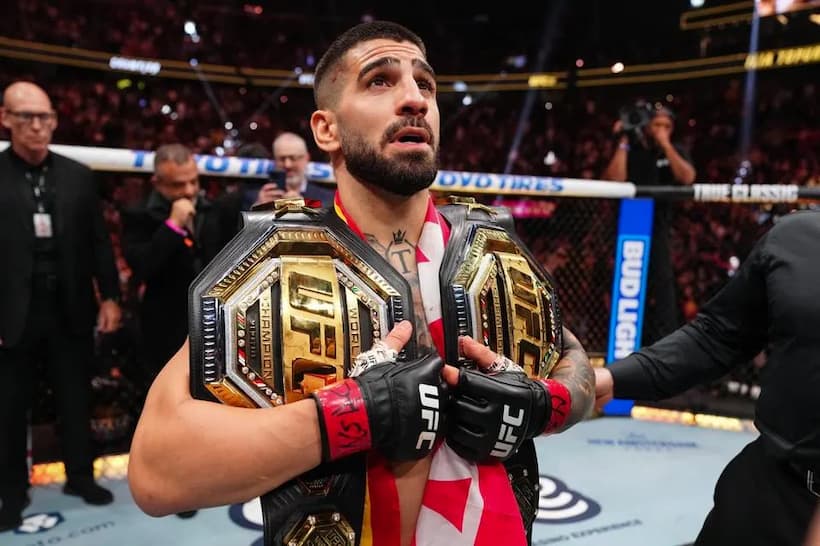
Ilia Topuria’s net worth is currently $2m+, and he is also the current P4P number one due to receiving the most amount of votes. More than the likes of Islam Makhachev, Alexandre Pantoja and Merab Dvalishvili.
So although there are official UFC pound-for-pound rankings, they remain totally subjective. Today, this is how fans distinguish who the best fighters on the planet are from all UFC weight classes combined.
What Is The Criteria For A UFC Pound-For-Pound List?
When compiling a P4P list, there are various criteria fans, media and other authorities may use to distinguish theirs. Like judging, it is subjective and can vary depending on how an individual sees it.
Some people might prefer technical skill and ability as a mixed martial artist, some may favour the big knockouts. Other criteria may include the length of a reign as champion, beating top opponents, consistency at the top level and career longevity.
Depending on what you like to watch, whether that be hitting and not getting hit, or big knockouts, the UFC pound-for-pound rankings are totally subjective.
There is no right or wrong answer as such, but it is generally the same fighters we see crop up at the top of the majority of UFC P4P lists today.
Which Fighters Are Recognised As P4P Stars Today In The UFC?
Nowadays, the pound-for-pound conversation usually includes Ilia Topuria, Islam Makhachev and Merab Dvalishvili as the outright top 3 following Jon Jones’ retirement.
Again, this isn’t definitive and is totally subjective. There is a case that Alex Pereira should be back in the top 3 after regaining the UFC Light-Heavyweight Title.
There seems to be a direct correlation between the UFC P4P rankings and the most followed UFC fighters and most popular names too. Topuria and Makhachev are at the top of that list, as well as being top of the P4P list.
Some people may completely disagree with this Top 3 and have someone else at the top of the list, but the general consensus is that either Topuria or Makhachev are the out-and-out best P4P fighters today, with Dvalishvili not too far behind.
Other names such as Khamzat Chimaev, Alexandre Pantoja and Alexander Volkanovski are generally recognised as comfortable top 10 pound-for-pound fighters. If you hold a UFC Title in your weight class, you should be in the pound-for-pound rankings. Period.
Some may still include the likes of Max Holloway, despite having not been a champion since 2019. Then you get fighters like Tom Aspinall, Jack Della Maddalena and Charles Oliveira, who are widely regarded as some of the best fighters in the world too.
🚨 The UFC men's pound-for-pound have been updated following #UFCRio
Charles Oliveira is back in the PFP rankings, replacing Shavkat Rakhmonov at #15 pic.twitter.com/xZr6G0PA83
— Championship Rounds (@ChampRDS) October 14, 2025
Official UFC Pound-For-Pound Rankings (Men’s Top 15)
| Ranking | Fighter | Weight Class |
|---|---|---|
| 1. | Ilia Topuria | Lightweight |
| 2. | Islam Makhachev | Lightweight |
| 3. | Merab Dvalishvili | Bantamweight |
| 4. | Khamzat Chimaev | Middleweight |
| 5. | Alexandre Pantoja | Flyweight |
| 6. | Alex Pereira | Light-Heavyweight |
| 7. | Alexander Volkanovski | Featherweight |
| 8. | Jack Della Maddalena | Welterweight |
| 9. | Tom Aspinall | Heavyweight |
| 10. | Dricus du Plessis | Middleweight |
| 11. | Magomed Ankalaev | Light-Heavyweight |
| 12. | Max Holloway | Featherweight |
| 13. | Belal Muhammad | Welterweight |
| 14. | Arman Tsarukyan | Lightweight |
| 15. | Charles Oliveira | Lightweight |
Official UFC P4P Rankings (Women’s Top 15)
| Ranking | Fighter | Weight Class |
|---|---|---|
| 1. | Valentina Shevchenko | Flyweight |
| 2. | Zhang Weili | Strawweight |
| 3. | Kayla Harrison | Bantamweight |
| 4. | Manon Fiorot | Flyweight |
| 5. | Juliana Pena | Bantamweight |
| 6. | Natalia Silva | Flyweight |
| 7. | Alexa Grasso | Flyweight |
| 8. | Erin Blanchfield | Flyweight |
| 9. | Virna Jandiroba | Strawweight |
| 10. | Raquel Pennington | Bantamweight |
| 11. | Tatiana Suarez | Strawweight |
| 12. | Rose Namajunas | Flyweight |
| 13. | Yan Xiaonan | Strawweight |
| 14. | Maycee Barber | Flyweight |
| 15. | Amanda Lemos | Strawweight |
UFC Pound-For-Pound Rankings – Key Takeaways
To conclude, there is no right or wrong answer when it comes to compiling a pound-for-pound list in the UFC. It is totally subjective.
Yes, there is an official P4P list on the UFC website, but again that is selected by a panel. That panel is forming an universal opinion based on each of their own individual opinions. That is why there is no right or wrong answer.
Ilia Topuria may be number on in the official UFC pound-for-pound rankings, but who’s to say you’re wrong if you have Alex Pereira as number one? Nobody. That is why the pound-for-pound argument is one that could go on forever in MMA.
Pound-for-pound in UFC terms purely means putting fighters against each other in a hypothetic sense if the playing field was level.
Would the best heavyweight in the world beat the best flyweight in the world? Who is more skilful? Would their skill and ability outweigh the power and knockout punch?
The general consensus is that technical skill, knockouts, length of a reign as champion, beating top opponents, consistency at the top level and career longevity are widely regarded as some of the main criteria for accurate P4P lists.
It creates great debate amongst UFC fans day in, day out.