
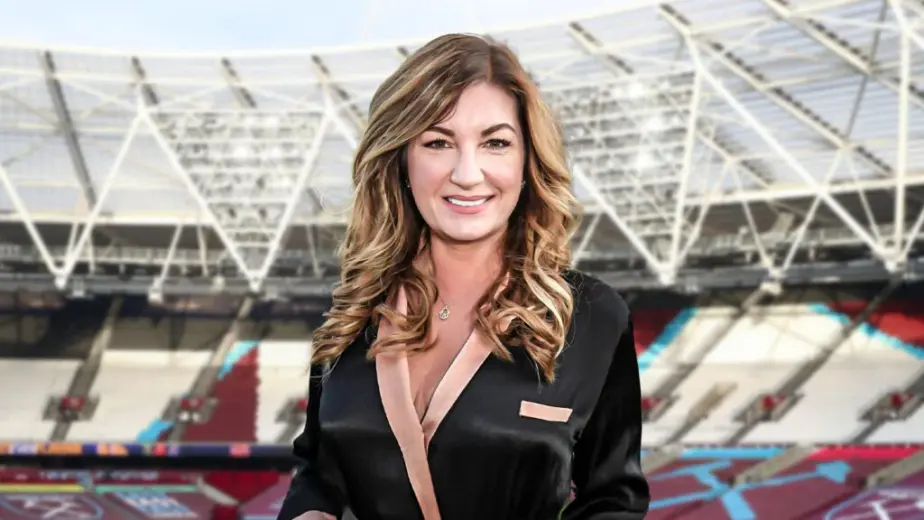
West Ham United have confirmed that Baroness Karren Brady will step down from her position as the club’s Deputy Chair at the end of the 2025/26 season.
Her departure marks the conclusion of a transformative and often controversial 16-year tenure that saw the Hammers move from their ancestral home at Upton Park to the London Stadium.
Brady, often referred to as “The First Lady of Football,” joined the club in 2010 alongside David Sullivan and the late David Gold following their successful takeover.
Her exit signals a significant shift in the club’s hierarchy and administrative identity as they look toward a new chapter under Sullivan’s continued stewardship and the growing influence of Czech billionaire Daniel Kretinsky.
Karren Brady’s Legacy at West Ham: From Upton Park to Stratford
When Brady arrived in East London, West Ham was a club mired in financial uncertainty.
Her primary mandate was to professionalise the commercial arm of the business and spearhead the bid for the Olympic Stadium.
While the move to the London Stadium in 2016 remains a point of contention for many traditionalists who mourned the loss of Boleyn Ground, there is no denying the commercial upswing it provided.
Under Brady’s guidance, West Ham’s turnover increased significantly, allowing the club to break their transfer record multiple times and eventually secure European silverware in the form of the UEFA Europa Conference League in 2023.
Controversies and Challenges During the “Sullivan and Gold” Era
Brady’s time at the club was not without friction. She often found herself at the centre of supporter protests, particularly during the turbulent transition period to Stratford.
Fans frequently criticised the “corporate” rebranding of the club and the perceived lack of transparency regarding the stadium’s lease.
Furthermore, her weekly newspaper column often drew the ire of rival fans and occasionally put her at odds with Premier League contemporaries.
However, her ability to navigate the male-dominated corridors of power in the Premier League earned her respect across the board, culminating in her becoming a prominent voice in the top flight’s decision-making processes.
What Does Karren Brady’s Exit Mean for West Ham’s Future?
The timing of Brady’s departure is particularly interesting given the evolving ownership structure at the club.
With Daniel Kretinsky holding a 27% stake and many speculating about a full takeover in the coming years, Brady’s exit may clear the path for a new executive team to take the reins.
Speculation is already mounting regarding who will fill the void.
The club will need a figurehead who can balance the commercial demands of a modern Premier League side with the need to repair a sometimes-fractured relationship with the fanbase.
A Trailblazing Career in English Football
Before her time at West Ham, Brady made history at Birmingham City, becoming the first woman to hold the post of managing director of a top-flight club at just 23 years old.
Whether you agreed with her methods or not, she has been one of the most influential figures in English football for over three decades.
As West Ham prepares for life after Brady, the club stands at a crossroads.
Supporters will be hoping that the next era brings as much stability on the pitch as Brady brought to the balance sheet off it.
Key Takeaways from Karren Brady’s West Ham Departure:
-
Duration: 16 years (2010–2026).
-
Key Achievement: Oversight of the move to the London Stadium and commercial growth.
-
Next Steps: The club will likely seek a new executive lead to work alongside David Sullivan and Daniel Kretinsky.