
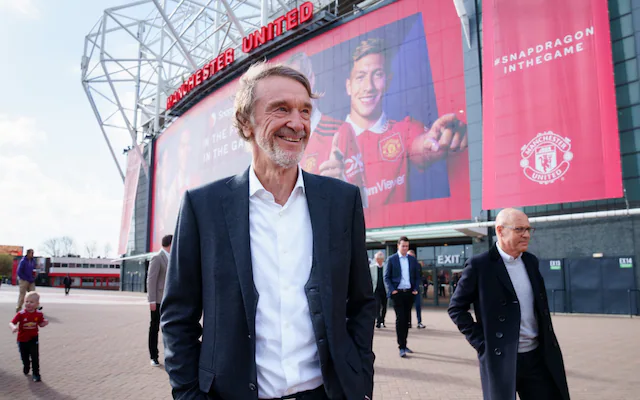
Manchester United owner Sir Jim Ratcliffe has slashed the asking price of one of his biggest businesses as he looks for a quick exit.
The British billionaire has endured a tough start to life as an owner in the Premier league but shows no signs of shying away yet.
In fact, Ratcliffe has reportedly slashed his asking price for French side Nice as he looks to sharpen his focus on United even further.
Why Ratcliffe Is Moving To Sell Nice Quickly
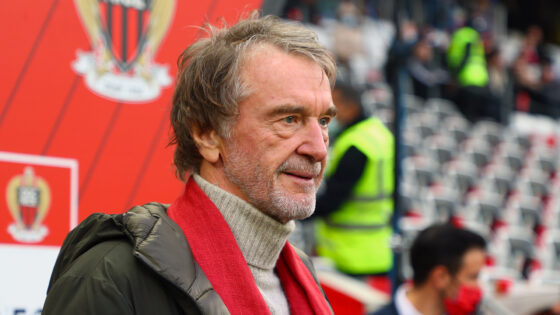
Ratcliffe’s decision to slash the asking price for OGC Nice reflects a combination of market realities and strategic recalibration.
After acquiring Nice in 2019 for around €100 million, he initially sought as much as €250 million to sell the French club, but investor interest has proven weak — a situation compounded by broader financial uncertainty in French football and unfavourable broadcast revenue conditions.
As a result, the asking price has now been reduced to under €200 million in a bid to attract a buyer willing to pull the trigger.
Part of the practical motivation for ratcheting up the urgency appears to be about focus and clarity of purpose.
Owning multiple clubs has been operationally complex: UEFA regulations on multi-club ownership once forced structural changes at Nice to facilitate continental competition eligibility, and even temporarily blocked player moves between the sides.
Selling Nice would free Ratcliffe and INEOS from those complications and allow them to concentrate more fully on Manchester United’s sporting project — something insiders have framed as a priority amid inconsistent results and off-field restructuring at Old Trafford.
There’s also a market reality at play.
Nice’s recent performances on the pitch have disappointed compared with their lofty status a couple of seasons ago, sitting around the lower half of Ligue 1 and struggling in Europe, which has dampened buyer appetite.
With fewer interested suitors and a ticking clock on external factors like media rights instability in France, Ratcliffe appears to be choosing to take a smaller return now rather than risk the asset languishing on the market indefinitely.
What Selling Nice Signals For Manchester United
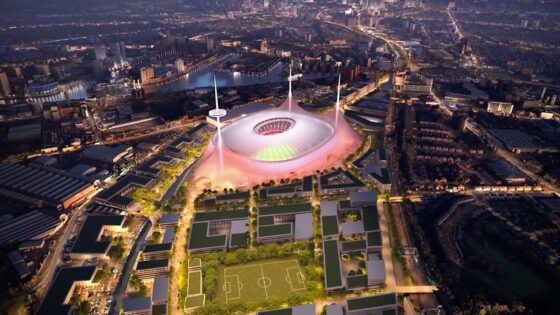
For Manchester United, Sir Jim Ratcliffe’s willingness to accelerate a sale elsewhere looks less like retrenchment and more like consolidation.
Since INEOS assumed sporting control, the stated aim has been to simplify decision-making, reduce conflicts and focus resources where they matter most.
Offloading Nice would remove one of the lingering complications of multi-club ownership and allow Ratcliffe’s football operation to centre fully on United.
That sharper focus comes at a critical moment. United are approaching a defining stretch of the season, where momentum, squad availability and clarity of direction are all under scrutiny.
With attention already heightened by positive developments in team news ahead of the Manchester derby, the spotlight on how prepared the club truly is — both on the pitch and behind the scenes — has only intensified.
In that context, the Nice sale reads as a strategic signal rather than a distraction.
Ratcliffe appears keen to strip away peripheral commitments and ensure there are no competing priorities as United’s rebuild gathers pace.
While the headlines may initially point elsewhere, the implications of this move land squarely in Manchester — and on the success or failure of the project now taking shape.
Ratcliffe Manchester United Sale — What Selling Nice Signals
Taken together, the push to offload Nice at a reduced price feels less like a fire sale and more like a statement of intent.
Sir Jim Ratcliffe is not stepping back from football ownership, but narrowing his focus — and Manchester United sits unmistakably at the centre of that recalibration.
By stripping away secondary interests, Ratcliffe appears determined to remove any operational noise that could complicate United’s rebuild.
The message, intentional or otherwise, is that attention, capital and authority are being channelled toward a single project rather than spread across multiple fronts.
In that sense, the Nice sale is not a distraction from Manchester United’s future, but a reflection of it.
As scrutiny intensifies on results, recruitment and direction, this move suggests Ratcliffe is positioning himself — and INEOS — to be judged on one thing alone: whether they can restore United to the level they believe the club belongs.