
York City’s long-term vision stretches beyond simple ambitions of a return to the Football League, with foundations being laid in the National League to support sustainable growth.
York City’s Football League ambitions have become clearer in recent seasons.
Promotion remains the immediate target.
There is also a wider sense that the club wants to establish itself in a way that allows for future growth beyond simply reaching League Two.
A Season That Reflects the Ambition

York City’s current campaign offers a clear snapshot of the direction the club is trying to move in.
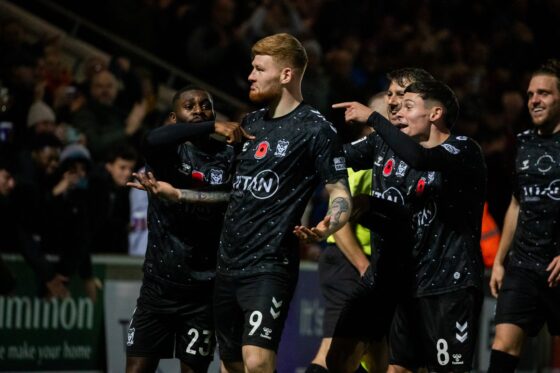
The Minstermen are locked in a National League title challenge and have scored more goals than any other side across the top five tiers of English football.
Goals alone do not define ambition, but leading the scoring charts points to a team built to impose itself on matches rather than simply do enough to get by.
Performances have carried a sense of intent and momentum, which reflects a club pushing for more than short-term progress.
A Club Shaped By Its Past

York City’s modern ambitions sit against a backdrop of a club that has spent much of its history moving between the lower reaches of the Football League and non-league football.
For long periods, simply staying afloat has been the defining challenge rather than pushing on towards sustained progress.
Relegation out of the Football League marked a difficult period, and the club later fell beyond the National League.
This highlights how far standards and stability had slipped at that point.
Those years forced a deeper reset, both on and off the pitch.
The experience of working back from that low ebb has shaped how the club now talks about its future.
Recent seasons point towards a longer-term attempt to rebuild York’s foundations.
Promotion is not framed as an end point.
It is seen as the first step in re-establishing York City as a consistent Football League presence.
The National League Bottleneck
York City’s push back towards the Football League continues to run into one of the most controversial structural barriers in the English pyramid.
Only two teams are promoted from the National League each season, with just two relegated from League Two.
This creates a narrow and unforgiving pathway for ambitious clubs.
In a division that now contains several full-time, well-resourced sides, finishing second is no guarantee of progress.
A season of strong results can still end with a single play-off match undoing months of work.
This has fuelled long-running frustration among clubs who feel the system no longer reflects the modern reality of the fifth tier.
That frustration has helped drive wider calls for reform.
There is growing support for the 3UP campaign, which argues for an additional promotion place between the National League and League Two.
For clubs like York, the debate is not simply about fairness, but about whether the structure of the pyramid allows sustained ambition to be rewarded often enough to make long-term planning viable.
Ownership, Investment and a Platform for Growth

York City’s current direction has been shaped by the takeover led by the Uggla family, who now co-own the club.
Matt Uggla is generally the public-facing figure.
Since their arrival, the focus has shifted towards long-term planning.
The aim has been to build a stable platform, rather than chase short-term gains.
Since taking control, the Ugglas have backed that vision with targeted investment across the wider operation.
As a result, the club has worked to strengthen the foundations that support performance on the pitch.
At the same time, structures around the club have been improved to better support future progression.
Matt Uggla has also invested heavily in the playing squad.
In addition, he has shown a willingness to act decisively when managerial changes have been needed.
Those decisions have involved a degree of risk.
However, to date, the approach has largely paid off, with the club benefiting from the momentum created by those calls.
Off the pitch, Uggla has taken a notably open approach.
He regularly uses social media to share insight into life at the club and to engage directly with supporters.
At times, he has even leaned into rivalry, with posts aimed at riling up opposition fans.
That visibility has helped shape a stronger sense of connection between ownership and fanbase, even if it brings its own scrutiny.
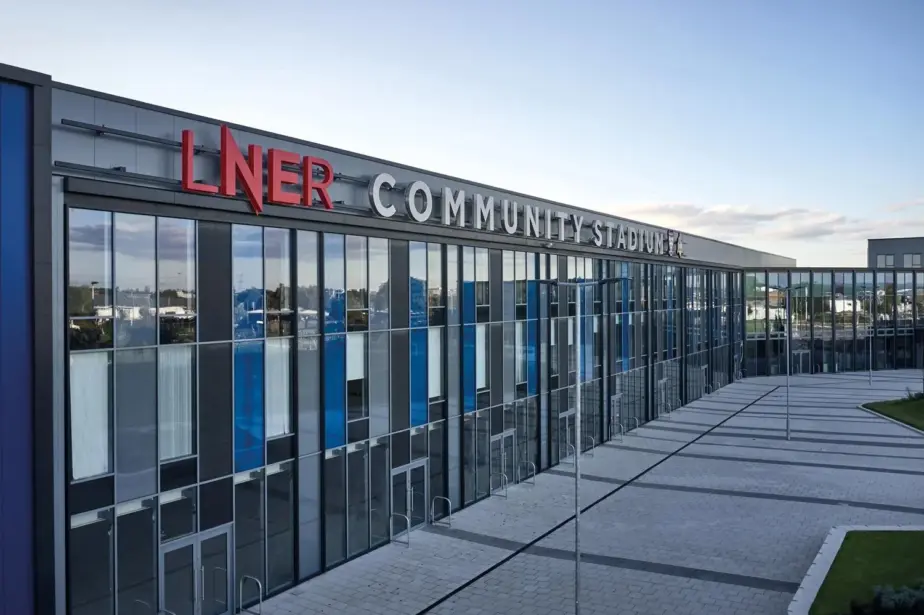
The club is also operating from the York Community Stadium, which provides a modern base for matchday revenue and commercial growth. This, in turn, supports supporter engagement.
Together, ownership stability and improved infrastructure give York a platform to think beyond simply returning to League Two and towards building something more sustainable over the longer term.
Looking Beyond Promotion
For York City, returning to the Football League is framed as a milestone rather than a destination.
Promotion would validate the work being done behind the scenes.
However, the broader ambition appears to centre on building a club that can sustain progress rather than bounce between divisions.
That longer-term view points towards stability as much as success.
They are looking to establish clear recruitment pathways, maintaining professional standards, and building a consistent identity.
These will be key if York are to avoid the familiar cycle of rise, fall and reset that defines so many clubs at this level.
In that sense, growth is as much about resilience as it is about results.
There is also a sense that York want to reconnect ambition with identity.
Developing a style of play, strengthening ties with the local community, and creating a club that supporters can recognise and invest in emotionally all form part of that wider picture.
If promotion does arrive, those foundations may prove just as important as the final league position in shaping what comes next.