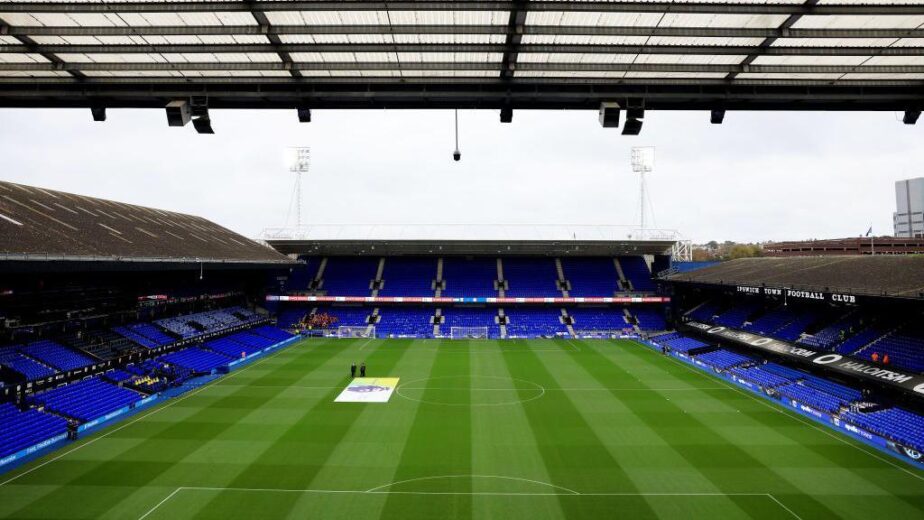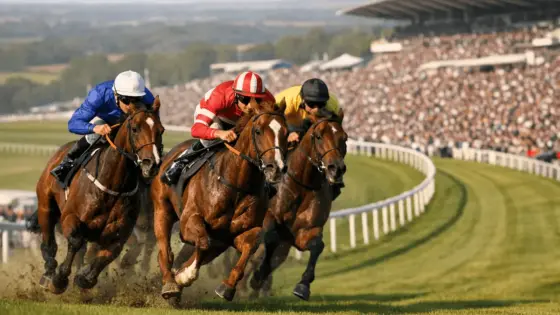

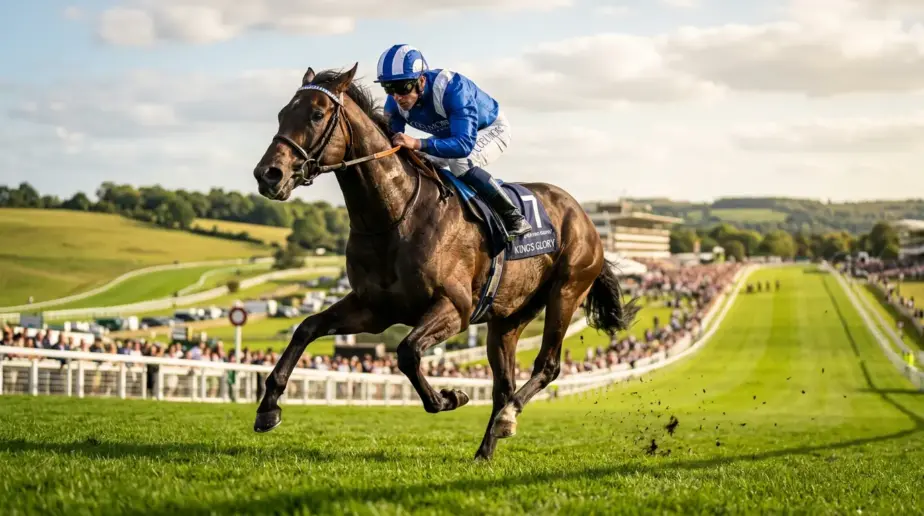
Aidan O’Brien has won the Epsom Derby 11 times – more than any trainer in the history of the race – and on Saturday 6th June 2026 at 3:30pm, he goes to Epsom chasing something no trainer has ever done: four consecutive victories in British racing’s most prestigious Classic. His 2/1 favourite Benvenuto Cellini makes that pursuit a live betting proposition, not just a historical footnote. This is simultaneously a record-documentation piece and a betting intelligence brief, because with O’Brien holding three of the five shortest-priced runners in the ante-post betting, understanding his Derby pattern is the foundation for backing the right horse on Saturday.
Aidan O’Brien’s Derby Record: What the Numbers Actually Show
Eleven wins. The nearest rival in the all-time record books – Robert Robson, John Porter, Fred Darling – managed six. O’Brien has nearly doubled that benchmark, and he has done it across three distinct phases: an early Coolmore burst in 2001 and 2002, a sustained mid-period run from 2012 to 2020, and now a remarkable three-in-a-row streak from 2023 to 2025. The current sequence – Auguste Rodin (2023), City Of Troy (2024), Lambourn (2025) – represents consecutive Derby wins that no trainer in the modern era has matched, and extending it to four would move the record into territory that may not be challenged in our lifetimes.
The market reflects both the historical weight and the live probability. Benvenuto Cellini opened for ante-post betting at a price that has since compressed toward 2/1, with O’Brien’s runners collectively dominating the top of the board. For context on how the broader Derby market is shaping up beyond O’Brien’s squad, the Betfair analyst’s full 1-2-3 Derby preview offers biomechanics data and stride analysis that sits directly alongside this historical framework.
All 11 Epsom Derby Winners Trained by Aidan O’Brien
Galileo (2001) – The one that started everything, and arguably the most consequential Derby winner of the modern era. Galileo won easily at Epsom, took the Irish Derby just as comfortably, then landed the King George VI & Queen Elizabeth Stakes at Ascot. He went on to become the dominant sire in European thoroughbred breeding, turning O’Brien’s first Classic win into a dynasty. The commercial logic of the Ballydoyle-Coolmore axis was crystallised in that single horse.
High Chaparral (2002) – Back-to-back Derbies for O’Brien at the very start of his Epsom account, underlining that 2001 was no fluke. High Chaparral gave O’Brien consecutive wins in the race before the market or media had fully processed what Ballydoyle was building.
Camelot (2012) – A decade gap between 2002 and 2012 that O’Brien closed emphatically. Camelot arrived at Epsom as one of the most hyped Classic horses in years and delivered on it, going on to contest the Triple Crown before just failing in the St Leger. His subsequent stud career kept the Coolmore commercial model turning.
Ruler of the World (2013) – Three wins in four years from 2012 to 2014 demonstrated that O’Brien’s Derby dominance was structural rather than cyclical. Ruler of the World won from the front, a tactical variation that O’Brien would deploy again to notable effect later in the sequence.
Australia (2014) – Named for the continent, won with the authority of a horse who knew exactly what was required. Australia represented the peak of O’Brien’s mid-period dominance and later joined the Coolmore stallion roster, continuing the pattern of Derby wins converting directly into stud-fee value.
Wings of Eagles (2017) – The Chester Vase route to Epsom is not a new playbook. Wings of Eagles used that exact trial in 2017 before landing the Derby at a big price, establishing a template that O’Brien’s team has returned to repeatedly. The win was a reminder that the Ballydoyle second-string can outrun their market position.
Anthony Van Dyck (2019) – Won a Derby shaped by Epsom’s unique undulations and camber, demonstrating that O’Brien trains horses specifically to handle this track rather than simply relying on quality to override the course’s idiosyncrasies.
Serpentine (2020) – The most tactically striking of the eleven. From a six-strong Ballydoyle squad at a behind-closed-doors Derby during the pandemic, Serpentine led throughout and won at 25/1 while stable companion Mogul – the expected market leader – trailed in. It was the clearest illustration of how O’Brien’s multi-runner strategy creates market inefficiencies that sharp punters need to price correctly.
Auguste Rodin (2023) – Win number nine and the beginning of the current three-in-a-row sequence. Auguste Rodin justified favouritism and kicked off the streak that O’Brien is now seeking to extend to an unprecedented four.
City Of Troy (2024) – Win ten. Confirmed that the 2023 success was not a one-off return to dominance but the opening act of a new sustained run. City Of Troy was among the more impressive recent Derby winners on pure form.
Lambourn (2025) – Win eleven and the record-setter. With Lambourn’s victory last year, O’Brien moved to three consecutive Derbies and set himself up for the historic fourth attempt in 2026.
What O’Brien’s Derby Winners Have in Common – And Why It Matters for 2026
The Chester Vase appears repeatedly as the key trial. Wings of Eagles used it in 2017. Benvenuto Cellini used it in May 2026. This is not coincidence – it is a deliberate Ballydoyle routing pattern, and it produces results. The Chester Vase is run over 1m 4f at Chester’s tight, left-handed track, which tests a horse’s tactical adaptability without exposing them to the full pressure of a Classic. Horses that win it well tend to be genuine middle-distance performers rather than milers with stamina questions.
Pedigree lines cluster around Galileo – both as a runner and as a sire whose influence has permeated the O’Brien roster for two decades. Several of O’Brien’s Derby winners have been Galileo sons or closely related, and the sire’s own Epsom profile, having been the first in this sequence of eleven, gives the bloodline an Epsom-specific credibility. The commercial return is also evident: Galileo, High Chaparral, Australia, and Camelot all joined the Coolmore stallion roster post-Derby, making each Classic win a multiplier for breeding revenue.
On market positioning, O’Brien’s Derby winners have come at a wide range of prices – Serpentine at 25/1 is the extreme outlier, but several others have been at single-figure odds. The pattern is not ‘always back the favourite’; it is ‘respect the O’Brien runner that fits the established trial profile’. Wings of Eagles (Chester Vase) and Benvenuto Cellini (Chester Vase) share that profile precisely. The actionable conclusion is straightforward: when an O’Brien runner uses the Chester route, wins well, and the trainer confirms satisfaction with the performance, you are looking at a serious Derby contender, not incidental trial form.
Why a Fourth Straight Derby Would Be Unprecedented – and What the Market Already Knows
Auguste Rodin (2023), City Of Troy (2024), Lambourn (2025) – three consecutive Epsom Derbies for one trainer is an achievement without precedent in the modern era. No trainer has ever won four in a row. If O’Brien lands it with Benvenuto Cellini or Pierre Bonnard on Saturday, he will have set a landmark in British Classic racing that may stand indefinitely. That historical framing is not decorative; it is the reason the market has priced Benvenuto Cellini where it has, and why the ante-post betting on this race generated unusual early interest.
O’Brien currently holds three of the five shortest prices in the market – Benvenuto Cellini at 2/1, Pierre Bonnard at 5/1, and Action at 20/1. That concentration of Ballydoyle runners across the top of the board creates the same dynamic that defined the 2020 Derby: multiple O’Brien runners mean the market cannot price them all correctly simultaneously, and one of them will be underpriced. The question is which one. For the full weekend context, including Oaks Day on Friday at the same festival, Sportscasting UK’s Oaks Day tips cover the broader Derby Festival picture ahead of Saturday’s main event.
Benvenuto Cellini, Pierre Bonnard, and the 2026 Derby Market: O’Brien’s Live Chances Assessed
The current ante-post betting market for the 2026 Epsom Derby:
- Benvenuto Cellini: 2/1 (Aidan O’Brien)
- Item: 10/3 (Andrew Balding)
- Pierre Bonnard: 5/1 (Aidan O’Brien)
- Maltese Cross: 9/1 (William Haggas)
- James J Braddock: 10/1 (Joseph O’Brien)
- Bay Of Brilliance: 14/1 (Ralph Beckett)
- Ancient Egypt: 16/1 (Charlie Johnston)
- Action: 20/1 (Aidan O’Brien)
- Christmas Day: 25/1 (Aidan O’Brien)
- Balzac: 150/1 (Jane Chapple-Hyam)
- Poker: 200/1 (Karl Burke)
- Rebel Rocker: 200/1 (Faye Bramley)
- A Taste Of Glory: 250/1 (Andrew Balding)
- Alderman: 250/1 (Richard Hannon)
Odds are for entertainment purposes only and are subject to change.
Benvenuto Cellini at 2/1 is the clear yard number one, and the evidence supports that designation. He won the Chester Vase in early May in a manner O’Brien described as entirely satisfactory – “the stable couldn’t be happier with his Chester performance en route to Epsom,” O’Brien confirmed on a recent stable tour. The Chester Vase-to-Derby pipeline has worked for Ballydoyle before, most notably with Wings of Eagles in 2017. Benvenuto Cellini’s victory at Chester came over the exact Derby distance of 1m 4f, and the ease of that win suggests he is not at his ceiling. At 2/1, the market has priced him as a genuine favourite rather than an odds-on jolly, which means there is still reasonable value relative to the probability his form implies.
Pierre Bonnard at 5/1 is the more interesting analytical case. He has lost both starts this season, but context matters: his defeat at Leopardstown came by a short head to James J Braddock – a horse now trading at 10/1 for the Derby – and O’Brien’s assessment was unambiguous that Pierre Bonnard needed a step up in trip. Epsom’s 1m 4f provides exactly that. A horse who comes within a short head of a legitimate Derby contender over a trip short of his best is not a 5/1 shot who has been beaten twice; he is a 5/1 shot who has been campaigned conservatively and arrives at the right race at the right time. Pierre Bonnard looks significantly underestimated at current odds. For a detailed look at how James J Braddock‘s Leopardstown trial form reads in the broader Derby context, Kevin Blake’s market analysis of James J Braddock at 10/1 offers a useful complementary framework.
The principal non-O’Brien threat is Item at 10/3 for Andrew Balding, the only runner in the market priced between the top Ballydoyle pair. Item’s price implies the market considers it a genuine alternative to Benvenuto Cellini rather than a make-weight, and Balding’s track record in Classics means it cannot be dismissed. Maltese Cross at 9/1 for William Haggas is the next credible outside challenger – Haggas trains fewer Derby runners than O’Brien but wins at a healthy strike rate in the races he targets. The gap between 9/1 and 2/1 is significant, however, and the form evidence does not suggest either is mispriced in the other direction.
One variable to monitor before Saturday: going conditions at Epsom can shift the tactical shape of the race materially. Several of O’Brien’s best Derby winners have been effective on ground ranging from good to soft, and Benvenuto Cellini’s Chester performance came on going that did not present an extreme test. If the track firms up significantly before Saturday, watch for any late market moves on Pierre Bonnard, whose Leopardstown performance suggests he handles quick ground without issue. The draw will also be a factor – Epsom’s camber rewards certain berths over others, and final declarations will clarify whether any of O’Brien’s runners face a positional disadvantage from the stalls.
Bottom Line: The Bet for Saturday’s Epsom Derby
The statistical case for Aidan O’Brien is overwhelming: eleven Derby winners, the outright all-time record, three consecutive victories, and a 2026 squad containing the favourite and the most compelling each-way case in the market. History does not guarantee he wins a fourth in a row – but history is the reason his runners are correctly installed at the prices they occupy. Benvenuto Cellini has done everything asked of him via the Chester Vase route, and O’Brien’s satisfaction with the performance is the clearest available signal from Ballydoyle. Pierre Bonnard represents the sharpest each-way play in the race: a horse who needs this trip, who has proven he belongs in the same conversation as a 10/1 Derby contender, and who is available at 5/1 in a race paying 1-2-3-4 for place terms.
The Bet: Pierre Bonnard each-way at 5/1. Place terms pay 1-2-3-4. Win double option: Benvenuto Cellini to win at 2/1 combined with Pierre Bonnard each-way for those who want Ballydoyle coverage across both the outright and the place market.